HERB · SUN (CULPEPER) · FIRE
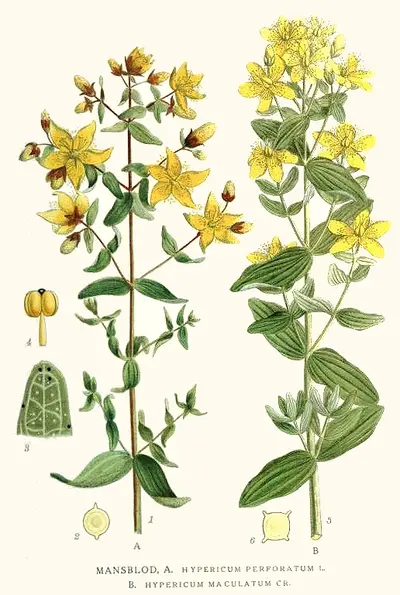
St John's wort
Hypericum perforatum
USE WITH CARE
Safe for most external use, but has real cautions — read the note. Interferes with many medicines, including the contraceptive pill and antidepressants, and makes skin sensitive to sunlight.
IN MAGIC
Gathered on Midsummer Eve and hung over doors against evil spirits.
LORE
Called fuga daemonum, 'flight of demons'. Its red oil was said to be the blood of John the Baptist.
WHAT IS USED
Flowering tops
WHEN
Flowers or is gathered in Britain from June to July.
USED FOR
ProtectionBanishingHealing & blessing
In Culpeper's words
From his herbal of 1653, under “St. John’s Wort”. Culpeper was a physician of his day, and many of his remedies are now known to be useless or dangerous: read him as history, never as medical advice.
PLACEThis grows in woods and copses, as well those that are shady, as open to the sun.
TIMEThey flower about Midsummer and July, and their seed is ripe in the latter end of July or August.
GOVERNMENT AND VIRTUESIt is under the celestial sign Leo, and the dominion of the Sun. It may be, if you meet a Papist, he will tell you, especially if he be a lawyer, that St. John made it over to him by a letter of attorney. It is a singular wound herb; boiled in wine and drank, it heals inward hurts or bruises; made into an ointment, it open obstructions, dissolves swellings, and closes up the lips of wounds. The decoction of the herb and flowers, especially of the seed, being drank in wine, with the juice of knot-grass, helps all manner of vomiting and spitting of blood, is good for those that are bitten or stung by any venomous creature, and for those that cannot make water. Two drams of the seed of St. John’s Wort made into powder, and drank in a little broth, doth gently expel choler or congealed blood in the stomach. The decoction of the leaves and seeds drank somewhat warm before the fits of agues, whether they be tertains or quartans, alters the fits, and, by often using, doth take them quite away. The seed is much commended, being drank for forty days together, to help the sciatica, the falling-sickness, and the palsy.
Nicholas Culpeper, The Complete Herbal (London: Thomas Kelly, 1850), reprinting The English Physitian Enlarged (1653).
