A WAY IN
Types of magic
Magic is not one thing. Over two thousand years people have worked with plants and stones, with the planets and their hours, with ritual and the old books, with charms at the door, with cards and dreams. This page sorts that inheritance into eight kinds, says what each works with and the question it asks, and shows where to begin in each.
Choose by interest
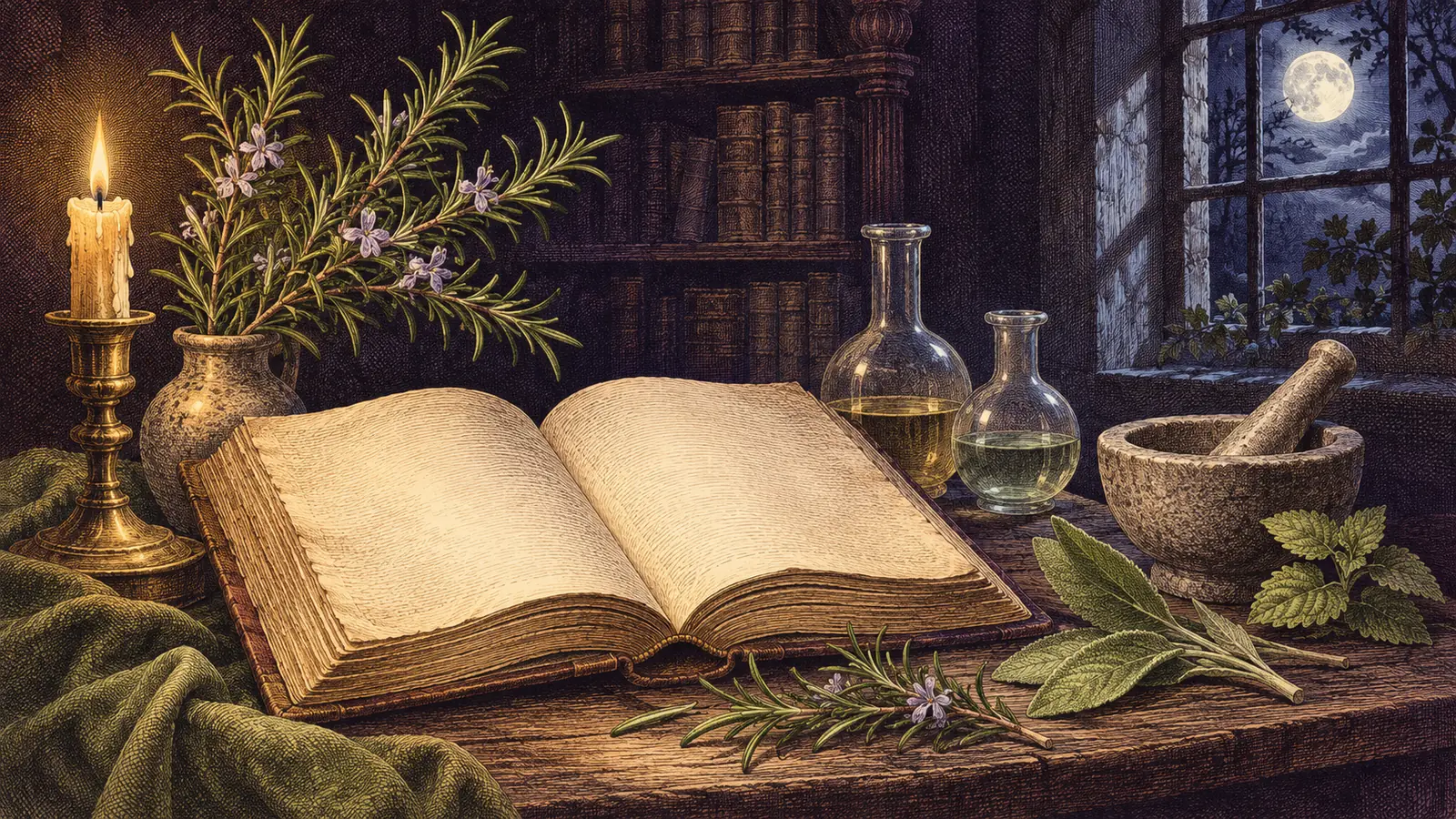 Natural magicPlants, stones, metals and animals
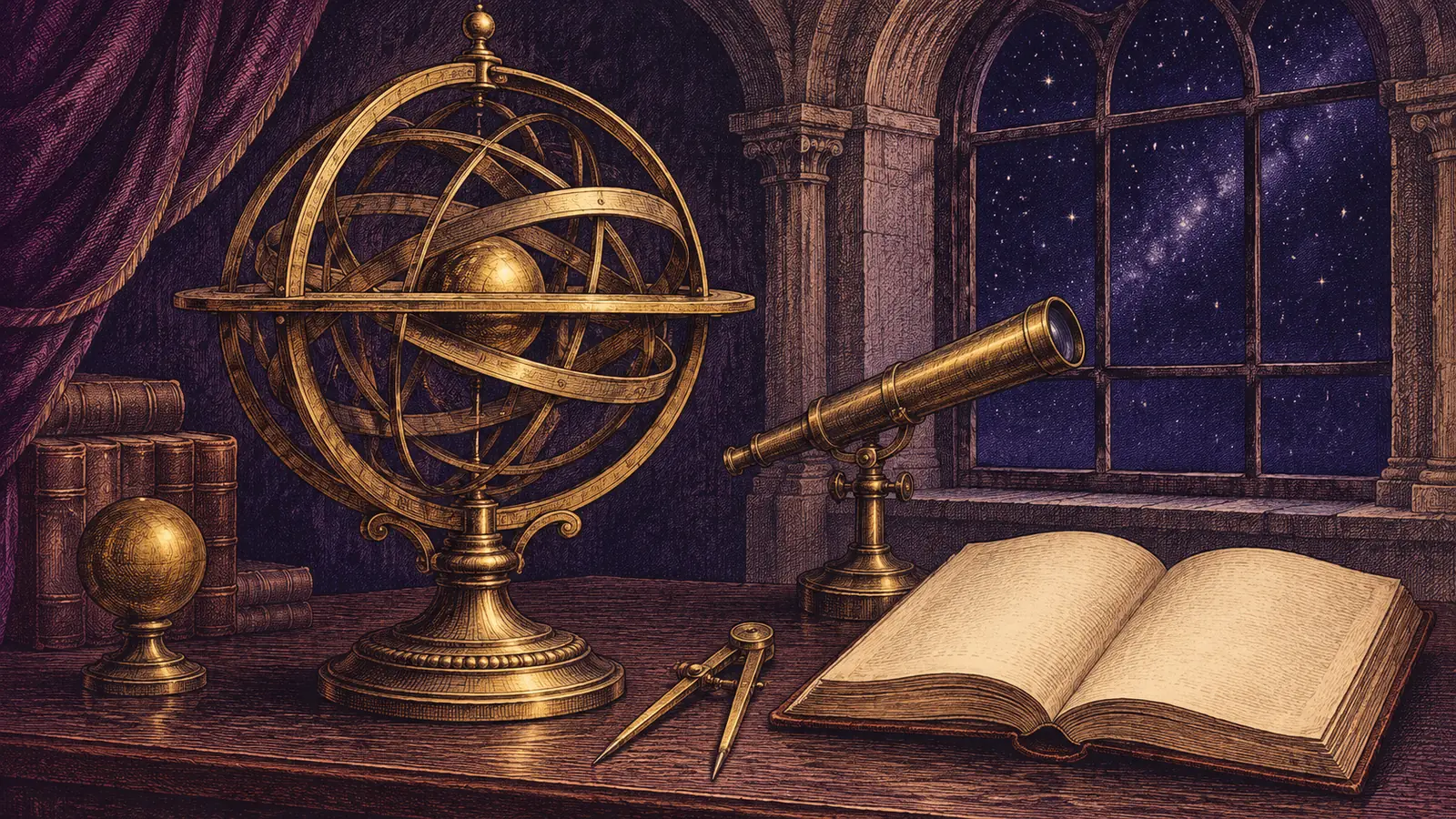 Planetary and lunar magicThe seven planets, the Moon's phases and mansions, and the hours they rule
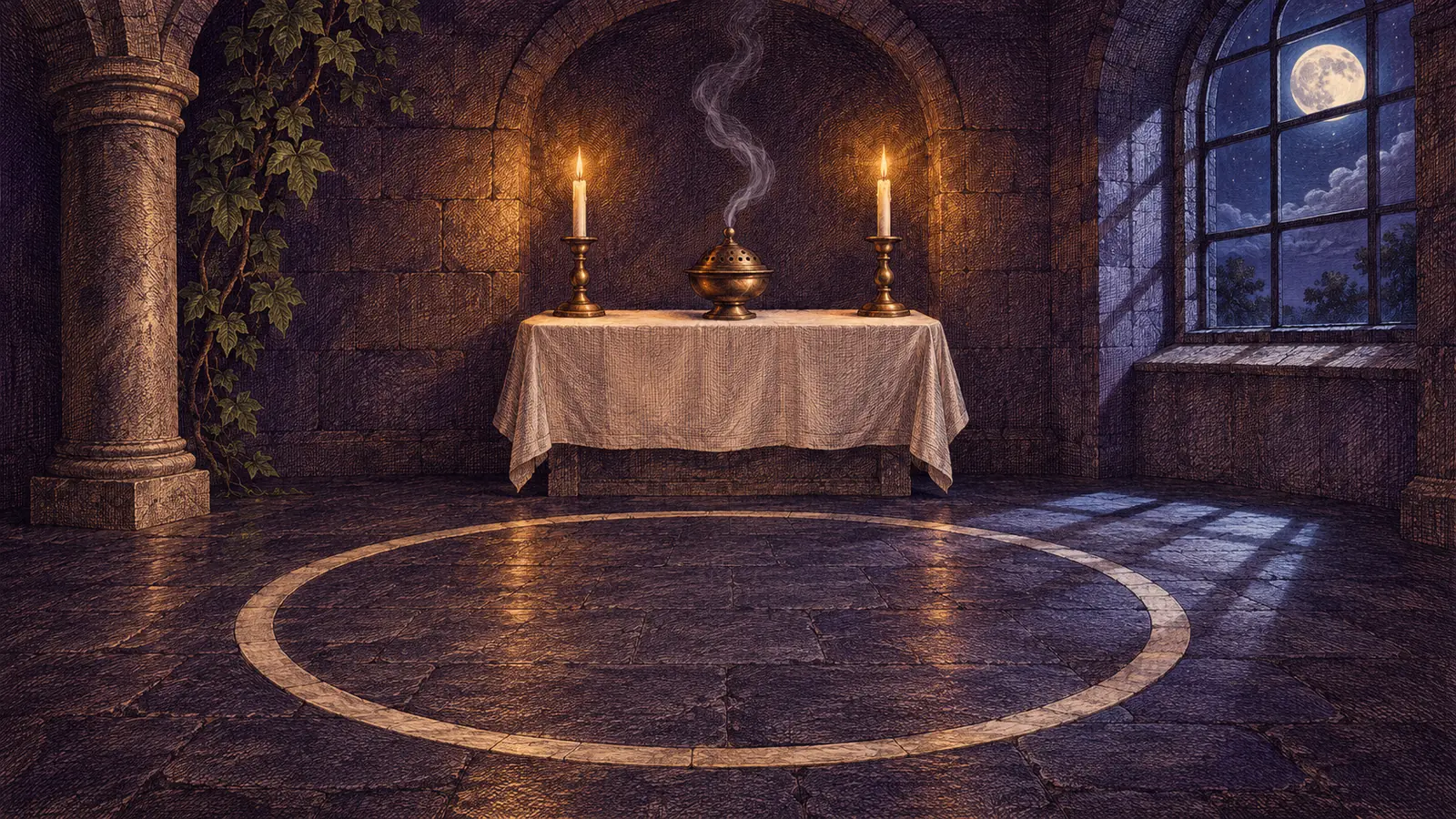 Ceremonial and grimoire magicRitual, divine names, circles, seals and the books that prescribe them
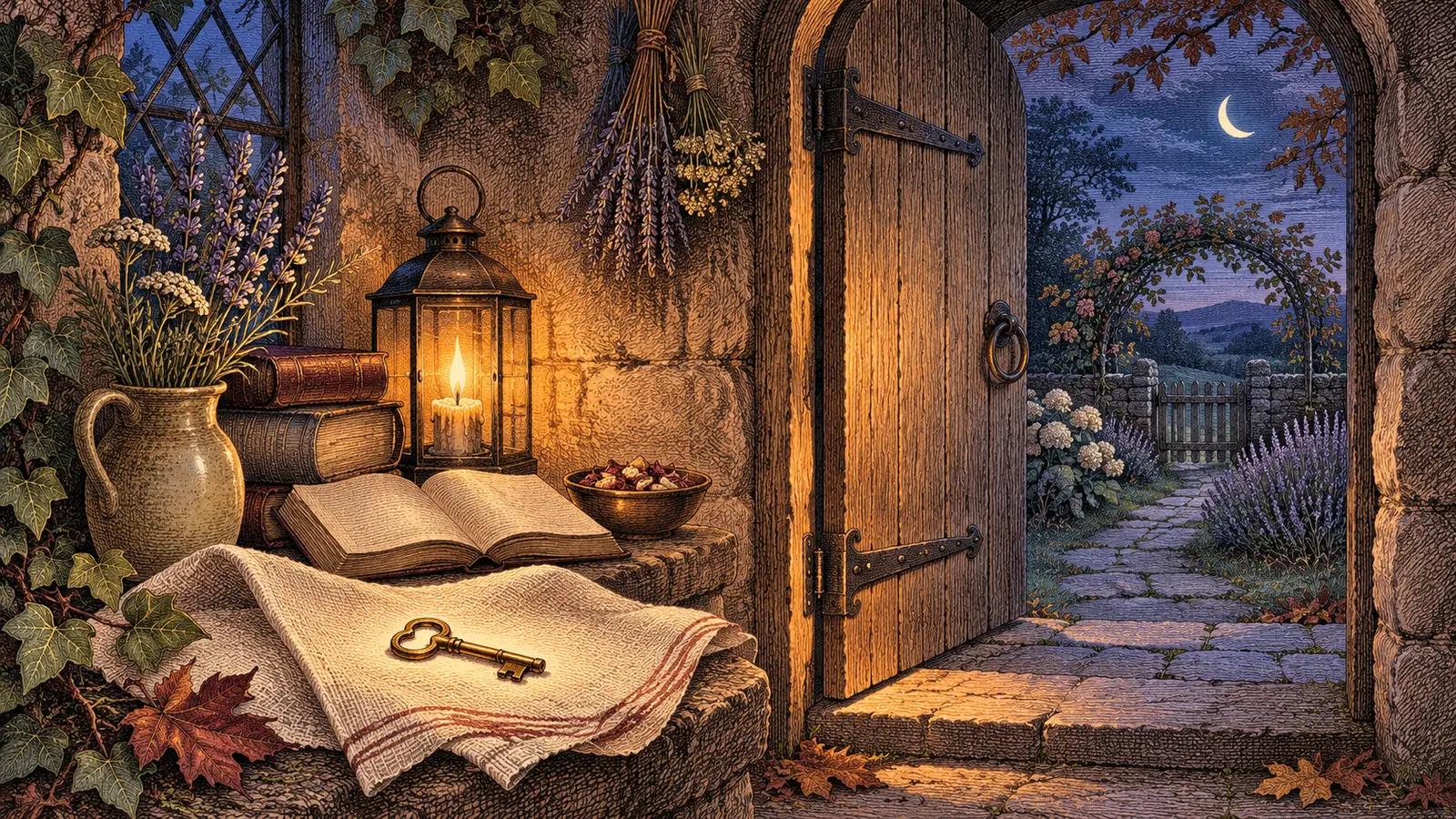 Folk and household magicCharms, knots, bottles, thresholds and words of healing
 DivinationCards, lots, stars, sand, birds and dreams
 Dream, vision and contemplative practiceAttention, imagination and the inner senses
 Modern experimental magicBelief, sigils, servitors and results
 Seasonal and festival practiceThe solstices, the equinoxes and the old quarter days
The kinds overlap
These are ways of sorting, not walls. A Renaissance talisman is natural magic in its metal, planetary in its timing and ceremonial in its consecration. A cunning man might own a grimoire; a dream can be a divination; a seasonal festival can be kept with herbs. A kind of practice, a period of history and a living religion are three different ways of arranging the same material, and the courses use all three.
| KIND | WORKS WITH | ITS QUESTION | OLD SOURCES |
|---|---|---|---|
| Natural magic | Plants, stones, metals and animals | What hidden virtue has this thing, and what is it like? | Agrippa, Book I (1533); della Porta, Natural Magick (1558) |
| Planetary and lunar magic | The seven planets, the Moon's phases and mansions, and the hours they rule | When is the right time, and what belongs to it? | The Picatrix; Ficino, De vita (1489); Agrippa, Book II |
| Ceremonial and grimoire magic | Ritual, divine names, circles, seals and the books that prescribe them | How is the operation to be done, and by what authority? | The Key of Solomon; the Lemegeton; the Golden Dawn |
| Folk and household magic | Charms, knots, bottles, thresholds and words of healing | How do I protect this house, heal this hurt, find what was lost? | Charm books, trial records and objects found in old houses |
| Divination | Cards, lots, stars, sand, birds and dreams | What is the shape of this question, and where is it heading? | Ancient lot oracles; medieval geomancy; the tarot since 1781 |
| Dream, vision and contemplative practice | Attention, imagination and the inner senses | What can be seen, or learned, with the eyes closed? | Temple incubation; the Greek Magical Papyri; John Dee's séances; the Golden Dawn |
| Modern experimental magic | Belief, sigils, servitors and results | Does it work for me, and how would I know? | Austin Osman Spare (1913); the Illuminates of Thanateros (1978) |
| Seasonal and festival practice | The solstices, the equinoxes and the old quarter days | What does this time of year ask of me? | The Gaelic quarter feasts; the modern Wheel of the Year (1950s) |
Natural magic
For Renaissance writers natural magic was the respectable end of the art: knowing the hidden virtues of natural things, such as the lodestone's pull on iron or a herb's power in the body, and joining like to like. Agrippa made it the first of his three books, and Giambattista della Porta's Natural Magick (1558) mixed it freely with what we would now call chemistry, optics and cookery.
Modern herbal and crystal practice, sometimes called green magic, is its descendant, though many of its correspondences come from later lists, such as Culpeper's herbal of 1652 or nineteenth-century tables, rather than from the Renaissance books. Asking where a correspondence came from is the first skill of this kind of magic.
Planetary and lunar magic
The old sky had seven wandering lights, from the Moon to Saturn, and each was thought to pour its own quality into the world. Planetary magic chooses the hour, the metal, the colour, the scent and the figure that share a planet's nature, and makes talismans when that planet is strong. Its great handbook is the Picatrix, written in Arabic in al-Andalus and translated at the court of Alfonso X of Castile.
Lunar magic is partly the same learned art, with the Moon's twenty-eight mansions, and partly a folk one: sowing, cutting and beginning things as the Moon waxes and wanes.
Ceremonial and grimoire magic
Learned ritual magic runs from the necromancers' manuals of the Middle Ages, through the Solomonic books that tell the magician how to purify himself, consecrate his tools, draw the circle and call angels or spirits by the names of God, to the Hermetic Order of the Golden Dawn, founded in 1888, which rebuilt it into a graded course of training.
Its first lesson is usually the least dramatic: a daily banishing that marks out a clean space. Its second is to read the books themselves, which differ from manuscript to manuscript more than their modern editions admit.
Folk and household magic
The magic of the house and the village was done by ordinary people and by local specialists, the cunning folk, who healed, found stolen goods and undid witchcraft for a fee. Those who practised it rarely wrote it down, so it is known from charm books, court records, collectors' notebooks and the things left in walls, under floors and up chimneys: shoes, bottles, marks scratched beside doorways.
It is regional, not one tradition, and the courses keep its places apart: English cunning folk, Pennsylvania powwow, African American hoodoo and the charms of many languages.
Divination
Divination is not one technique but a family: casting lots, watching birds, reading the stars, marking sand into the figures of geomancy, laying out cards. The tarot was invented in northern Italy in the early fifteenth century as a card game, and was first claimed as a book of ancient wisdom in 1781.
What the methods share is a way of turning a question into a pattern to be read. The courses teach each method with its own history, and ask you to keep a record of what came true and what did not.
Dream, vision and contemplative practice
Some magic happens almost entirely inside: meditation, visualisation, dream incubation, gazing into water, crystal or a dark mirror, and the guided visions the Golden Dawn called pathworking. The sick slept in Greek temples to receive healing dreams; the magical papyri of Roman Egypt give rites for dream oracles by lamplight; John Dee wrote down what Edward Kelley saw in his stone.
Its tools are the most ordinary in the curriculum, a timer, a bowl, a notebook, and its discipline is honesty: recording what was perceived before deciding what it meant.
Two practices turn the inner senses towards places the body is not. Remote viewing, a name first used in New York in 1971, asks a viewer to describe a hidden target, and judges the description blind against decoys; the United States paid for such work from 1972 until 1995, when an outside review found more hits than chance in the laboratory but no report that had ever guided an operation. Astral projection is the far older hope of leaving the body altogether: Greek and Roman writers told of travelling souls, the Golden Dawn and Aleister Crowley taught methods for it, and psychologists study it as the out-of-body experience, which one person in ten or more reports.
Modern experimental magic
Chaos magic, which emerged in England in the 1970s, treats belief itself as a tool: take up a system, use it and put it down. It took the sigil from Austin Osman Spare, whose Book of Pleasure appeared in 1913, and its founders, Peter Carroll and Ray Sherwin, who started the Illuminates of Thanateros in 1978, wanted magic tested like an experiment.
It is the newest kind of magic in the curriculum, and the most explicit about method: state the aim, do the working, record the result.
Seasonal and festival practice
Every farming people marked the turning year. Four Gaelic feasts, Samhain, Imbolc, Beltane and Lughnasadh, divided it in Ireland and Scotland, and British pagans of the 1950s joined them to the solstices and equinoxes to make the eightfold Wheel of the Year that many witches and pagans keep today.
For many people it is the easiest place to begin: notice the season, mark the day, and let the year itself set the rhythm of practice.
Before any of them
Every kind of magic rests on the same few skills: a steady mind, a clear intention, a record kept honestly, and good sense about safety. The Foundations course teaches them, and its first lessons are free.
- What Is Magic? · 12 min · free
- Ethics, Safety & a Sound Mind · 8 min · free
- Learning by Heart · 14 min · free
- The Magical Journal · 10 min
Religions in their own right
Some courses are not about a kind of magic at all, but about a religion or a culture in its own terms. Their rites belong to communities with their own teachers, initiations and authority; the courses describe them with their sources and in their own setting, and do not offer them as spells to borrow.
Living traditions: Haitian Vodou · Santería (Lucumí) · Candomblé · Tantra and Tibet · Onmyōdō · Jewish Magic · Wicca
The ancient and historical world: Egyptian Magic · Mesopotamian Magic · The Magical Papyri & Theurgy · Norse Magic · Celtic Magic & Druidry · Finnish and Slavic Magic
This week in magic
One email each Thursday morning: the Moon and the festivals of the week, the angel of each day, and a free lesson to read. Free, and you can stop it in one click.
We use your address only for this email. See our privacy policy.
The old books behind this page
All on the Grimoire Shelf, with notes on which edition to read:
- Three Books of Occult Philosophy
- Natural Magick
- Picatrix (Ghāyat al-Ḥakīm)
- The Lesser Key of Solomon: Goetia
- The Discoverie of Witchcraft
- The Complete Herbal (The English Physitian)
The illustrations on this page: original AI illustration created for Occultum. They are scenes, not historical pictures.