IN THIS LESSON
Egyptian Magic · Lesson 3 of 7
Amulets — Life, Stability and the Sound Eye
The ankh, the djed, the tyet, the wedjat, the scarab, the was and the shen; the spells of the Book of the Dead said over amulets of gold and red jasper; the heart scarab; and Bes, Taweret and the ivory wands that drew a ring of protectors round mother and child.
No people has left more amulets than the Egyptians. They were worn by the living from birth, and by the Late Period the wrappings of a mummy could hold dozens, each in its proper place. Flinders Petrie's Amulets (1914) sorted them into hundreds of types, and Carol Andrews' Amulets of Ancient Egypt (1994) is the guide to read today.
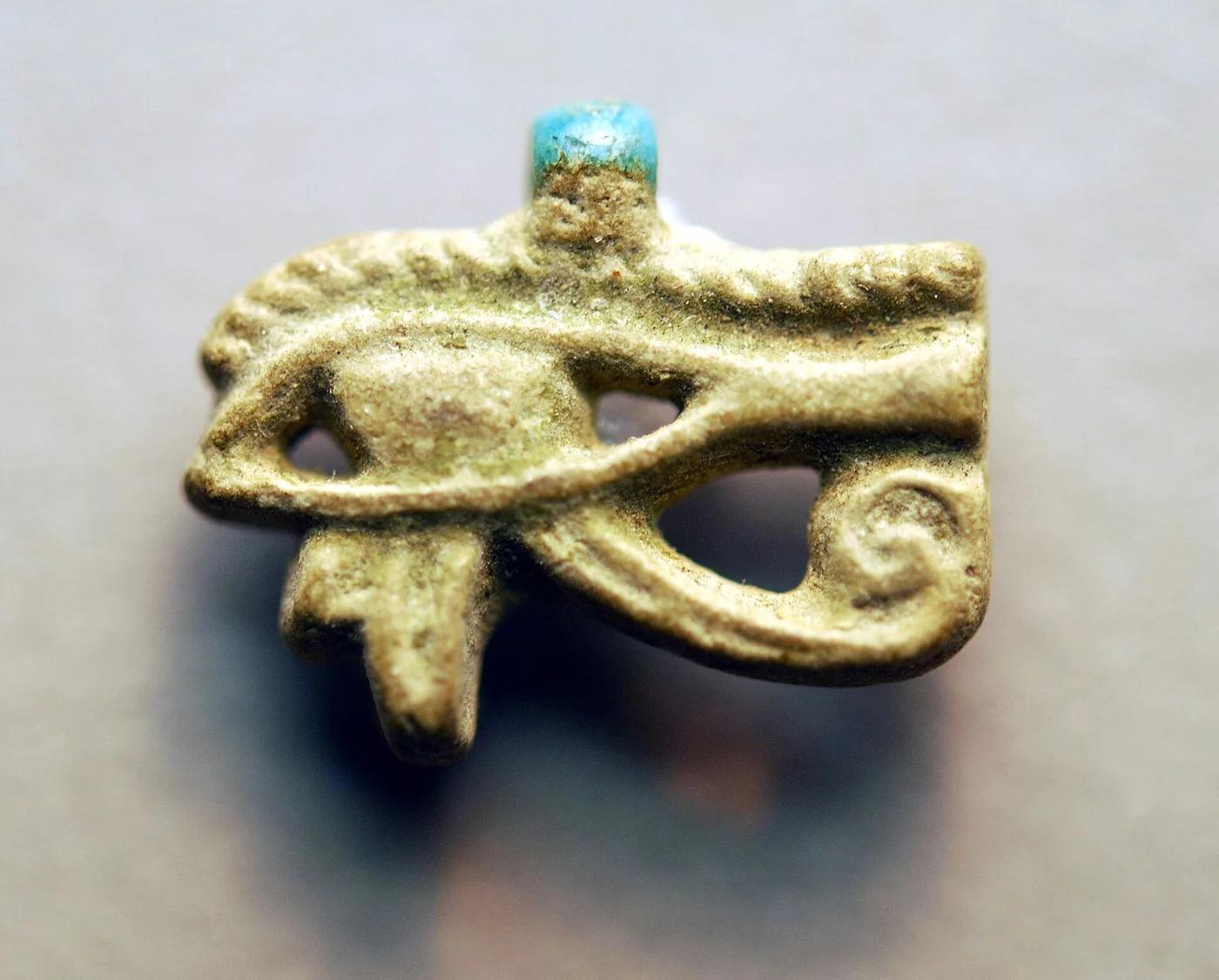
What an amulet was
The Egyptians had several words for them, and the words say what they were for: sa and meket, protection; wedja, well-being. An amulet worked in three ways at once.
- By its shape. An image was a presence: the eye of Horus was the healed eye, the scarab was the rising sun.
- By its material and colour. Green stone and green faience meant new growth and life; red, in carnelian and red jasper, meant blood and energy, for good or ill; the deep blue of lapis lazuli, brought all the way from Afghanistan, was the night sky. Faience, a glazed quartz paste, let workshops press out cheap amulets in moulds by the thousand; gold was for those who could pay.
- By the words said over it. Many spells end with a rubric: words to be spoken over an amulet of such a stone, strung on a linen thread, often knotted, and put at the throat. The words woke it.
Lesson 3 of 7 · 15 min
READ THE SOURCE
- Egyptian Magic · E. A. Wallis Budge, 1899 · free in the Reading Room