The French Grimoires · Lesson 5 of 7
The Grimorium Verum and the Black Pullet
Two more books from the pedlar's pack — the "True Grimoire" of Alibeck the Egyptian, "Memphis, 1517", with its three chiefs of hell, its spirits Surgat who opens all locks and Morail who makes things invisible, and its virgin parchment; and the Black Pullet of "Egypt, 740", the soldier's tale of the old man in the pyramid, his talismanic rings and the hen that lays golden eggs.
The Grand Grimoire had rivals. Two of them sold almost as well and are still in print: one a dry, practical manual of conjuring, the other a little romance of talismans and treasure that barely pretends to be anything but a story.
The True Grimoire
The Grimorium Verum, "the True Grimoire", announces itself as the most approved keys of Solomon the Hebrew rabbi, "translated from the Hebrew by Plaingière, a Dominican Jesuit" — two religious orders at once — and "published by Alibeck the Egyptian" at Memphis in 1517. As Waite put it, "the work belongs to the middle of the eighteenth century, and Memphis is Rome". It survives in French and Italian editions, and in a French manuscript that MacGregor Mathers saw when he edited the Key of Solomon in 1889 and left out as not belonging to the Key proper. The modern edition is Joseph Peterson's (2007).
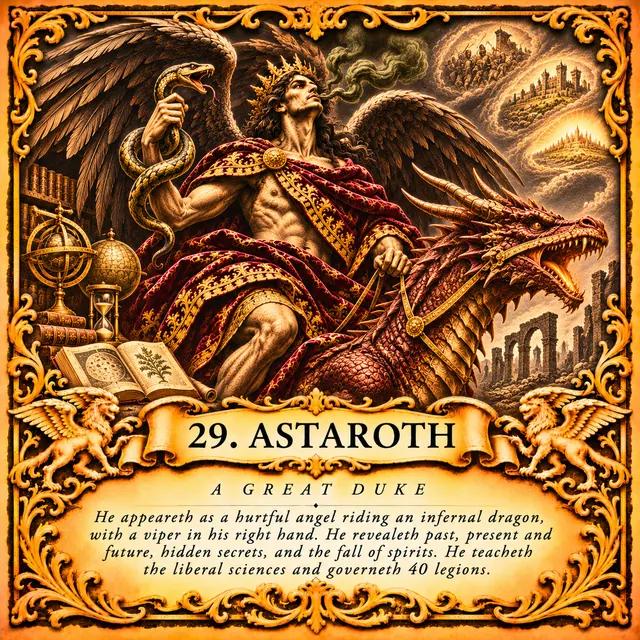
It is the most businesslike of the grimoires. It distinguishes three chief spirits — Lucifer, Beelzebuth and Astaroth — each with his lieutenants, and gives their characters, the signs that call them. Then come the lesser spirits, each with a single power and a single character, as in Waite's translation:
- Surgat "opens all locks".
- Morail "has the power to make everything in the world invisible".
- Frimost has power over wives and maids; Khil makes great earthquakes; Mersilde carries a man anywhere in an instant; Clistheret makes day or night at pleasure; Frucissière brings the dead to life; Guland causes every kind of disease.
Most of the book is about preparation: the operator's fasts and baths; the knife, the lancet and the burin, made on the day and in the hour of Jupiter; the virgin parchment made from the skin of an animal that has never bred; the inks, the incenses, the pentacles; and the conjurations, many lifted from the Key of Solomon (The Solomonic Grimoires). Like its sources, it insists that the spirits be "contented on their part", given a gift, and dismissed politely. It is a ceremonial magician's book in a pedlar's binding.
Lesson 5 of 7 · 15 min
READ THE SOURCE
- The Book of Ceremonial Magic · Arthur Edward Waite, 1911 · free in the Reading Room