IN THIS LESSON
Haitian Vodou · Lesson 3 of 7
Bois Caïman and the Revolution
The ceremony said to have begun the only successful revolt of enslaved people in history. The night of August 1791 at Bois Caïman, Dutty Boukman and the manbo Cécile Fatiman, the pig and the oath; what the earliest sources say, and what historians make of them; the uprising and the long war to independence in 1804; Vodou among the fighters; and how the story was later twisted into a 'pact with the devil'.
The Haitian Revolution (1791–1804) is the only revolt of enslaved people in history that founded a free nation. Haitian tradition says it began with a Vodou ceremony in a forest in the north. That ceremony has been honoured as the founding moment of the nation, doubted by historians, and slandered by foreigners. This lesson looks at what we know.
The night at Bois Caïman
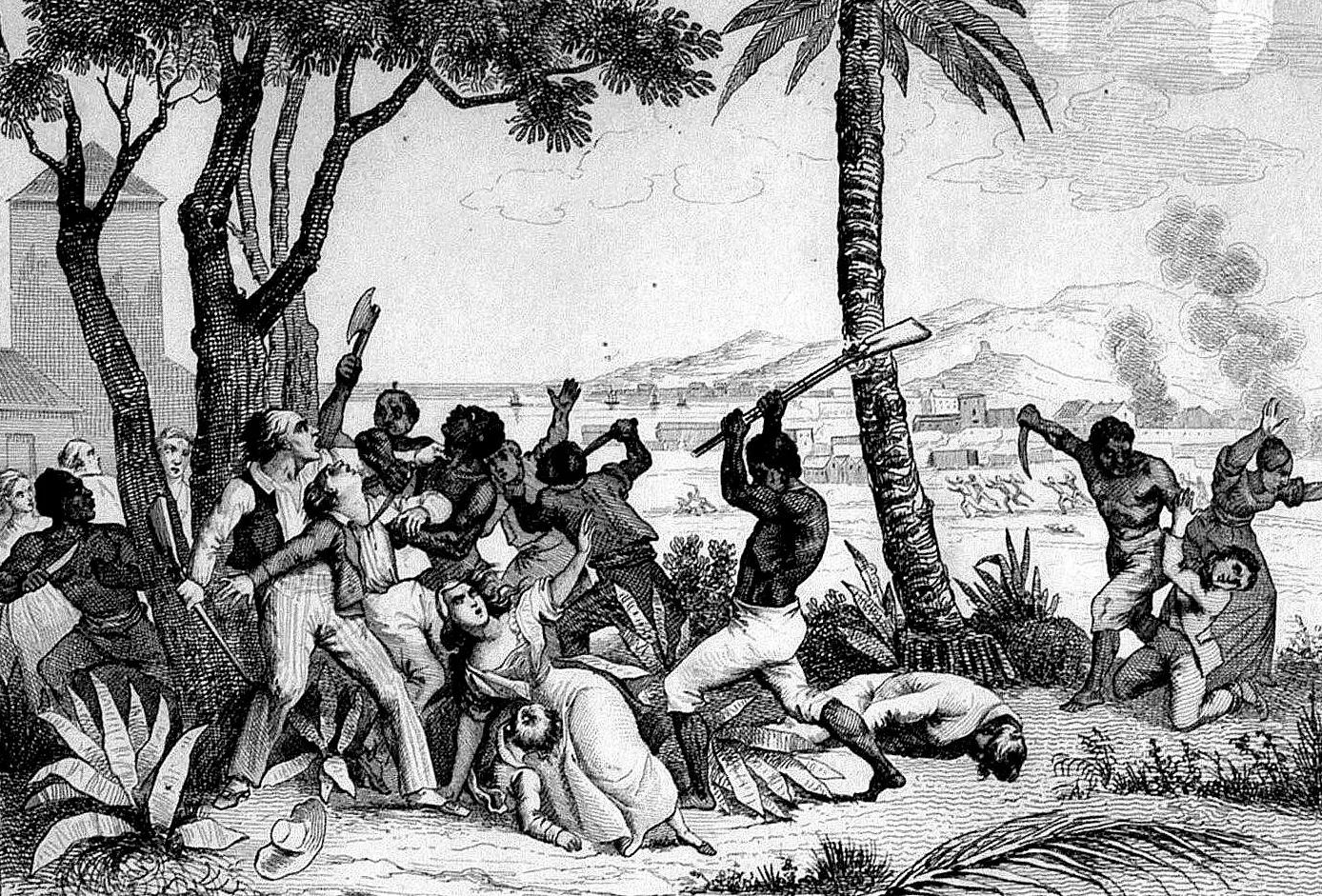
According to tradition, on the night of 14 August 1791, during a storm, representatives of the enslaved from the plantations of the northern plain gathered secretly in a forest called Bois Caïman, near Cap-Français. The ceremony was led by Dutty Boukman, an oungan and a slave driver (commandeur), and Cécile Fatiman, a manbo. A black pig was sacrificed, and those present drank or were marked with its blood and swore to fight. Boukman, it is said, spoke a prayer: the god of the whites demands crime, but our god asks only good works; throw away the image of the whites' god, who thirsts for our tears, and listen to the voice of liberty that speaks in all our hearts.
A week later, on the night of 22 August, the enslaved of the northern plain rose. Within days plantations across the plain were in flames. Boukman was killed in battle that November, and the French displayed his head at Cap-Français.
Lesson 3 of 7 · 16 min