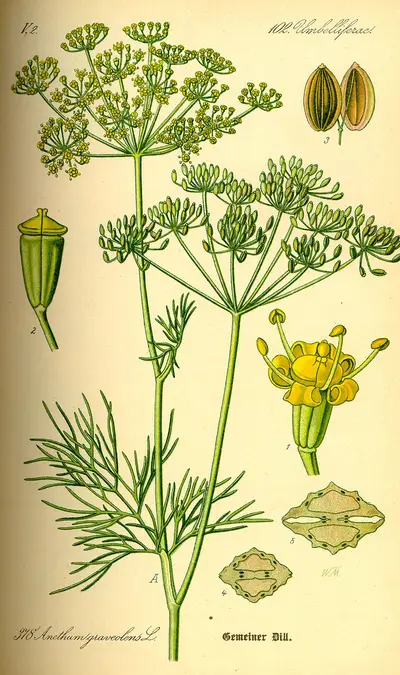
Dill
Anethum graveolens · ☿ Mercury (Culpeper) · Fire
Hung over doors and cradles against witchcraft.
More ▾Less ▴
An old rhyme: 'Vervain and dill / Hinder witches of their will.'

- Parts used
- Leaves and seeds
- Season
- Jun–Aug
- Good for
- Protection, Love
A herbarium of 82 magical plants and trees and 24 fungi — rulers, seasons, folklore and clear safety warnings — with a blend maker for sachets, incense, oils and washes, when to gather each plant, the festivals that use it, and your own herb cabinet with the blends it can make. Two pictures open the herbarium: the gatherer's year, a wheel of what is in season each month with the festivals on its rim, and Culpeper's garden, seven planetary beds whose leaves show how safe each herb is. Grind a sachet or incense blend yourself in a mortar, working the pestle round until the leaves are powder, sunwise or against the sun as your aim asks.
mixer19 lessons explain the ideas behind this tool.
Safety first. This is a guide to magical lore and external, symbolic use — sachets, altars, incense and charms. It is not a foraging guide or medical advice. Never eat or drink a wild plant or fungus because of anything here: many are poisonous, some deadly ones look like edible ones, and herbs can interact with medicines and pregnancy.
Each month carries a leaf for every plant here that flowers or is gathered then in Britain. The eight festivals stand on the rim. Tap a month.
January · now
Green: kitchen-safe · gold: use with care · red: poisonous or deadly · violet: controlled. Tap a plant to find it below.
Culpeper's English Physitian (1652) gave nearly every herb a ruling planet. Here they grow in seven beds round a sundial, one for each planet, each leaf coloured by how safe the plant is. Tap a bed to show only its herbs.
☿ The bed of Mercury · 10
1 of them poisonous or deadly.
He matched herb to illness by sympathy, a herb of the planet that caused it, or by antipathy, a herb of the opposing planet. Lore only: not medical advice.

Anethum graveolens · ☿ Mercury (Culpeper) · Fire
Hung over doors and cradles against witchcraft.
An old rhyme: 'Vervain and dill / Hinder witches of their will.'


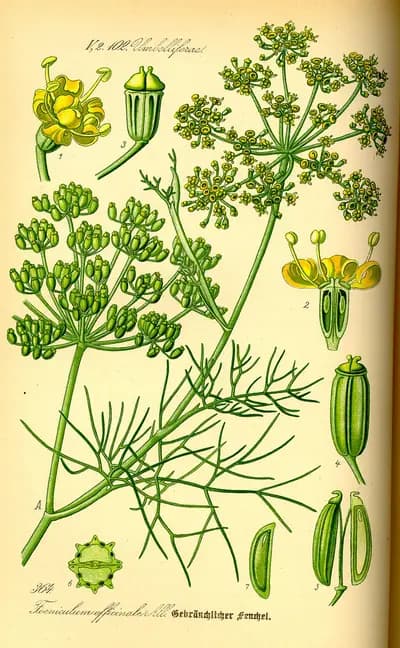
Foeniculum vulgare · ☿ Mercury (Culpeper) · Fire
Hung over doors at Midsummer; seeds in keyholes to keep out spirits.
Prometheus carried fire from heaven in a hollow stalk of giant fennel. It is one of the Nine Herbs.

Stones of Mercury →Mercury in Correspondences →
Caution: Concentrated oil is unsafe in pregnancy and for young children.

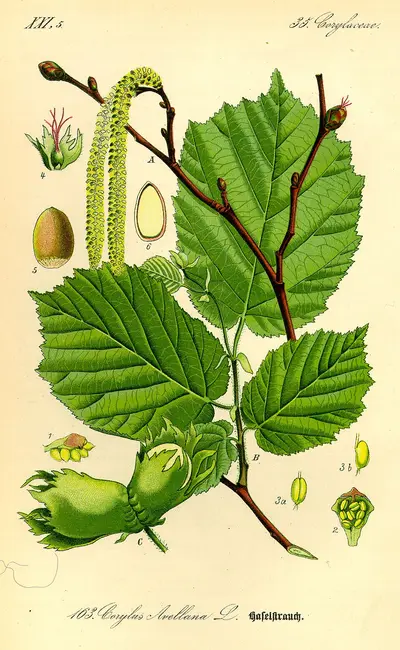
Corylus avellana · ☿ Mercury (Culpeper) · Air
Wands and divining rods; nuts for wisdom and Samhain love divination.
In Irish myth nine hazels drop their nuts into the well of wisdom, where the salmon of knowledge eats them.

Stones of Mercury →Mercury in Correspondences →
Caution: Nut allergy.

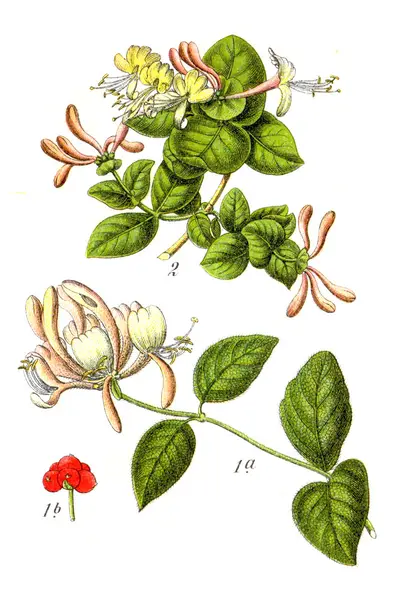
Lonicera periclymenum · ☿ Mercury (Culpeper) · Earth
Devotion and binding in love; sweet-scented altar flowers.
Also called woodbine for the way it binds trees. 'So doth the woodbine the sweet honeysuckle gently entwist' (A Midsummer Night's Dream).

Stones of Mercury →Mercury in Correspondences →
Caution: The red berries are poisonous.

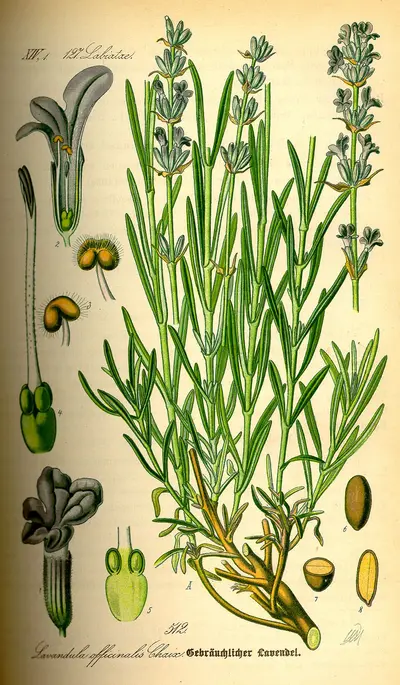
Lavandula angustifolia · ☿ Mercury (Culpeper) · Air
Sleep pillows, peace sachets and cleansing washes.
Its name may come from Latin lavare, 'to wash': Romans scented their baths with it.

Stones of Mercury →Mercury in Correspondences →
Caution: Don't swallow the essential oil.

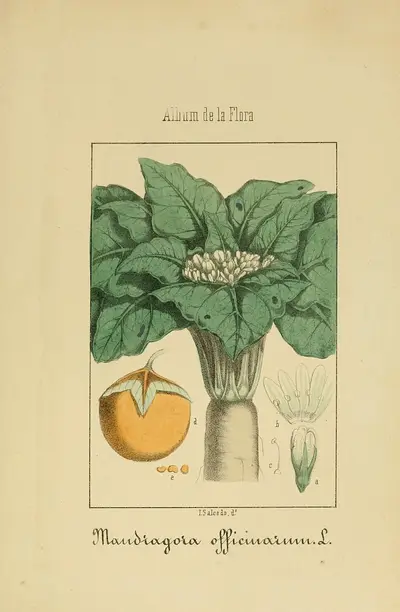
Mandragora officinarum · ☿ Mercury (later tradition) · Earth
Studied for its history; whole roots were kept as household charms.
Caution: Every part is poisonous. Not for any use but study.
Its forked root looks human. Legend said it shrieked when pulled up, killing whoever heard it, so a dog was tied to it to do the work. English 'mandrakes' sold by quacks were often carved bryony roots.


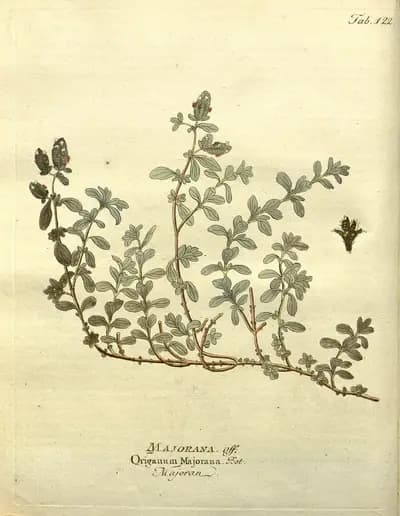
Origanum majorana · ☿ Mercury (Culpeper) · Air
Love, joy and comfort for the grieving.
Greek and Roman couples were crowned with marjoram, said to have been created by Aphrodite. Planted on a grave, it was a sign the dead were happy.


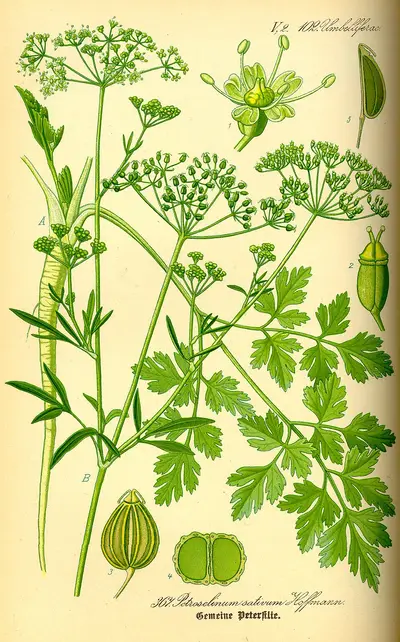
Petroselinum crispum · ☿ Mercury (Culpeper) · Air
Purification and protection; honouring the dead.
The Greeks linked it with death, so a dying person was 'in need of parsley'. Folklore says its slow seed goes to the Devil and back several times before it sprouts.

Stones of Mercury →Mercury in Correspondences →
Caution: Large amounts and the oil are unsafe in pregnancy.

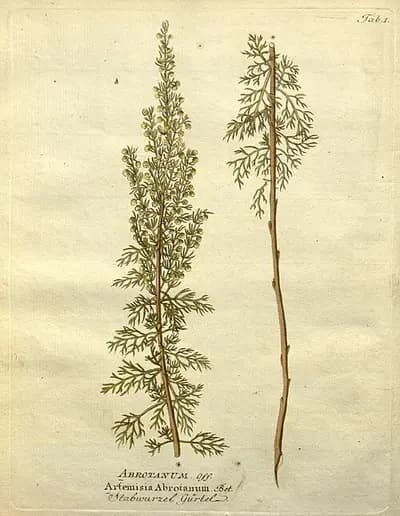
Artemisia abrotanum · ☿ Mercury (Culpeper) · Air
Love posies; hung in wardrobes against moths.
Called 'lad's love': young men put it in posies for sweethearts. The French call it garde-robe, 'guard the clothes'.

Stones of Mercury →Mercury in Correspondences →
Caution: Contains thujone; don't ingest it.

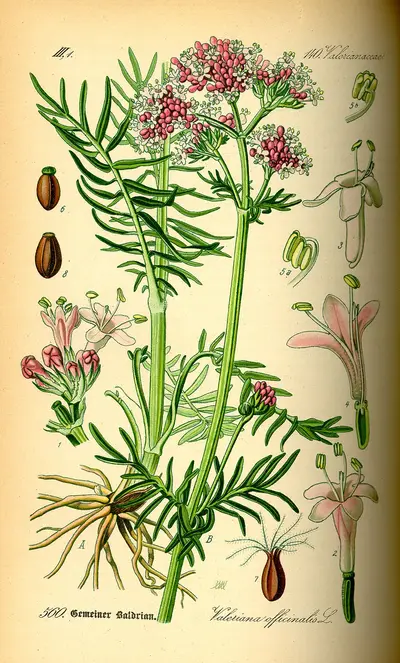
Valeriana officinalis · ☿ Mercury (Culpeper) · Water
Peace and sleep charms.
Its smell drives cats wild; one story says the Pied Piper used it as well as his pipe.

Stones of Mercury →Mercury in Correspondences →
Caution: A sedative: don't combine with alcohol, sleeping pills or driving.
Greek and Roman medicine
Every plant is hot or cold and moist or dry, in a degree from one to four.
Sources: “Pharmacy of the Greeks and Romans”, PMC; Cunnan, “Degrees of heat”
Planetary rulers marked Culpeper are from The English Physitian (1652); elements and the rest follow later tradition, which varies. Seasons are typical for Britain. See also Planetary Herbs and Herbal Preparations.
A few things to do with this tool, from a first try to a habit. Each one you tick counts as practice for the day, towards your streak and milestones.
Kept in this browser. Notes you send to the journal are kept there as well.