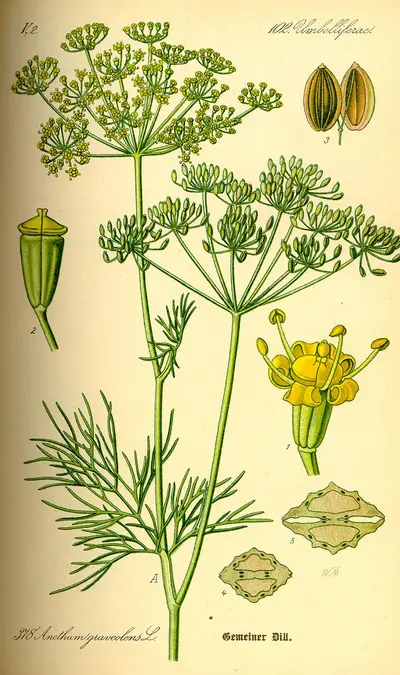
HERB · MERCURY (CULPEPER) · FIRE
Dill
Anethum graveolens
KITCHEN-SAFE
A common food or tea plant in normal amounts.
IN MAGIC
Hung over doors and cradles against witchcraft.
LORE
An old rhyme: 'Vervain and dill / Hinder witches of their will.'
WHAT IS USED
Leaves and seeds
WHEN
Flowers or is gathered in Britain from June to August.
USED FOR
ProtectionLove
In Culpeper's words
From his herbal of 1653, under “Dill”. Culpeper was a physician of his day, and many of his remedies are now known to be useless or dangerous: read him as history, never as medical advice.
PLACEIt is most usually sown in gardens and grounds for the purpose, and is also found wild in many places.
GOVERNMENT AND VIRTUESMercury has the dominion of this plant, and therefore to be sure it strengthens the brain. The Dill being boiled and drank, is good to ease swellings and pains; it also stays the belly and stomach from casting. The decoction therefore helps women that are troubled with the pains and windiness of the mother, if they sit therein. It stays the hiccough, being boiled in wine, and but smelled unto being tied in a cloth. The seed is of more use than the leaves, and more effectual to digest raw and vicious humours, and is used in medicines that serve to expel wind, and the pains proceeding therefrom. The seed, being roasted or fried, and used in oils or plasters, dissolve the imposthumes in the fundament; and dries up all moist ulcers, especially in the fundament; an oil made of Dill is effectual to warm or dissolve humours and imposthumes, and the pains, and to procure rest. The decoction of Dill, be it herb or seed (only if you boil the seed you must bruise it) in white wine, being drank, it is a gallant expeller of wind, and provoker of the terms.
Nicholas Culpeper, The Complete Herbal (London: Thomas Kelly, 1850), reprinting The English Physitian Enlarged (1653).