IN THIS LESSON
Candomblé · Lesson 2 of 7
From the Bight of Benin to Bahia
How the orixás came to Brazil. The largest slave trade in the Americas; Bahia's tobacco trade with the Bight of Benin and the Yoruba and Fon who arrived in the last decades; the Black Catholic brotherhoods and the sisters of the Good Death; the Malê revolt of 1835; the women who founded the Casa Branca near the church of Barroquinha; the Gantois and the Opô Afonjá; the travellers between Salvador and Lagos; and abolition in 1888.
Brazil received more enslaved Africans than any other country in the Americas, and Bahia was one of the great centres of that trade. Candomblé was born from the people who arrived there, in the city of Salvador, in the decades before abolition.
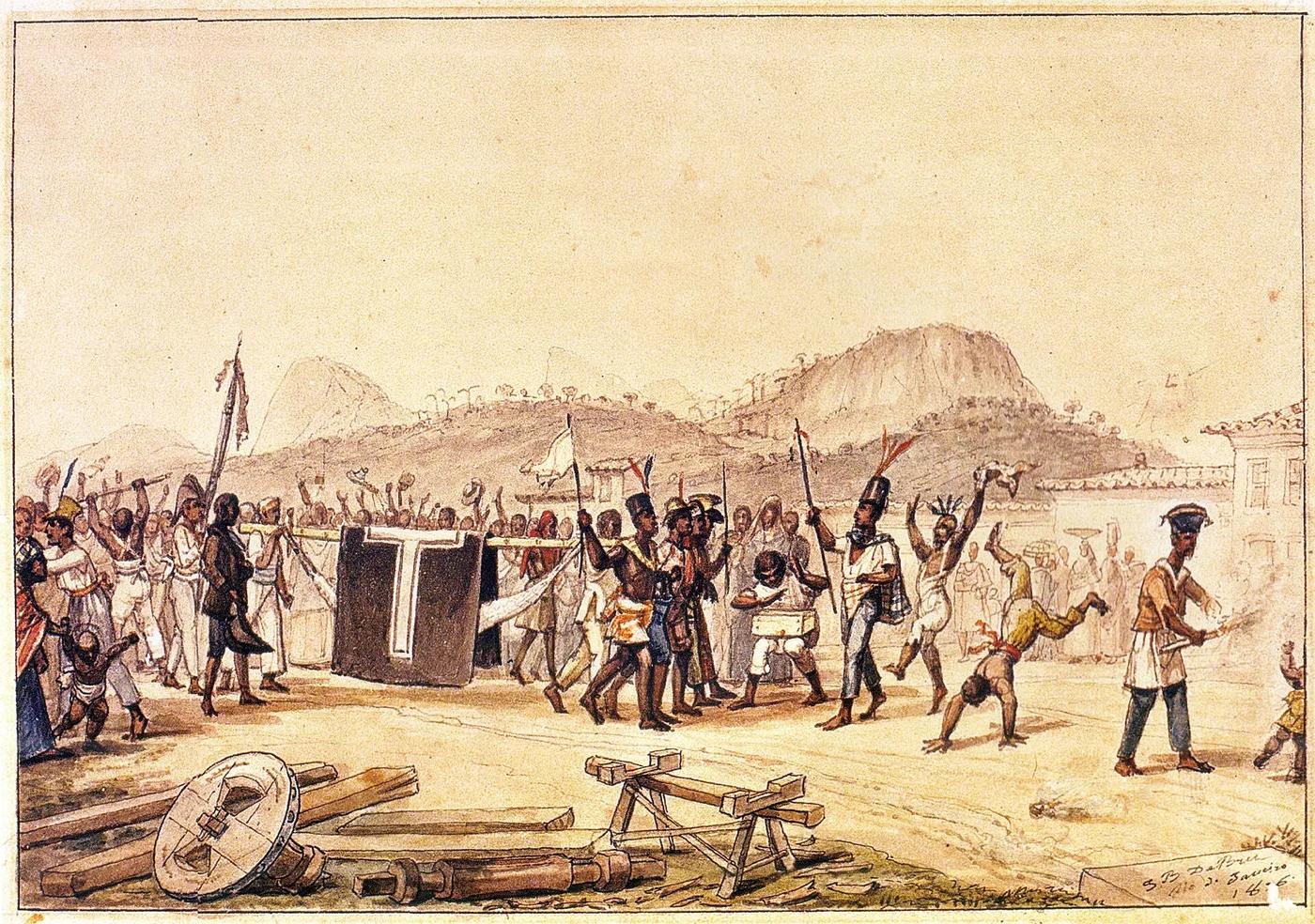
The trade
From the 1530s to 1850, when the trade was finally suppressed, around four million Africans, by some estimates more, were landed in Brazil to work on sugar plantations, in gold and diamond mines, on coffee farms and in cities. Many came from West Central Africa, the lands of Kongo and Angola, and their languages and spirits shaped Brazilian Portuguese, music and the Angola nation of Candomblé.
Bahia had a special link with one part of Africa: the Bight of Benin, the coast of Dahomey and Yorubaland. Bahian merchants traded tobacco there, soaked in molasses, which Africans prized, and bought captives in return. In the late eighteenth and early nineteenth centuries the wars of Dahomey and then the Yoruba wars that followed the collapse of Oyo (From Oyo to Havana) sent great numbers of people to the coast. Between about 1775 and 1850 most of the Africans landed in Salvador came from the Bight of Benin: Yoruba, called Nagô in Bahia, and Fon and their Ewe and Gbe-speaking neighbours, called Jeje. The photographer and scholar Pierre Verger traced this traffic in both directions, "ebb and flow", in a classic study of 1968.
Lesson 2 of 7 · 16 min