IN THIS LESSON
Santería (Lucumí) · Lesson 2 of 7
From Oyo to Havana
How the orishas crossed the Atlantic. The Yoruba city-states, Ile-Ife and the empire of Oyo, whose fall in the 1830s sent tens of thousands into slavery; Cuba's sugar boom after the Haitian Revolution and the illegal slave trade that fed it; the Lucumí; the cabildos de nación with their kings, queens and Epiphany dances; the first consecrated batá drums; the elders who built the Regla de Ocha; and abolition in 1886.
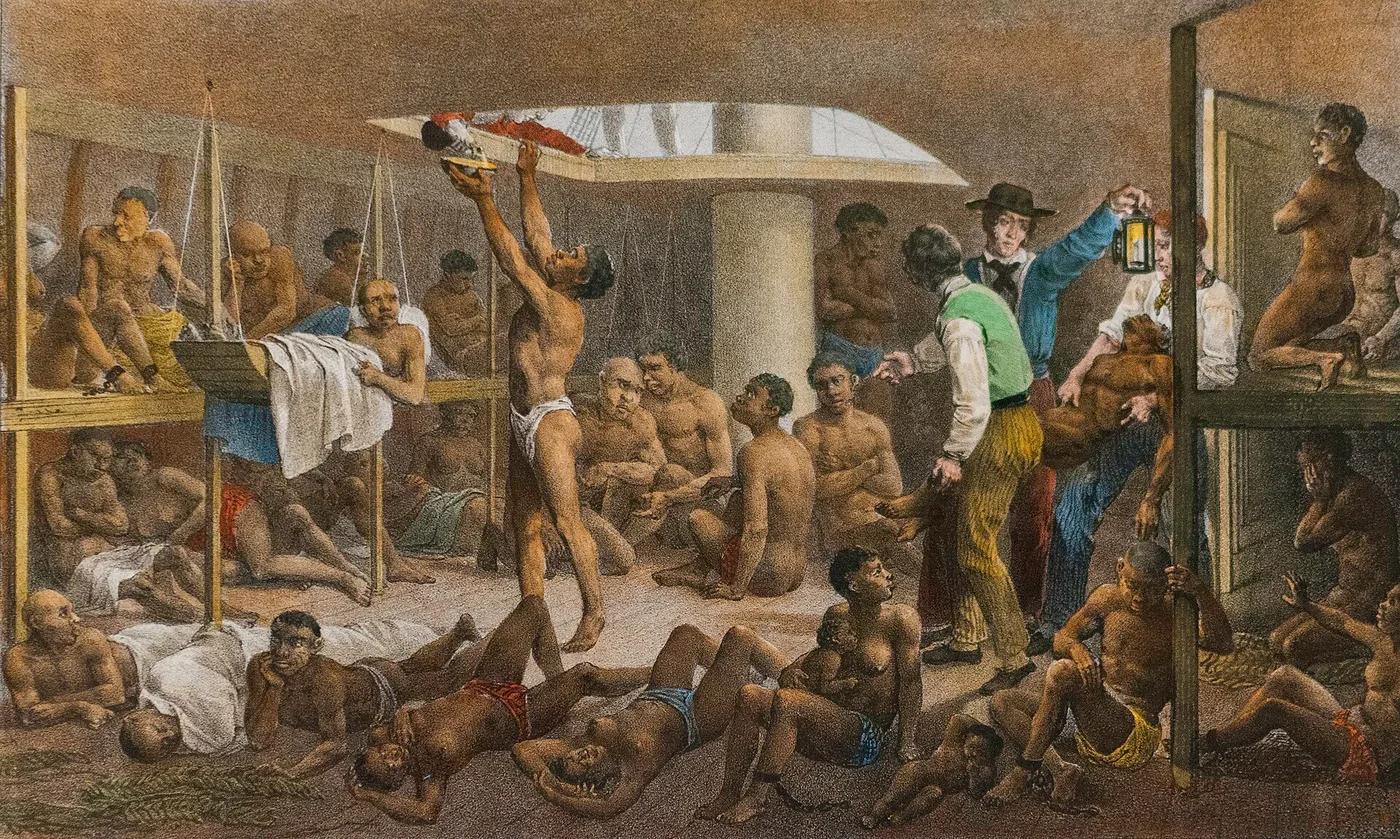
The orishas came to Cuba with people who had been captured, sold and shipped across the Atlantic. This lesson follows that journey and the institutions that let a religion survive it.
The Yoruba and their orishas
The Yoruba live in what is now south-western Nigeria and parts of Benin. Before the nineteenth century they were not one nation but many city-states and kingdoms, sharing a language, a sacred origin at Ile-Ife, where the gods were said to have come down to make the world, and a great many orishas. Most orishas were served locally: Changó above all in the kingdom of Oyo, Ochún at Oshogbo, Yemayá by the Ogun river. The empire of Oyo, the most powerful Yoruba state of the seventeenth and eighteenth centuries, carried some cults, like Changó's, far and wide.
In the early nineteenth century Oyo fell apart. Revolts and the jihad that created the Sokoto Caliphate in the north broke its power, and the old capital was abandoned around 1835. The Yoruba wars that followed lasted most of the century, and tens of thousands of Yoruba men, women and children were captured and sold to slavers on the coast. Many of them went to Brazil (From the Bight of Benin to Bahia) and to Cuba.
Lesson 2 of 7 · 16 min