IN THIS LESSON
Celtic Magic & Druidry · Lesson 6 of 7
Stukeley, Iolo and the Druid Revival
How the druids came back — Aubrey and Stukeley's druid temples at Stonehenge and Avebury, the Ancient Order of Druids of 1781 in a Soho tavern, Iolo Morganwg's Gorsedd on Primrose Hill in 1792 and his brilliant forgeries, the Awen and the Gorsedd prayer, the Eisteddfod, and Dr William Price, who cremated his son.
After the Romans the druids vanished for more than a thousand years, kept alive only in Caesar, Pliny and the Irish and Welsh tales. Then, from the seventeenth century, the British began to imagine them back: first as the builders of the stone circles, then as the wise patriarchs of a native religion, and at last as something people could become. This lesson follows that revival, much of it built on mistakes and some of it on forgery, and shows how it produced the Druidry practised today.
The temples that were not theirs
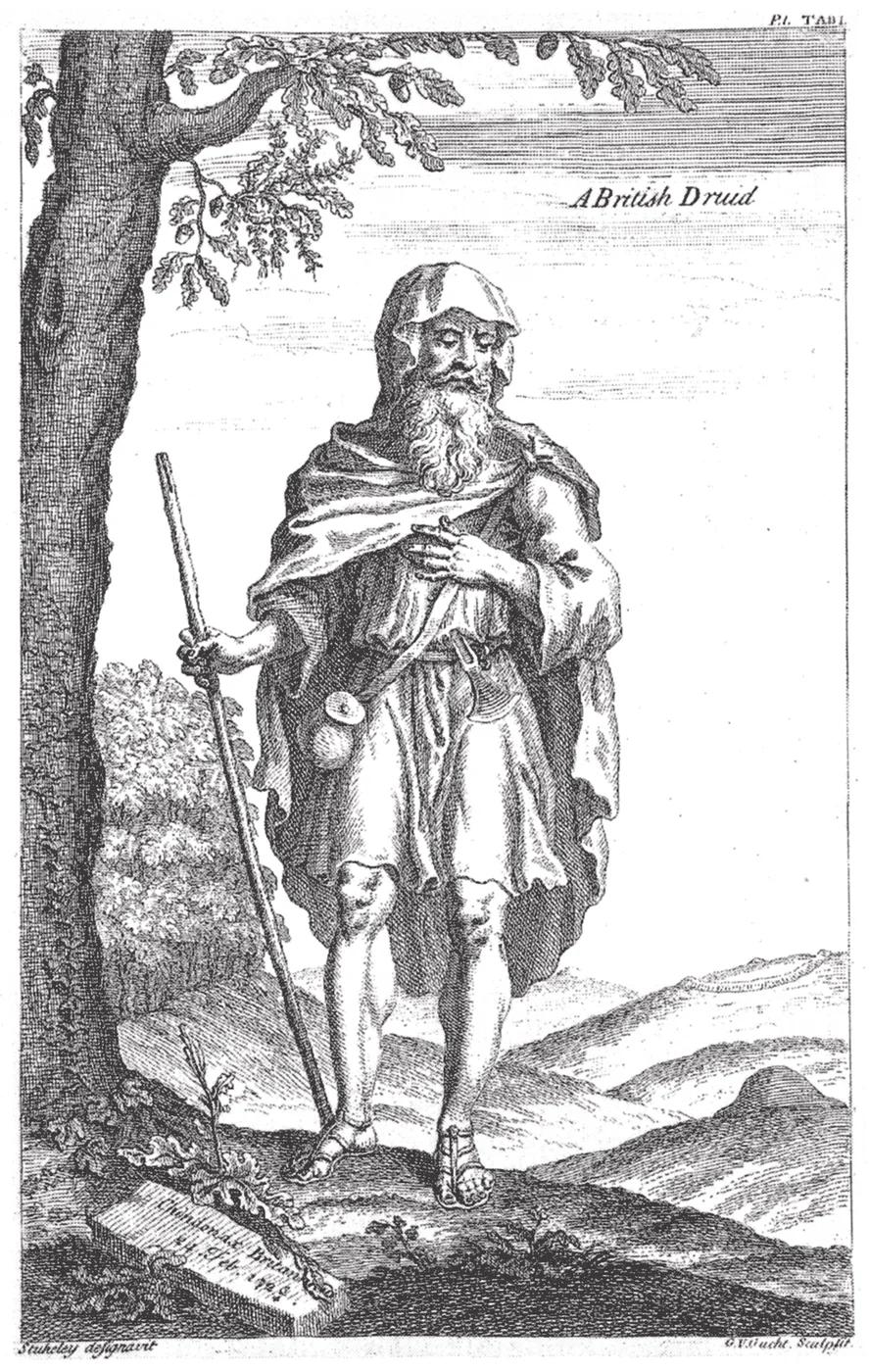
The antiquary John Aubrey, surveying Avebury and Stonehenge in the 1660s for his Monumenta Britannica, was the first to suggest that the great stone circles were temples of the druids, since they seemed older than the Romans and the druids were the only ancient British priests anyone knew of. The physician and clergyman William Stukeley made the idea famous. His Stonehenge: A Temple Restor'd to the British Druids (1740) and Abury: A Temple of the British Druids (1743) described the druids as heirs of the religion of Abraham, almost Christians before Christ, and Stukeley called himself by a druid name, Chyndonax.
Archaeology has since shown that Stonehenge and Avebury were built in the Neolithic and Bronze Age, from about 3000 to 1500 BCE, some two thousand years before any druid we know of. But the link between druids and the stones was made, and it has never been broken in the public mind.
Lesson 6 of 7 · 15 min