IN THIS LESSON
Egyptian Magic · Lesson 5 of 7
The Book of the Dead and the Weighing of the Heart
From the Pyramid Texts of Unas to the illustrated papyri of the New Kingdom; Lepsius's "Book of the Dead" and its real name; spell 125, the Hall of the Two Truths and the forty-two judges; Anubis, Thoth and Ammit at the balance; the shabti that works in your place; and the Opening of the Mouth.
The Egyptians wrote more magic for the dead than for the living, and it reached its fullest form in the papyri we call the Book of the Dead. It is not a bible or a book of prayers: it is a library of spells, and each papyrus a selection made for one person.
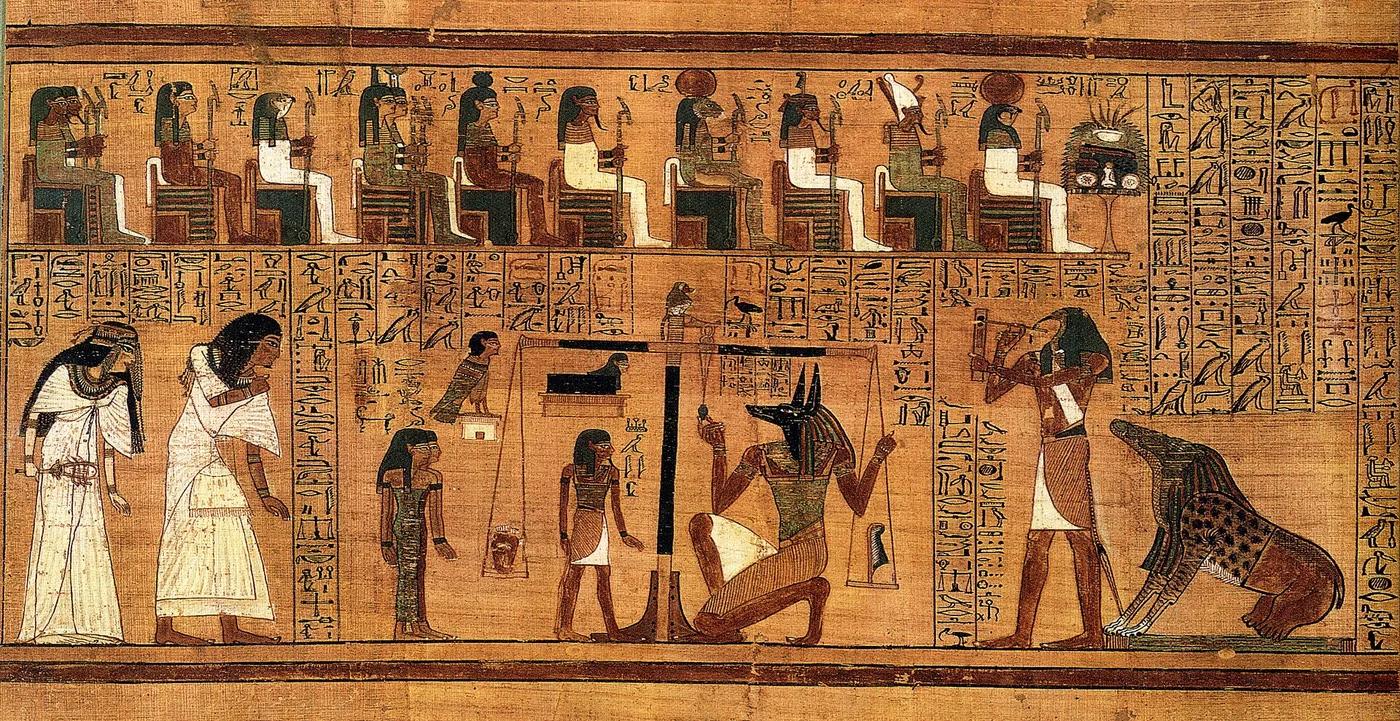
Three books in one long tradition
- The Pyramid Texts. Around 2350 BCE, the walls of the burial chamber of Unas, last king of the 5th Dynasty, were carved with spells to raise the dead king to the sky among the stars and the gods. Later kings, and then queens, had them too.
- The Coffin Texts. In the Middle Kingdom, officials and their families had spells painted inside their wooden coffins, many of them reworkings of the Pyramid Texts, others new.
- The Book of the Dead. From the start of the New Kingdom, about 1550 BCE, spells were written on rolls of papyrus, illustrated with coloured pictures called vignettes, and laid in the tomb. Some two hundred spells are known, though no papyrus has them all. Scribes kept ready-made rolls with spaces left for the buyer's name, while the rich had theirs made to order: the Papyrus of Ani, about 1250 BCE and some 24 metres long, was bought for the British Museum by Wallis Budge in 1888.
The Egyptian name was Spells for Going Forth by Day. The title Book of the Dead comes from the German Todtenbuch that Karl Richard Lepsius gave to his edition of a papyrus in Turin in 1842, when he also numbered the spells; the numbers are still used.
Lesson 5 of 7 · 16 min
READ THE SOURCE
- Egyptian Magic · E. A. Wallis Budge, 1899 · free in the Reading Room