Egyptian Magic · Lesson 6 of 7
Sothis, the Decans and the Lucky Days
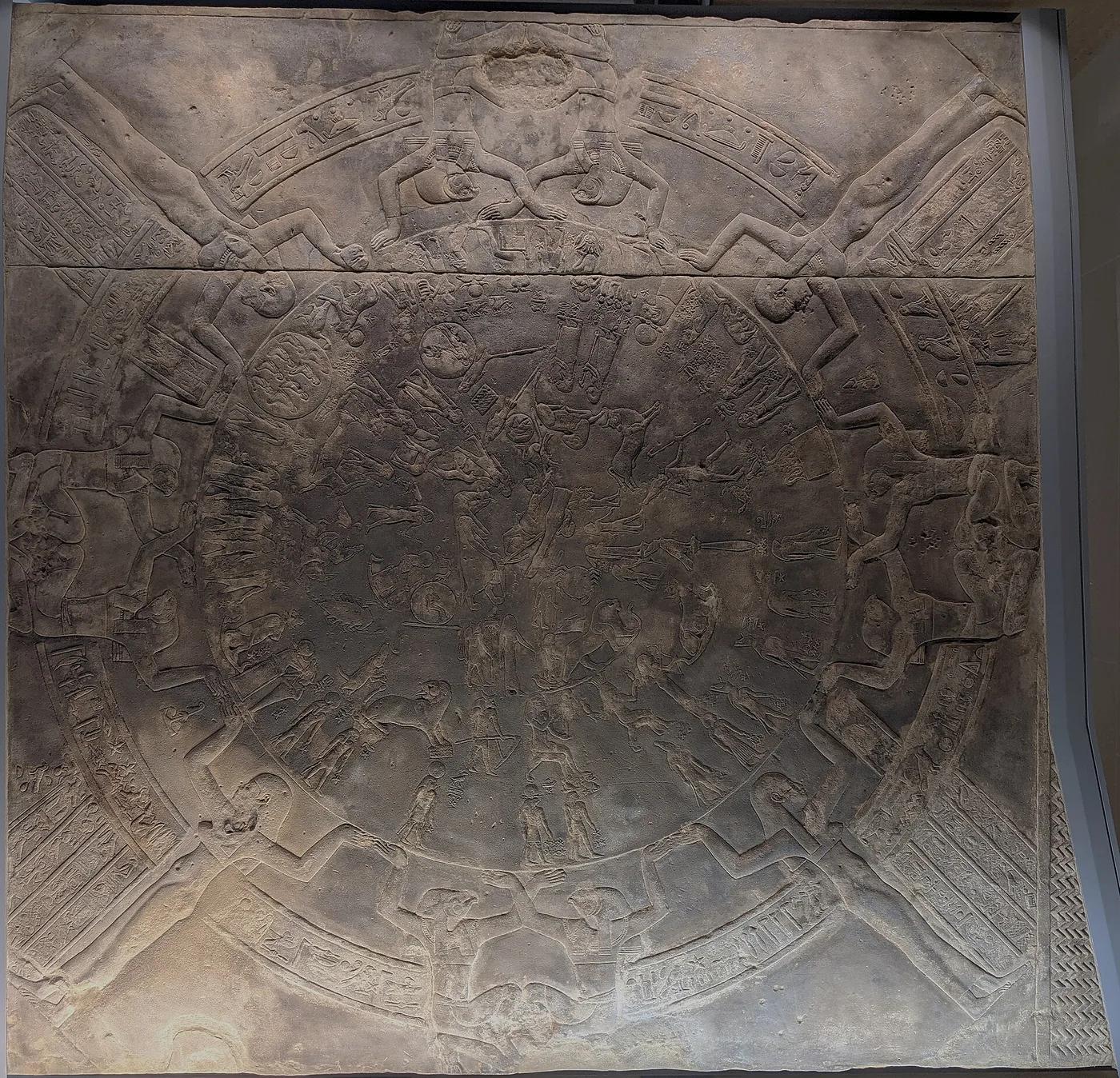
The Egyptian year of 365 days and the rising of Sirius before the flood; the thirty-six decans that told the hours of the night and passed into Greek astrology and the tarot; the Dendera zodiac; and the Cairo Calendar of lucky and unlucky days.
Egypt gave the world the 365-day year and the 24-hour day, and both came out of watching the stars. The same sky told the Egyptians when to work, when to rest and which days to fear.
The year and the Dog Star
The civil year had twelve months of thirty days, in three seasons of four months: Akhet, the flood; Peret, the growing; Shemu, the harvest. Five more days were added at the end, the days "upon the year", and Herodotus thought it the best calendar he knew. Those five days were the birthdays of Osiris, Horus, Seth, Isis and Nephthys: Plutarch tells how Thoth won them from the Moon at draughts, so that the sky goddess Nut, cursed to give birth on no day of the year, could bear her children.
The star that ruled it was Sopdet, the Greeks' Sothis, our Sirius, the brightest star in the sky. Each year it disappears in the Sun's glare for about seventy days and then, one summer morning, can be seen again for a moment in the east before dawn. That heliacal rising came close to the start of the Nile's flood, on which all of Egypt lived, and it was the ideal New Year. But a year of 365 days is a quarter of a day short, so the calendar slipped against the star by a day every four years, and came back to it only after some 1,460 years, the Sothic cycle. The Roman writer Censorinus records that the New Year and the star's rising fell together in 139 CE, which is one of the fixed points from which Egypt's history is dated. It may be no accident that embalming took seventy days, the time a star spent unseen.
Lesson 6 of 7 · 14 min