← The Curriculum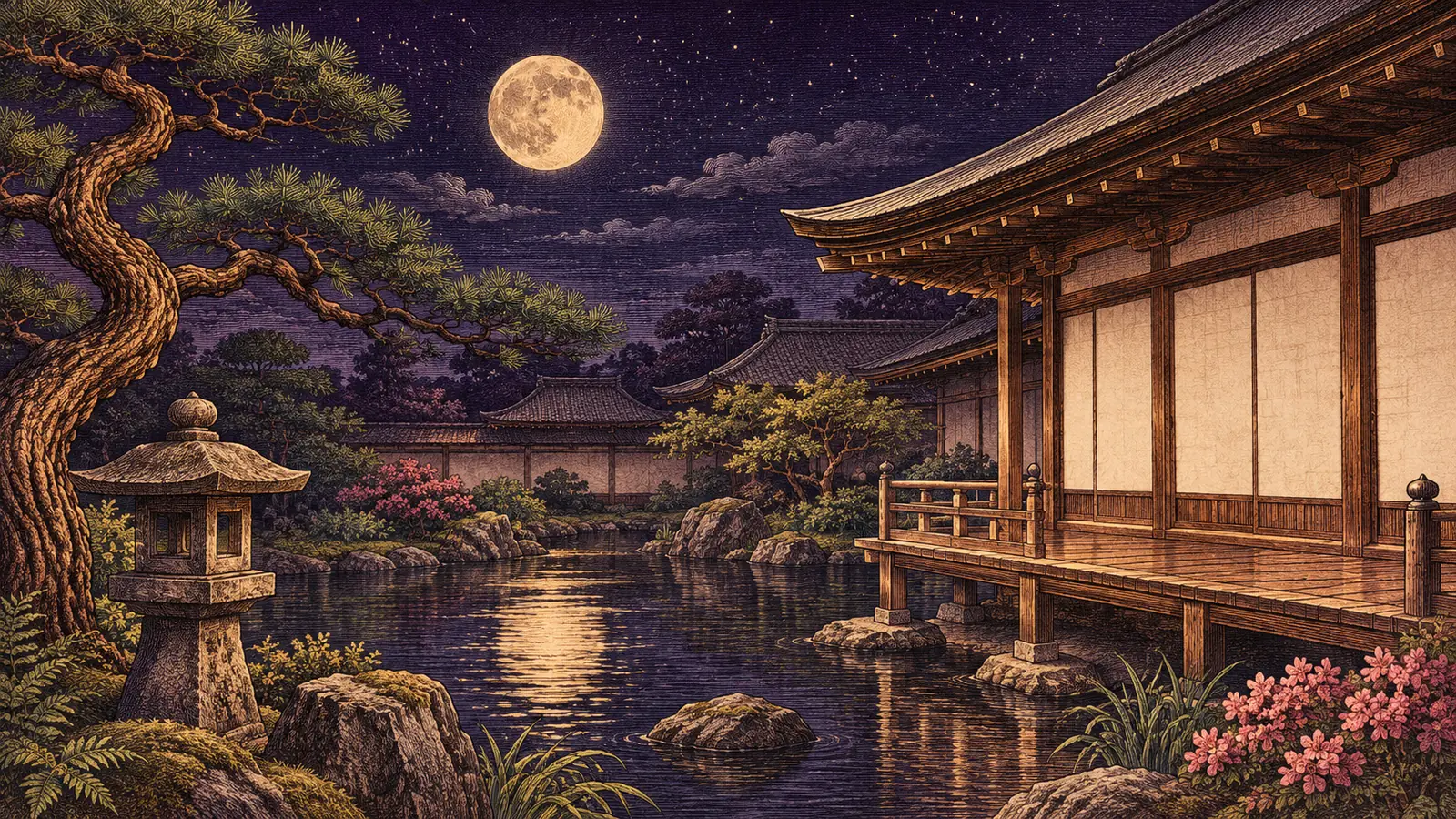
Original AI illustration created for Occultum: an imagined garden, not any particular palace.
Onmyōdō
Japan's way of yin and yang: divination, the calendar and the directions
The Japanese art of yin and yang and its practitioners, from the court bureau to the village: Chinese cosmology made into an office of state; the experts from Paekche, Emperor Tenmu's observatory and the Bureau of Yin and Yang with its divination, calendar, astronomy and water clock; Abe no Seimei in the diaries and in legend; days of abstinence, the gods of the directions, katatagae, the demon gate, Kōshin, the rokuyō and the fire-horse year; the rites of the lord of Mount Tai, the expulsion of demons, purification, curses and shikigami; the Tsuchimikado licence, Shibukawa Harumi's calendar and the Meiji abolition; and Izanagi-ryū and the modern onmyōji boom.
7 lessonsabout 2 hours of reading1 free
Not started yet
BY THE END YOU WILL
- Explain what onmyōdō was and how it differed from a religion
- Trace it from Paekche and Tenmu to the Bureau of Yin and Yang and its four sections
- Tell the history and the legend of Abe no Seimei apart
- Use the almanac's rules of days and directions, from katatagae to the rokuyō
- Describe the rites of protection and purification, and what shikigami were
- Follow onmyōdō from the Tsuchimikado licence to its abolition, survival and modern revival
WHERE NEXT
The end of this branch. See the map of the tracks for another.
The lessons
1. What Onmyōdō Is
The 'way of yin and yang' in Japan. Chinese cosmology made into a branch of government; the onmyōji as court technicians of divination, calendar, astronomy and time, and as ritual specialists of protection and purification; how onmyōdō lived beside Shinto and Buddhism; the gap between the sorcerer of novels and films and the official of the records; and what survives today, from the lucky direction of Setsubun to the six-day cycle printed on Japanese calendars.
15 minFree2. From the Continent to the Bureau
How the Chinese arts of time and fortune came to Japan, and how they were made into an office of state. The experts sent from Paekche in the sixth century; the monk Kwalleuk and his books in 602; Emperor Tenmu, the divining board and the first observatory; the Bureau of Yin and Yang under the codes of the eighth century, with its four sections and its students; the divining board of heaven and earth; the annotated calendar on which nobles kept their diaries; the water clock; and the Senmyō calendar that lasted eight centuries.
16 min◈3. Abe no Seimei
The most famous onmyōji, in the records and in legend. The Kamo and the Abe, and the division of the calendar from the stars; Seimei's late start and long career serving emperors and the regent Michinaga; the rain rite and the rites of long life the diaries record; the tales of the twelfth and thirteenth centuries, the boy who saw demons, the shikigami at the shutters, the curse buried in Michinaga's path and the rival Ashiya Dōman; the fox mother of the puppet stage; the five-pointed star; and the shrine built on his house in 1007.
16 min◈4. Days, Directions and Taboos
Living by the almanac. Days of abstinence and the tags that announced them; the directional gods: Ten'ichijin on his sixty-day circuit, Daishōgun who blocks a direction for three years, and the god of the year's good fortune; changing direction to dodge them, in the Tale of Genji and the Pillow Book; the demon gate in the north-east of Kyoto and Edo; the Kōshin nights kept awake against the three worms; the six-day rokuyō on today's calendars; and the fire-horse year, 1966 and 2026.
17 min◈5. Rites, Curses and Shikigami
What onmyōji did when the signs were bad. The rite of the lord of Mount Tai for the span of life, and the disciple who offered to die for his master; rites against epidemics at the four corners and four borders; the New Year's Eve expulsion of demons that became Setsubun; purification with paper dolls carried away by water; the magic steps; vengeful spirits and the Buddhist exorcists who fought them; curses with dolls and nails, and the laws against them; spells that end 'quickly, quickly, as the law commands'; and what the shikigami really were.
17 min◈6. The Tsuchimikado and the Calendar
From court office to national licence to abolition. Onmyōji in the service of the shoguns; the Abe become the Tsuchimikado and the Kamo line dies out; diviners in the villages and on the roads; the Tsuchimikado's control over the country's onmyōji in the Edo period, and their Shinto; Shibukawa Harumi and the first Japanese calendar of 1684; the almanacs sold to every household; and the Meiji state, which closed the Bureau in 1870, banned the Tsuchimikado's religion and adopted the Western calendar in 1873.
16 min◈7. Izanagi-ryū and the Onmyōji Boom
What survived the Meiji abolition, and what came back. The tayū of Izanagi-ryū in the mountains of Kōchi, with their chanted texts, cut-paper gods and spirits called shikiōji; the revived Tsuchimikado Shinto in Fukui; the onmyōji boom since the late 1980s, from Yumemakura Baku's novels to films, manga, a figure-skating programme and a mobile game; the pilgrims of the Seimei Shrine; the ehōmaki and the rokuyō in modern life; the fire-horse year of 2026; and how to tell living practice from entertainment.
15 min◈