IN THIS LESSON
Onmyōdō · Lesson 6 of 7
The Tsuchimikado and the Calendar
From court office to national licence to abolition. Onmyōji in the service of the shoguns; the Abe become the Tsuchimikado and the Kamo line dies out; diviners in the villages and on the roads; the Tsuchimikado's control over the country's onmyōji in the Edo period, and their Shinto; Shibukawa Harumi and the first Japanese calendar of 1684; the almanacs sold to every household; and the Meiji state, which closed the Bureau in 1870, banned the Tsuchimikado's religion and adopted the Western calendar in 1873.
After the Heian period the court lost its power to the warrior governments, and the onmyōji followed the power. At the same time their arts spread far beyond the court, until in the Edo period every village had its diviners and every household its almanac. Then, in a few years, the modern state swept the old system away.
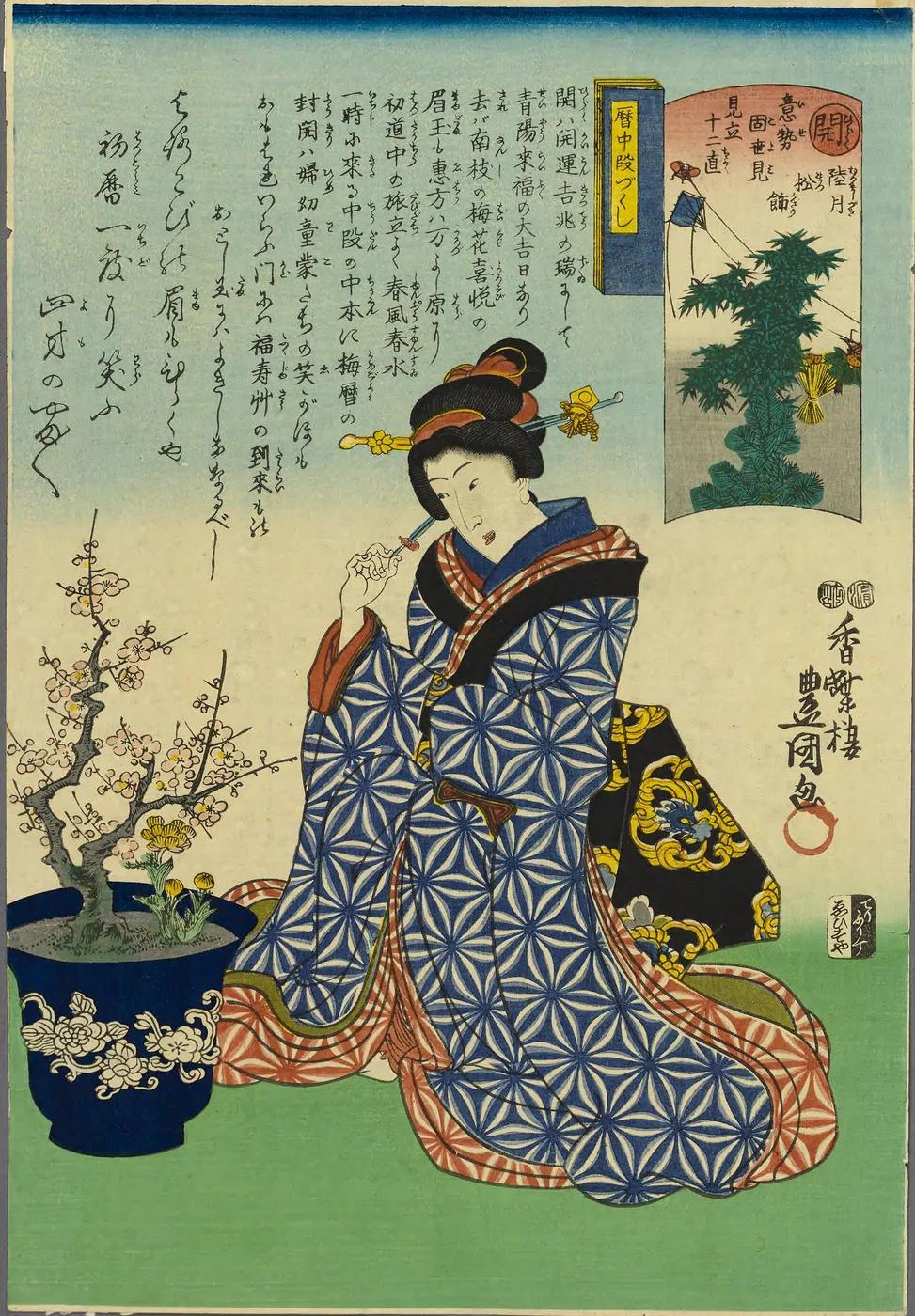
Serving the warriors
The Kamakura shogunate (1185–1333) kept onmyōji of its own, who divined, chose days and performed rites for the shoguns much as their Kyoto colleagues did for the court. The Ashikaga shoguns of the fourteenth and fifteenth centuries patronised the Abe, who now took the name Tsuchimikado from the street of their residence, and rose to high court rank. The Kamo line of the calendar died out in the sixteenth century, and the Tsuchimikado inherited its duties too. In the civil wars of that century the family withdrew for a time to its estate at Natashō in Wakasa, on the Sea of Japan.
Lesson 6 of 7 · 16 min