IN THIS LESSON
Spiritualism and Mediumship · Lesson 2 of 7
The Séance
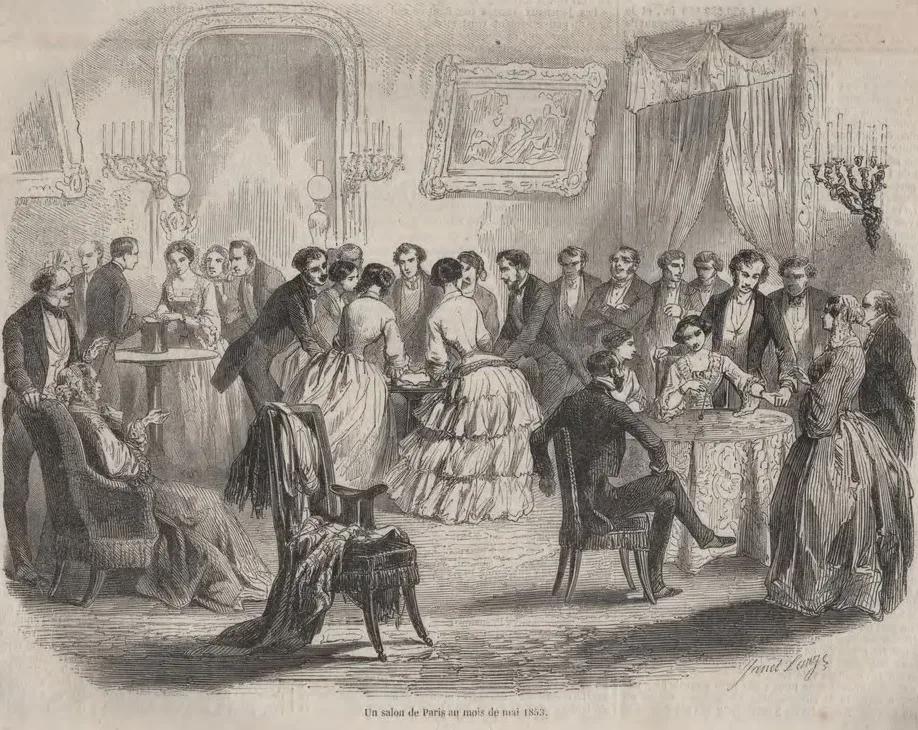
How a Victorian sitting worked. The circle of hands round the table, the hymn and the lowered gas, the medium and the spirit "control"; raps and the called-over alphabet; the table-turning craze of 1853 and Faraday's test of it; Victor Hugo's talking tables and Allan Kardec's Spiritism; the planchette, the Ouija board, automatic writing and the trance speakers.
The Fox sisters' raps were soon only one way among many of hearing from the dead. Within a few years the séance (French for "a sitting") had settled into a form that would be repeated in thousands of parlours, and the mediums had found a dozen means of communication. This lesson takes you into the room.
The circle
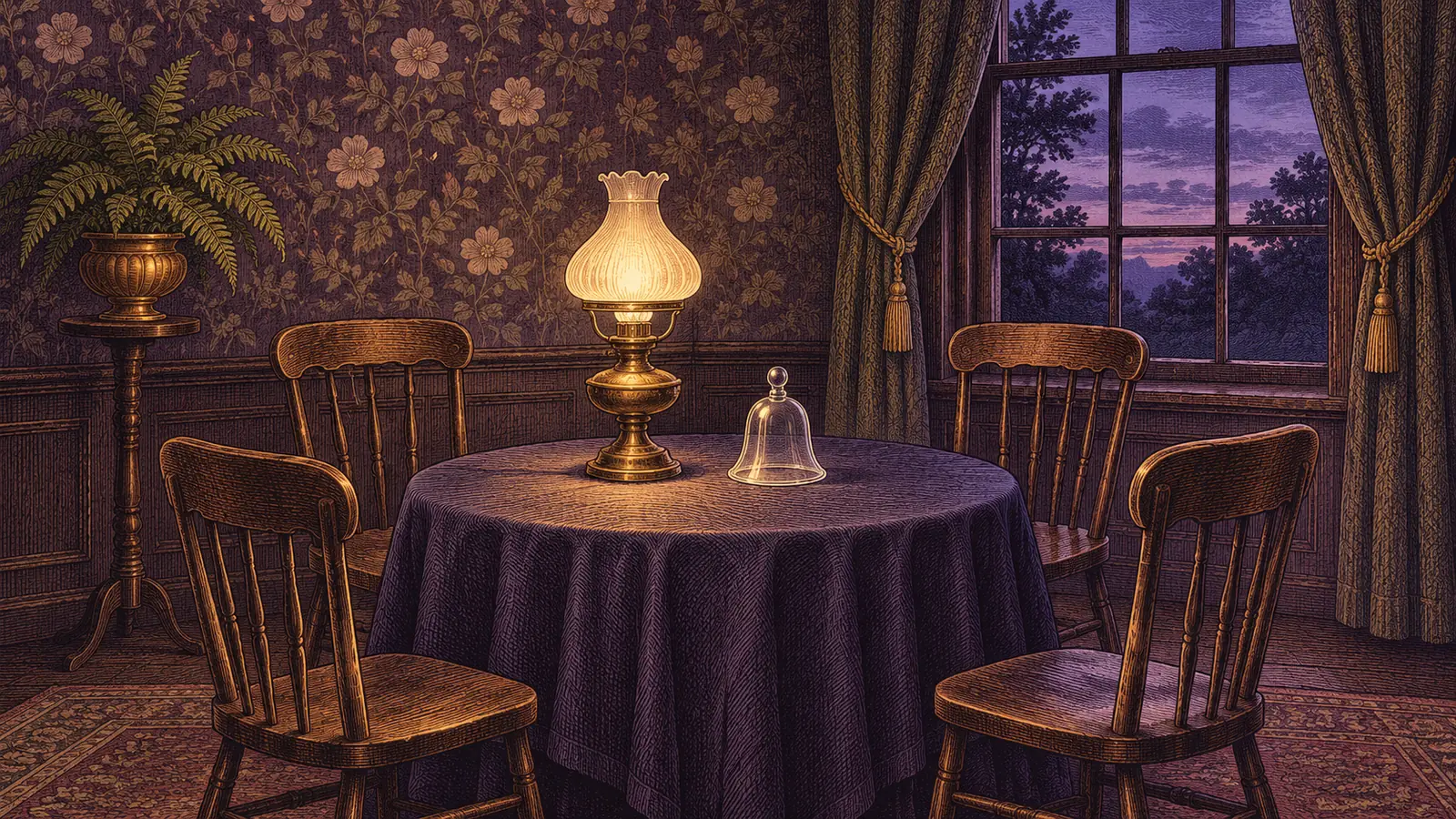
A Victorian séance was usually small: six to a dozen people round a table in a private house, often in the evening. Handbooks advised the same sitters every week, men and women placed alternately, since the sexes were thought to carry positive and negative currents like a battery. The sitters laid their hands flat on the table with little fingers touching, or held hands, to "complete the circle". They might open with a hymn or a prayer to bring the room into harmony. Then the gas was turned down. Some phenomena were said to come in full light, but most asked for dimness or darkness, and from the 1870s many circles used a red lamp, like the light of a photographer's darkroom.
The medium sat in the circle, or behind a curtain across a corner of the room in a cabinet, where the "power" was said to gather. Most mediums came to have a control or guide: a spirit who managed the sitting, spoke for the others and kept order on the far side. Some controls appeared for dozens of different mediums. "John King", said to have been the buccaneer Henry Morgan, spoke for the Davenport brothers in the 1850s and for Eusapia Palladino fifty years later. Others were children, doctors, sages from the East, or figures supposed to be Native Americans, cast in the stereotypes of the day.
Sitters were warned that doubt itself could spoil the conditions. A sceptic in the circle, a sudden light or a grab at a spirit might stop the phenomena, or even harm the medium. For believers this was common sense: a delicate force needed care. For critics it was the perfect excuse. The Séance Room is built round that disagreement.
Lesson 2 of 7 · 15 min
READ THE SOURCE
- Cock Lane and Common-Sense · Andrew Lang, 1894; this text from the second edition of 1896 · free in the Reading Room