IN THIS LESSON
Tantra and Tibet · Lesson 2 of 7
The Śaiva Age and the Goddess
How tantra grew in India. The skull-bearing ascetics of the cremation ground; the first Śaiva tantras and the 'Śaiva Age' of kings initiated by their gurus; the Kaula clans and the circular open-air temples of the sixty-four yoginīs; Abhinavagupta and the non-dual Śaivism of Kashmir; the Goddess as Kālī, at Kāmākhyā and in the songs of Bengal; Śrīvidyā and the Śrīcakra; and the long decline and partial return of the old traditions.
The tantric traditions of India grew from many roots, and scholars still argue about where they began. What is clear is that by the middle of the first millennium Śaiva tantras were being written, and that for some eight centuries afterwards tantric religion, Śaiva above all, was a power in Indian courts, cities and temples.
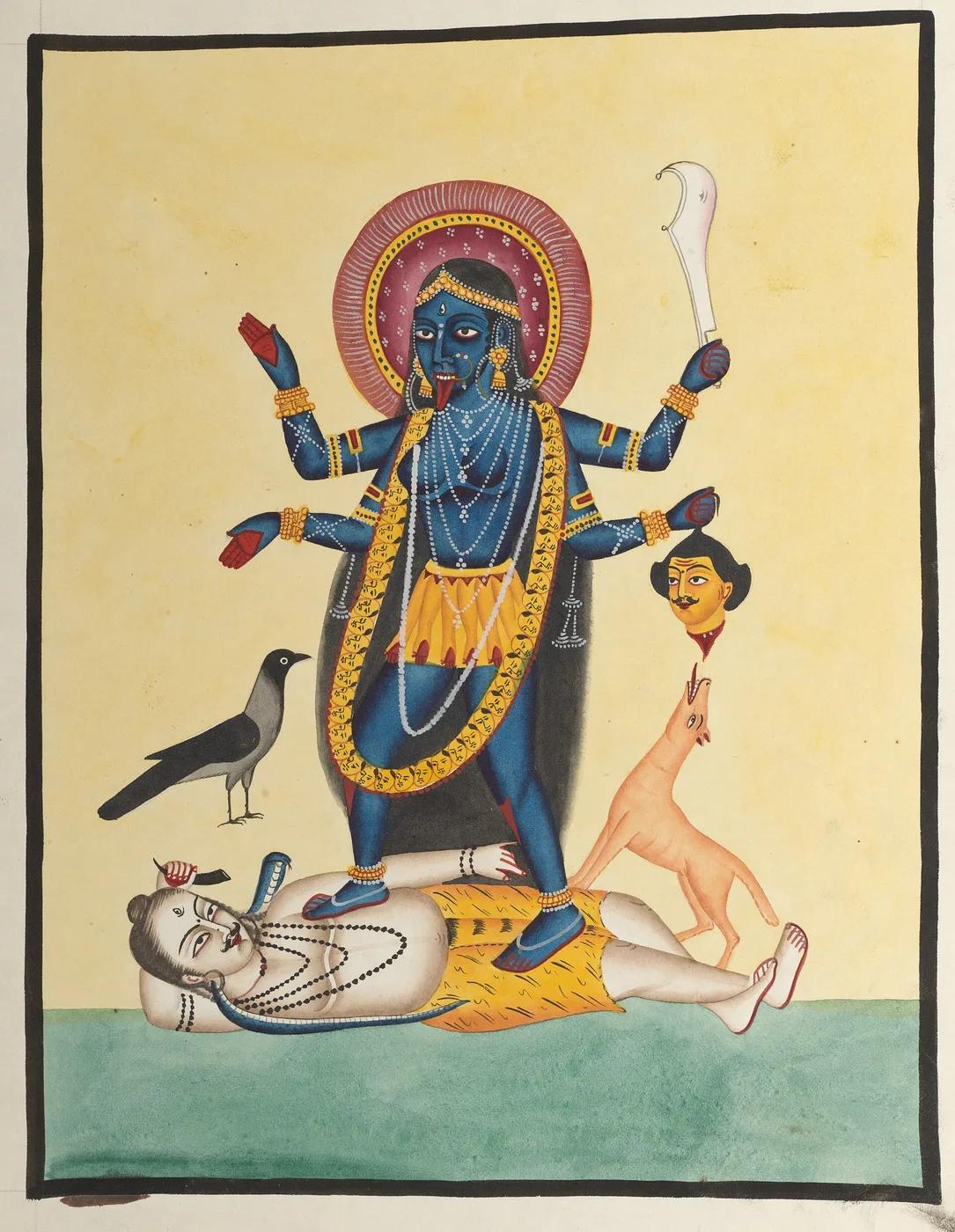
The cremation ground
Before the tantras there were the Śaiva ascetics of the Atimārga, the "path beyond", who sought liberation by vows that set them outside ordinary society. The Pāśupatas smeared themselves with ash, laughed, sang and behaved like madmen to court the contempt of others. The Kāpālikas, the "skull-men", went further. They lived in cremation grounds, carried a bowl made from a human skull and a staff topped with a skull, and imitated Bhairava, the fierce form of Śiva who wandered the world carrying the skull of the god Brahmā as penance for cutting off his head. Sanskrit plays of the seventh and eighth centuries show Kāpālikas as frightening figures, and the historian David Lorenzen has gathered what can be known of them.
Lesson 2 of 7 · 17 min