Editor, 1845
Introduction
Were not every chapter of the history of the human mind too precious an inheritance to be willingly relinquished,—for appalling as its contents may be, the value of the materials it may furnish may be inestimable,—we might otherwise be tempted to wish that the miserable record in which the excesses occasioned by the witch mania are narrated, could be struck out of its pages, and for ever cancelled. Most assuredly, he, who is content to take the fine exaggeration of the author of Hydriotaphia as a serious and literal truth, and who believes with him that "man is a glorious animal," must not go to the chapter which contains that record for his evidences and proofs. If he should be in search of materials for humiliation and abasement, he will find in the history of witchcraft in this country, from the beginning to the end of the seventeenth century, large and abundant materials, whether it affects the species or the individual. In truth, human nature is never seen in worse colours than in that dark and dismal review. Childhood, without any of its engaging properties, appears prematurely artful, wicked and cruel1; woman, the victim of a wretched and debasing bigotry, has yet so little of the feminine adjuncts, that the fountains of our sympathies are almost closed; and man, tyrannizing over the sex he was bound to protect, in its helpless destitution and enfeebled decline, seems lost in prejudice and superstition and only strong in oppression. If we turn from the common herd to the luminaries of the age, to those whose works are the landmarks of literature and science, the reference is equally disappointing;—
And silent as the moon
Hid in her vacant interlunar cave."
We find the illustrious author of the Novum Organon sacrificing to courtly suppleness his philosophic truth, and gravely prescribing the ingredients for a witches' ointment;2—Raleigh, adopting miserable fallacies at second hand, without subjecting them to the crucible of his acute and vigorous understanding;3—Selden, maintaining that crimes of the imagination may be punished with death;4—The detector of Vulgar Errors, and the most humane of physicians,5 giving the casting weight to the vacillating bigotry of Sir Matthew Hale;6—Hobbes, ever sceptical, penetrating and sagacious, yet here paralyzed, and shrinking from the subject as if afraid to touch it;7—The adventurous explorer, who sounded the depths and channels of the "Intellectual System" along all the "wide watered" shores of antiquity, running after witches to hear them recite the Common Prayer and the Creed, as a rational test of guilt or innocence;8—The gentle spirit of Dr. Henry More, girding on the armour of persecution, and rousing itself from a Platonic reverie on the Divine Life, to assume the hood and cloak of a familiar of the Inquisition;9—and the patient and enquiring Boyle, putting aside for a while his searches for the grand Magisterium, and listening, as if spell-bound, with gratified attention to stories of witches at Oxford, and devils at Mascon.10 Nor is it from a retrospect of our own intellectual progress only that we find how capricious, how intermitting, and how little privileged to great names or high intellects, or even to those minds which seemed to possess the very qualifications which would operate as conductors, are those illuminating gleams of common sense which shoot athwart the gloom, and aid a nation on its tardy progress to wisdom, humanity, and justice. If on the Continent there were, in the sixteenth century, two men from whom an exposure of the absurdities of the system of witchcraft might have been naturally and rationally expected, and who seem to stand out prominently from the crowd as predestined to that honourable and salutary office, those two men were John Bodin11 and Thomas Erastus.12 The former a lawyer—much exercised in the affairs of men—whose learning was not merely umbratic—whose knowledge of history was most philosophic and exact—of piercing penetration and sagacity—tolerant—liberal minded—disposed to take no proposition upon trust, but to canvass and examine every thing for himself, and who had large views of human nature and society—in fact, the Montesquieu of the seventeenth century. The other, a physician and professor, sage, judicious, incredulous,
"The scourge of impostors, the terror of quacks,"
who had routed irrecoverably empiricism in almost every shape—Paracelsians—Astrologers—Alchemists—Rosicrucians—and who weighed and scrutinized and analyzed every conclusion, from excommunication and the power of the keys to the revolutions of comets and their supposed effects on empires, and all with perfect fearlessness and intuitive insight into the weak points of an argument. Yet, alas! for human infirmity. Bodin threw all the weight of his reasoning and learning and vivacity into the scale of the witch supporters, and made the "hell-broth boil and bubble" anew, and increased the witch furor to downright fanaticism, by the publication of his Demo-manie,13 a work in which
Looks dark as ignorance, as frenzy wild;"
but which it is impossible to read without being carried along by the force of mind and power of combination which the author manifests, and without feeling how much ingenious sophistry can perform to mitigate and soften the most startling absurdity. His contemporary, Erastus, after all his victories on the field of imposition, was foiled by the subject of witchcraft at last. This was his pet delusion—almost the only one he cared not to discard—like the dying miser's last reserve:—
Not that, I cannot part with that,—and died."
In his treatise De Lamiis, published in 1577, 8vo., he defends nearly all the absurdities of the system with a blind zealotry which in such a man is very remarkable. His book has accordingly taken its place on the same shelf with Sprenger, Remigius, Delrio, and De Lancre, and deserves insertion only in a list which has yet to be made out, and which if accurately compiled would be a literary curiosity, of the singularly illogical books of singularly able reasoners. What was left unaccomplished by the centurions of literature came ultimately from the strangest of all possible quarters; from the study of an humble pupil of the transmuter of metals and prince of mountebanks and quacks—the expounder of Reuchlin de verbo mirifico, and lecturer in the unknown tongues—the follower of Trismegistus—cursed with bell, book and candle, by every decorous Church in Christendom—the redoubted Cornelius Agrippa; who, if he left not to his pupil Wierus the secret of the philosopher's stone or grand elixir, seems to have communicated a treasure perhaps equally rare and not less precious, the faculty of seeing a truth which should open the eyes of bigotry and dispel the mists of superstition, which should stop the persecution of the helpless and stay the call for blood. If, in working out this virgin ore from the mine, he has produced it mixed up with the scoria of his master's Occult Philosophy; if he gives us catalogues of devils and spirits, with whose acquaintance we could have dispensed; if he pleads the great truth faintly, inconsistently, imperfectly, and is evidently unaware of the strength of the weapons he wields; these deductions do not the less entitle Wierus to take his place in the first rank of Humanity's honoured professors, the true philanthropists and noble benefactors of mankind.
In our own country, it may be curious and edifying to observe to whom we mainly owe those enlightened views on this subject, which might have been expected to proceed in their natural channel, but for which we look in vain, from the "triumphant heirs of universal praise," the recognized guides of public opinion, whose fame sheds such a lustre on our annals,—the Bacons, the Raleighs, the Seldens, the Cudworths, and the Boyles.
The strangely assorted and rather grotesque band to whom we are principally indebted for a vindication of outraged common sense and insulted humanity in this instance, and whose vigorous exposition of the absurdities of the prevailing system, in combination with other lights and sources of intelligence, led at last to its being universally abandoned, consists of four individuals—on any of whom a literary Pharisee would look down with supercilious scorn:—a country gentleman, devoted to husbandry, and deep in platforms of hop gardens,14—a baronet, whose name for upwards of a century has been used as a synonyme for incurable political bigotry,15—a little, crooked, and now forgotten man, who died, as his biographer tells us, "distracted, occasioned by a deep conceit of his own parts, and by a continual bibbing of strong and high tasted liquors,"16—and last, but not least assuredly, of one who was by turns a fanatical preacher and an obscure practitioner of physic, and who passed his old age at Clitheroe in Lancashire in attempting to transmute metals and discover the philosopher's stone.17 So strange a band of Apostles of reason may occasion a smile; it deserves, at all events, a little more particular consideration before we address ourselves to the short narration which may be deemed necessary as an introduction to the republication which follows.
Of the first of the number, Reginald or Reynold Scot, it is to be regretted that more particulars are not known. Nearly the whole are contained in the following information afforded by Anthony à Wood, Athenæ., vol. i. p. 297; from which it appears that he took to "solid reading" at a crisis of life when it is generally thrown aside. "Reynolde Scot, a younger son of Sir John Scot, of Scot's Hall, near to Smeeth, in Kent, by his wife, daughter of Reynolde Pimp, of Pimp's Court, Knight, was born in that county, and at about 17 years of age was sent to Oxon, particularly as it seems to Hart Hall, where several of his countrymen and name studied in the latter end of K. Henry VIII. and the reign of Edward VI., &c. Afterwards he retired to his native country, without the honour of a Degree, and settled at Smeeth, where he found great encouragement in his studies from his kinsman, Sir Thomas Scot. About which time, taking to him a wife, he gave himself up solely to solid reading, to the perusing of obscure authors that had, by the generality of scholars, been neglected, and at times of leisure to husbandry and gardening. He died in September or October in 1599, and was buried among his ancestors, in the church at Smeeth before mentioned." Retired as his life and obscure as his death might be, he is one whose name will be remembered as long as vigorous sense, flowing from the "wells of English undefiled," hearty and radiant humour, and sterling patriotism, are considered as deserving of commemoration. His Discoverie of Witchcraft, first published in 1584, is indeed a treat to him who wishes to study the idioms, manners, opinions, and superstitions of the reign of Elizabeth. Its entire title deserves to be given:—
"The discouerie of witchcraft, wherein the lewde dealing of witches and witchmongers is notablie detected, the knauerie of coniurors, the impietie of inchantors, the follie of soothsaiers, the impudent falshood of cousenors, the infidelitie of atheists, the pestilent practises of Pythonists, the curiositie of figurecasters, the vanitie of dreamers, the beggerlie art of Alcumystrie, the abhomination of idolatrie, the horrible art of poisoning, the vertue and power of naturall magike, and all the conueiances of Legierdemaine and iuggling are deciphered: and many other things opened, which haue long lien hidden, howbeit verie necessarie to be knowne. Heerevnto is added a treatise vpon the nature and substance of spirits and diuels, &c: all latelie written by Reginald Scot Esquire. 1 John, 4, 1. Beleeue not euerie spirit but trie the spirits, whether they are of God; for many false prophets are gone out into the world, &c. 1584."
This title is sufficient to show that he gives no quarter to the delusion he undertakes to expose, and though he does not deny that there may be witches in the abstract, (to have done so would have left him a preacher without an audience,) yet he guards so cautiously against any practical application of that principle, and battles so vigorously against the error which assimilated the witches of modern times to the witches of Scripture, and, denying the validity of the confessions of those convicted, throws such discredit and ridicule upon the whole system, that the popular belief cannot but have received a severe shock from the publication of his work.18 By an extraordinary elevation of good sense, he managed, not only to see through the absurdities of witchcraft, but likewise of other errors which long maintained their hold upon the learned as well as the vulgar. Indeed, if not generally more enlightened, he was, in some respects, more emancipated from delusion than even his great successor, the learned and sagacious Webster, who, a century after, clung still to alchemy which Reginald Scot had ridiculed and exposed. Yet with all its strong points and broad humour, it is undeniable that The Discoverie of Witchcraft only scotched the snake instead of killing it; and that its effect was any thing but final and complete. Inveterate error is seldom prostrated by a blow from one hand, and truth seems to be a tree which cannot be forced by planting it before its time. There was something, too, in the book itself which militated against its entire acceptance by the public. It is intended to form a little Encyclopædia of the different arts of imposition practised in Scot's time; and in order to illustrate the various tricks and modes of cozenage, he gives us so many charms and diagrams and conjurations, to say nothing of an inventory of seventy-nine devils and spirits, and their several seignories and degrees, that the Occult Philosophy of Cornelius Agrippa himself looks scarcely less appalling, at first sight, than the Discoverie. This gave some colour to the declamation of the author's opponents, who held him up as Wierus had been represented before him, as if he were as deeply dipped in diabolical practises as any of those whom he defended. Atheist and Sadducee, if not very wizard himself, were the terms in which his name was generally mentioned, and as such, the royal author of the Demonology anathematizes him with great unction and very edifying horror. Against the papists, the satire of Scot had been almost as much directed as against what he calls the "witch-mongers," so that that very powerful party were to a man opposed to him. Vigorous, therefore, as was his onslaught, its effect soon passed by; and when on the accession of James, the statute which so long disgraced our penal code was enacted, as the adulatory tribute of all parties, against which no honest voice was raised, to the known opinions of the monarch, Scot became too unfashionable to be seen on the tables of the great or in the libraries of the learned. If he were noticed, it was only to be traduced as a sciolist, (imperitus dialecticæ et aliarum bonarum artium, says Dr. Reynolds,) and to be exposed for imagined lapses in scholarship in an age when for a writer not to be a scholar, was like a traveller journeying without a passport. Meric Casaubon, who carried all the prejudices of the time of James the first into the reign of Charles the second, but who, though overshadowed by the fame of his father, was no unworthy scion of that incomparable stock, at the same time that he denounces Scot as illiterate, will only acknowledge to having met with him "at friends houses" and "booksellers shops," as if his work were one which would bring contamination to a scholar's library. Scot was certainly not a scholar in the sense in which the term is applied to the Scaligers, Casaubons, and Vossius's, though he would have been considered a prodigy of reading in these days of superficial acquisition. But he had original gifts far transcending scholarship. He had a manly, straightforward, vigorous understanding, which, united with an honest integrity of purpose, kept him right when greater men went wrong. How invaluable a phalanx would the battalion of folios which the reign of James the first produced now afford us, if the admirable mother-wit and single-minded sincerity of Reginald Scot could only have vivified and informed them.19
After the lapse of another half century, and at the very period when the persecution against witches waxed hotter, and the public prejudice had become only more inveterate, from the ingredient of fanaticism having been largely thrown in as a stimulant, another ally to the cause of compassion and common sense started up, in the person of one whose name has rounded many a period and given point to many an invective. To find the proscribed author of the Patriarcha purging with "euphrasy and rue" the eyes of the dispensers of justice, and shouldering the crowd to obtain for reason a fair and impartial hearing, is indeed like meeting with Saul among the prophets. If there be one name which has been doomed to run the gauntlet, and against which every pert and insolent political declaimer has had his fling, it is that of this unfortunate writer; yet in his short but masterly and unanswerable "Advertisement to the Jurymen of England, touching Witches, together with a difference between an English and Hebrew Witch," first published in 1653, 4to., he has addressed himself so cogently and decisively to the main fallacy of the arguments in favour of witchcraft which rested their force on Scripture misunderstood, and has so pertinently and popularly urged the points to be considered, that his tract must have had the greatest weight on the class to whom his reasoning was principally addressed, and on whose fiat the fates of his unhappy clients may be said to have hung. For this good service, reason and common sense owe Sir Robert Filmer a debt which does not yet appear to have been paid. The verdict of proscription against him was pronounced by the most incompetent and superficial æra of our literature, and no friendly appellant has yet moved the court of posterity for its reversal. Yet without entering upon the theory of the patriarchal scheme, which after all, perhaps, was not so irrational as may be supposed, or discussing on an occasion like the present the conflicting theories of government, it may be allowable to express a doubt whether even the famous author of the "Essay on the Human Understanding," to whose culminating star the decadence of the rival intelligence is attributable, can be shewn to have been as much in advance of his generation in the time of king William, as from the tract on witchcraft, and another written on a different subject, but with equally enlightened views,20 Sir Robert Filmer manifestly appears to have outrun his at the period of the usurpation.21
The next champion in this unpopular cause, John Wagstaffe, who published "The Question of Witchcraft Debated," 1669, 12mo,22 was, as A. à Wood informs us, "the son of John Wagstaffe, citizen of London, descended from those of his name of Hasland Hall, in Derbyshire, was born in Cheapside, within the city of London, became a commoner of Oriel College in the latter end of 1649, took the degrees in Arts, and applied himself to the study of politics and other learning. At length, being raised from an academical life to the inheritance of Hasland, by the death of an uncle, who died without male issue, he spent his life afterwards in single estate." His death took place in 1677. The Oxford historian, who had little reverence for new lights, and never loses an opportunity of girding at those whose weights and measures were not according to the current and only authentic standard, has left no very flattering account of his person. "He was a little crooked man, and of a despicable presence. He was laughed at by the boys of this University, because, as they said, he himself looked like a little wizard." Small as might be his stature, and questionable the shape in which he appeared, he might still have taken up the boast of the author of the Religio Medici: "Men that look upon my outside do err in my altitude, for I am above Atlas's shoulders." None but a large-souled and kindly-affectioned man, whose intellect was as comprehensive as his feelings were benevolent, could have produced the excellent little treatise which claims him as its author. The following is the lofty and memorable peroration in which he sums up the strength of his cause:—
"I cannot think without trembling and horror on the vast numbers of people that in several ages and several countries have been sacrificed unto this idol, Opinion. Thousands, ten thousands, are upon record to have been slain, and many of them not with simple deaths, but horrid, exquisite tortures. And yet, how many are there more who have undergone the same fate, of whom we have no memorial extant. Since, therefore, the opinion of witchcraft is a mere stranger unto Scripture, and wholly alien from true religion; since it is ridiculous by asserting fables and impossibilities; since it appears, when duly considered, to be all bloody and full of dangerous consequence unto the lives and safety of men; I hope that with this my Discourse, opposing an absurd and pernicious error, I can not at all disoblige any sober, unbiassed person; especially if he be of such ingenuity as to have freed himself from a slavish subjection unto those prejudicial opinions which custom and education do with too much tyranny impose.—If the doctrine of witchcraft should be carried up to a height, and the inquisition after it should be intrusted in the hands of ambitious, covetous and malicious men, it would prove of far more fatal consequence unto the lives and safety of mankind, than that ancient, heathenish custom of sacrificing men unto idol gods; insomuch that we stand in need of another Hercules Liberator, who, as the former freed the world from human sacrifice, should, in like manner, travel from country to country, and by his all-commanding authority, free it from this euil and base custom of torturing people to confess themselves witches, and burning them after extorted confessions. Surely the blood of men ought not to be so cheap, nor so easily to be shed by those who, under the name of God, do gratifie exorbitant passions and selfish ends; for without question, under this side heaven, there is nothing so sacred as the life of man; for the preservation whereof all policies and forms of government, all laws and magistrates are most especially ordained. Wherefore I presume that this Discourse of mine, attempting to prove the vanity and impossibility of witchcraft, is so far from any deserved censure and blame, that it rather deserves commendation and praise, if I can in the least measure contribute to the saving of the lives of men."
Wagstaffe was answered by Meric Casaubon in his treatise "Of Credulity and Incredulity in Things Divine and Spiritual," 1670, 12mo; and if his reply be altogether inconclusive, it cannot be denied to be, as indeed every thing of Meric Casaubon's writing was, learned, discursive and entertaining. He observes of Wagstaffe:—
"He doth make some show of a scholar and a man of some learning, but whether he doth acquit himself as a gentleman (which I hear he is) in it, I shall leave to others to judge." This is surely the first time that a belief in witchcraft was ever made a test of gentlemanly propriety.
Two years before the trial, which is the subject of the following republication, took place, the hamlet of Thornton, in the parish of Coxwold, in the adjoining county of York, gave birth to one who was destined so utterly to demolish the unstable and already shaken and tottering structure which Bodin, Delrio, and their followers had set up, as not to leave one stone of that unhallowed edifice remaining upon another. Of the various course of life of John Webster, the author of "The Displaying of supposed Witchcraft," his travels, troubles, and persecutions; of the experience he had had in restless youth and in unsettled manhood of religion under various forms, amongst religionists of almost every denomination; and of those profound and wide-ranging researches in every art and science in which his vigorous intellect delighted, and by which it was in declining age enlightened, sobered and composed; it is much to be regretted that we have not his own narrative, written in the calm evening of his days, when he walked the slopes of Pendle, from where,
when, to use his own expressions, he lived a "solitary and sedentary life, mihi et musis, having more converse with the dead than the living, that is, more with books than with men." The facts for his biography are scanty and meagre, and are rather collected by inference from his works, than from any other source. He was born at Thornton on the 3rd of February, 1610. From a passing notice of A. à Wood, and an incidental allusion in his own works, he may be presumed to have passed some time at Cambridge, though with what views, or at what period of his life, is uncertain. He was ordained Presbyter by Dr. Morton, when Bishop of Durham, who was, it will be recollected, the sagacious prelate by whom the frauds of the boy of Bilson were detected. In the year 1634, Webster was curate of Kildwick in Craven, and while in that cure the scene occurred which he has so vividly sketched in the passage after quoted, and which supplied the hint, and laid the foundation, for the work which has perpetuated his fame. How long he continued in this cure we know not: but, if one authority may be relied on, he was Master of the Free Grammar School at Clitheroe in 1643. To this foundation he may be considered as a great benefactor, for, from information supplied from a manuscript source, I find that he recovered for its use, with considerable trouble and no small personal charge, an income of about £60. per annum, which had been given to the school, but was illegally diverted and withheld. From this period there is a blank in his biography for about ten years. Most probably his life was rambling and desultory. He speaks of himself as having been about that time a chaplain in the army. His first two works, published in 1653 and 1654, "The Saints' Guide," and "The Judgment Set and the Books Opened,"24 show that in the interval he had deserted the Established Church, and, probably, after some of those restless fluctuations of belief to which men of his ardent temperament are subject, settled at last in a wilder sort of Independency, which he eulogizes as "unmanacling the simple and pure light of the Gospel from the chains and fetters of cold and dead formality, and of restrictive and compulsory power." His language in these two works is more assimilated to that of the Seekers or Quakers, which it resembles in the cloudy mysteriousness of its phraseology, than that of the more rational and sober writers of the Independent school. Amongst the dregs of fanaticism of which they consist, the reader will look in vain for any germ or promise of future excellence or distinction as an author. It would seem that he preached the sermons contained in "The Judgment Set and Books Opened" at the church of All-Hallows, Lombard-street, at which he must have been for some time the officiating minister, and where the amusing incident, in which Webster was concerned, narrated by Wood, which had many a parallel in those times, no doubt occurred. "On the 12th of Oct., 1653," says the author of the Athenæ.,25 "he (i.e. William Erbury) with John Webster, sometimes a Cambridge scholar, endeavoured to knock down learning and the ministry both together, in a disputation that they then had against two ministers in a church in Lombard-street, in London. Erbury then declared that the wisest ministers and purest churches were at that time befool'd, confounded, and defil'd, by reason of learning. Another while he said, that the ministry were monsters, beasts, asses, greedy dogs, false prophets; and that they are the Beast with seven heads and ten horns. The same person also spoke out and said that Babylon is the Church in her ministers, and that the Great Whore is the Church in her worship, &c.; so that with him there was an end of ministers and churches and ordinations altogether. While these things were babbled to and fro, the multitude being of various opinions, began to mutter, and many to cry out, and immediately it came to a meeting or tumult, (call it which you please,) wherein the women bore away the Bell, but lost some of them their kerchiefs: and the dispute being hot, there was more danger of pulling down the church than the ministry."26
Of Erbury who, being originally in holy orders and a beneficed clergyman, deserted the Established Church and ran into all the excesses of Antinomianism, Webster was a great admirer, and has in a preface, hitherto unnoticed, prefixed to a scarce tract of Erbury's, entitled "The great Earthquake, or Fall of all the Churches," published in 1654, 4to, left a sketch of his opinions and character, in which his defence is undertaken with great zeal and no small ingenuity. One of his apologist's conclusions most of Erbury's readers will find no difficulty in assenting to, "the world is not ripe for such discoveries as our author held forth." The verses which are appended to this sketch, characterizing Erbury—
Who did the saintship sever
From the opinion; this fails, that shall never,
Chymist of Truth and Gospel;"—
are, also, evidently Webster's, and their quality is not such as to make us unreasonably impatient for any further manifestations of his poetical skill. In the year 1654 he published another tract of singular interest and curiosity, in which he attacks the Universities and the received system of education there, always with vigour and various learning, and frequently with success. It is entitled "Academiarum Examen, or the Examination of Academies; wherein is discussed and examined the matter, method, and customes of academick and scholastic learning, and the insufficiency thereof discovered and laid open; as also some expedients proposed for the reforming of schools, and the perfecting and promoting of all kind of science; offered to the judgment of all those that love the proficiencie of arts and sciences and the advancement of learning. By Jo. Webster. In moribus et institutis academiarum, collegiorum et similium conventium quo ad doctorum hominum sedes et operas mutuas destinata sunt, omnia progressui scientiarum in ulterius adversa inveniri. Franc. Bacon de Verulamio lib. de cogitat. et vis. pag. mihi. 14. London: Printed for Giles Calvert, and are to be sold at the sign of the Black Spread-Eagle, at the west end of Paul's. 1654." 4to. In this tract, which, like some other attacks upon the seats of learning, displays more power in objection than in substitution, in pulling down than in building up again, he shews the same fondness for the philosophers of the Hermetic school, for Paracelsus, Dee, Fludd and Van Helmont, and the same adhesion to planetary sigils, astrology, and the doctrine of sympathies and primæval signatures, which is perceptible in the deliberate performance of his old age. Of himself he observes: "I owe little to the advantages of those things called the goods of fortune, but most (next under the goodness of God) to industry: however, I am a free born Englishman, a citizen of the world and a seeker of knowledge, and am willing to teach what I know, and learn what I know not." No one can read the Academiarum Examen without feeling that it is the production of a vigorous and powerful mind, which had "tasted," and that not scantily, of the "sweet fruit of far fetched and dear bought science." Yet it still remains a literary problem rather difficult of solution, how a performance so clear, well digested, and rational, could proceed, and that contemporaneously, from the same author as the cloudy and fanatical "Judgment Set and Books Opened." On behalf of the Universities, answerers started up in the persons of Ward and Wilkins, both afterwards bishops, and the part taken by the first of them in the controversy was considered of sufficient importance to form matter of commemoration in his monumental inscription. Two opponents so famous, might almost seem to threaten extinction to one, of whom it could only be said, that he had been an obscure country schoolmaster, and whose acquirements, whatever they were, were mainly the result of his own unassisted study. In the joint answer, the title of which is "Vindiciæ Academiarum, containing some briefe animadversions upon Mr. Webster's book entitled the 'Examination of Academies,' together with an appendix concerning what Mr. Hobbes and Mr. Dell have published in this argument, Oxford, 1654," 4to., there is no want of bitterness nor of controversial skill, but though, particularly in the limited arena of the prescribed course of academical study, the knowledge displayed in it is more exact, there is neither visible in it the same power of mind, nor the same breadth of views, nor even the same variety of learning, as is conspicuous in the original tract. This, with the two fanatical pieces which Webster published contemporaneously with it, were entirely unknown to his biographer, Dr. Whitaker, who has ceded him a place amongst the distinguished natives and residents of the parish of Whalley, in the full confidence "that there is no puritanical taint in his writings, and that his taste had evidently been formed upon better models.27" Had these early theological and literary delinquencies of the physician of Clitheroe been communicated to his historian, it may be questioned whether the portals of his provincial temple of fame would have opened to receive so heinous a transgressor. But Dr. Whitaker's deduction would have been perhaps perfectly warrantable, had Webster left no remains but his History of Metals, and Displaying of Witchcraft—so little do an author's latest works afford a clue to the character of his earliest. From 1654 to 1671, when he published his History of Metals, little is known of Webster's course of life. He appears to have retired into the country and devoted himself to medical practice and study, and to have taken up his residence in or near Clitheroe. He complains, that in the year 1658 all his books and papers were taken from him, an abstraction which, so far as his manuscripts are concerned, posterity is not called upon to lament, if they all resembled his Judgment Set and Books Opened. But his capacious and acute understanding was gradually unfolding new resources, supplying the defects, and overcoming the disadvantages of his imperfect education and desultory and irregular studies, while his matured and enlightened judgment had abandoned and discarded the fanatical pravities and erroneous tenets, which his ardent enthusiasm had too hastily imbibed. When he again became a candidate for the honours of authorship, it was evident that he knew well how to apply those quarries of learning into which, during his long recess, he had been digging so indefatigably, to furnish materials for solid and durable structures, rising in honourable and gratifying contrast to the fabrics which had preceded them. In 1671 came forth his "Metallographia, or History of Metals,"28 in which all that recondite learning and extensive observation could bring together, on a subject which experiment had scarcely yet placed upon a rational basis, is collected. He styles himself on the Title page, "Practitioner in Physic and Chirurgery." In 1677, he published his great work. Its Title is "The Displaying of supposed Witchcraft. Wherein is affirmed that there are many sorts of Deceivers and Impostors. And Divers persons under a passive Delusion of Melancholy and Fancy. But that there is a Corporeal League made betwixt the Devil and the Witch, Or that he sucks on the Witches Body, has Carnal Copulation, or that Witches are turned into Cats, Dogs, raise Tempests, or the like, is utterly denied and disproved. Wherein also is handled, the Existence of Angels and Spirits, the truth of Apparitions, the Nature of Astral and Sydereal Spirits, the force of Charms and Philters; with other abstruse matters. By John Webster, Practitioner in Physic. Falsæ etenim opiniones Hominum præoccupantes, non solum surdos, sed et cæcos faciunt, ita ut videre nequeant, quæ aliis perspicua apparent. Galen, lib. 8. de Comp. Med. London, Printed by J.M. and are to be sold by the Booksellers in London. 1677," (fol.) In this memorable book he exhausts the subject, as far as it is possible to do so, by powerful ridicule, cogent arguments, and the most various and well applied learning, leaving to Hutchinson, and others who have since followed in his track, little further necessary than to reproduce his facts and reasonings in a more popular, it can scarcely be said, in a more effective, form.29 Those who love literary parallels may compare Webster, as he appears in this his last and most characteristic performance, with two famous medical contemporaries, Sir Thomas Browne, and Thomas Bartholinus the Dane, whom he strongly resembled in the character of his mind, in the complexion and variety of his studies, in grave simplicity, in exactness of observation, in general philosophical incredulity with some startling reserves, in elaborate and massive ratiocination, and in the enthusiasm, subdued but not extinguished, which gives zest to his speculations and poignancy and colouring to his style. He who seeks to measure great men in their strength and in their weakness, and what operation of literary analysis is more instructive or delightful, will find ample employment for collation and comparison in this extraordinary book, in which, keen as is the penetration displayed on almost every subject of imposition and delusion, he appears still to cling, with the obstinacy of a veteran, to some of the darling Dalilahs of his youth, "to the admirable and soul-ravishing knowledge of the three great Hypostatical principles of nature, salt, sulphur, and mercury," and, proh pudor! to alchemy and astrology—and those seraphic doctors and professors, Crollius, Libavius, and Van Helmont. He closed his literary performances with this noble fabric of logic and learning, not the less striking, and scarcely less useful, because it is chequered by some of the mosaic work of human imperfection,—a performance which may be said to have grown up under the umbrage of Pendle, and which he might have bequeathed to its future Demdikes and Chattox's as an amulet of irresistible power.30
But it is necessary to proceed from the authors on witchcraft to that extraordinary case which forms the subject of the present republication, and which first gave to Pendle its title to be considered as the Hartz Forest of England.
The Forest of Pendle is a portion of the greater one of Blackburnshire, and is so called from the celebrated mountain of that name, over the declivity of which it extends and stretches in a long but interrupted descent of five miles, to the water of Pendle, a barren and dreary tract. Dr. Whitaker observes of this and the neighbouring forests, and the remark even yet holds good, "that they still bear the marks of original barrenness, and recent cultivation; that they are still distinguished from the ancient freehold tracts around them, by want of old houses, old woods, high fences; (for these were forbidden by the forest laws;) by peculiarities of dialect and manners in their inhabitants; and lastly, by a general air of poverty which all the opulence of manufactures cannot remove." He considers that "at an uncertain period during the occupancy of the Lacies, the first principle of population" (in these forests) commenced; it was found that these wilds, bleak and barren as they were, might be occupied to some advantage in breeding young and depasturing lean "cattle, which were afterwards fattened in the lower domains. Vaccaries, or great upland pastures, were laid out for this purpose; booths or mansions erected upon them for the residence of herdsmen; and at the same time that herds of deer were permitted to range at large as heretofore, lawnds, by which are meant parks within a forest, were inclosed, in order to chase them with greater facility, or, by confinement, to produce fatter venison. Of these lawnds Pendle had new and old lawnd, with the contiguous park of Ightenhill."
In the early part of the seventeenth century, the inhabitants of this district must have been, with few exceptions, a wretchedly poor and uncultivated race, having little communication with the occupants of the more fertile regions around them, and in whose minds superstition, even yet unextinguished, must have had absolute and uncontrollable domination. Under the disenchanting influence of steam, manufactures, and projected rail-roads, still much of the old character of its population remains. Hodie manent vestigia ruris. The "parting genius" of superstition still clings to the hoary hill tops and rugged slopes and mossy water sides, along which the old forest stretched its length, and the voices of ancestral tradition are still heard to speak from the depth of its quiet hollows, and along the course of its gurgling streams. He who visits Pendle31 will yet find that charms are generally resorted to amongst the lower classes; that there are hares which, in their persuasion, never can be caught, and which survive only to baffle and confound the huntsman; that each small hamlet has its peculiar and gifted personage, whom it is dangerous to offend; that the wise man and wise woman (the white witches of our ancestors) still continue their investigations of truth, undisturbed by the rural police or the progress of the schoolmaster; that each locality has its haunted house; that apparitions still walk their ghostly rounds—and little would his reputation for piety avail that clergyman in the eyes of his parishioners who should refuse to lay those "extravagant and erring spirits," when requested, by those due liturgic ceremonies which the orthodoxy of tradition requires.
In the early part of the reign of James the first, and at the period when his execrable statute against witchcraft might have been sharpening its appetite by a temporary fast for the full meal of blood by which it was eventually glutted,—for as yet it could count no recorded victims,—two wretched old women with their families resided in the Forest of Pendle. Their names were Elizabeth Southernes and Ann Whittle, better known, perhaps, in the chronicles of witchcraft, by the appellations of Old Demdike and Old Chattox.32 Both had attained, or had reached the verge of the advanced age of eighty, were evidently in a state of extreme poverty, subsisting with their families by occasional employment, by mendicancy, but principally, perhaps, by the assumption of that unlawful power, which commerce with spirits of evil was supposed to procure, and of which their sex, life, appearance, and peculiarities, might seem to the prejudiced neighbourhood in the Forest to render them not unsuitable depositaries. In both, perhaps, some vindictive wish, which appeared to have been gratified nearly as soon as uttered, or some one of those curious coincidences which no individual's life is without, led to an impression which time, habit, and general recognition would gradually deepen into full conviction, that each really possessed the powers which witchcraft was believed to confer. Whether it be with witches as it is said to be with a much maligned branch of a certain profession, that it needs two of its members in a district to make its exercise profitable, it is not for me to say; but it is seldom found that competition is accompanied by any very amicable feeling in the competitors, or by a disposition to underrate the value of the merchandize which each has to offer for sale. Accordingly, great was the rivalry, constant the feuds, and unintermitting the respective criminations of the Erictho and Canidia of Pendle,33 who had opened shops for the vending of similar contraband commodities, and were called upon to decry each other's stock, as well as to magnify their own. Each "gave her little senate laws," and had her own party (or tail, according to modern phraseology) in the Forest. Some looked up to and patronized one, and some the other. If old Demdike could boast that she had Tibb as a familiar, old Chattox was not without her Fancy. If the former had skill in waxen images, the latter could dig up the scalps of the dead, and make their teeth serviceable to her unhallowed purposes. In the anxiety which each felt to outvie the other, and to secure the greater share of the general custom of a not very extended or very lucrative market, each would wish to be represented as more death-dealing, destructive, and powerful than her neighbour; and she who could number up the most goodly assortment of damage done to man and beast, whether real or not was quite immaterial, as long as the draught was spiced and flavoured to suit the general taste, stood the best chance of obtaining a monopoly. It is a curious fact, that the son-in-law of one of these two individuals, and whose wife was herself executed as a witch, paid to the other a yearly rent,34 on an express covenant that she should exempt him from her charms and witchcrafts. Where the possession of a commission from the powers of darkness was thus eagerly and ostentatiously paraded, every death, the cause of which was not perfectly obvious, whether it ended in a sudden termination or a slow and gradual decline, would be placed to the general account of one of the two (to use Master Potts's description,) "agents for the devil in those parts," as the party responsible for these unclaimed dividends of mortality. Did a cow go mad, or was a horse unaccountably afflicted with the staggers, the same solution was always at hand to clear negligence and save the trouble of inquiry; and so far from modestly disclaiming these atrocities, the only struggle on the parts of Mothers Demdike and Chattox would be which should first appropriate them. And in all this it must not be forgotten that their own credulity was at least as great as the credulity of their neighbours, and that each had the power in question was so much an admitted point, that she had long ceased, in all probability, to entertain any doubts on the subject. With this general conviction on one hand, and a sincere persuasion on the other, it would be surprising if, in the course of a few years, the scandalous chronicle of Pendle had not accumulated a corpus delicti against them, which only required that "one of his Majesties Justices in these parts, a very religious honest gentleman, painful in the service of his country," should work the materials into shape, and make "the gruel thick and slab."
Such a man was soon found in the representative of the old family of the Nowels of Read, who, desirous of signalizing himself as an active and stirring justice, took up the case of these self-accusing culprits, for both made confessions when examined before him, with a vigour worthy of a better cause. On the 2nd April, 1612, he committed old Demdike, old Chattox, Alizon Device, and Anne Redfern to Lancaster, to take their trial at the next assizes for various murders and witchcrafts. "Here," says the faithful chronicler, Master Potts, "they had not stayed a weeke, when their children and friendes being abroad at libertie, laboured a speciall meeting at Malking Tower35 in the Forrest of Pendle, vpon Good-fryday, within a weeke after they were committed, of all the most dangerous, wicked, and damnable witches in the county farre and neere. Vpon Good-fryday they met, according to solemne appoyntment, solemnized this great festiuall day according to their former order, with great cheare, merry company, and much conference. In the end, in this great assemblie it was decreed that M. Covell, [he was the gaoler of Lancaster Castle,] by reason of his Office, shall be slaine before the next Assises, the Castle at Lancaster to be blown up," &c., &c. This witches' convention, so historically famous, we unquestionably owe to the "painful justice" whose scent after witches and plots entitled him to a promotion which he did not obtain. An overt act so alarming and so indisputable, at once threw the country, far and near, into the greatest ferment—furiis surrexit Etruria justis—while it supplied an admirable locus in quo for tracing those whose retiring habits had prevented their propensities to witchcraft from being generally known to their intimate friends and connexions. The witness by whose evidence this legend was principally supported, was Jennet Device, a child about nine years old, and grand-daughter of old Demdike. A more dangerous tool in the hands of an unscrupulous evidence-compeller, being at once intelligent, cunning and pliant, than the child proved herself, it would not have been easy to have discovered. A foundation being now laid capable of embracing any body of confederates, the indefatigable justice proceeded in his inquiries, and in the end, Elizabeth Device the daughter of old Demdike, James Device her son, Alice Nutter, Katherine Hewitt, John Bulcock, Jane Bulcock, with some others, were committed for trial at Lancaster. The very curious report of that trial is contained in the work now republished, which was compiled under the superintendence of the judges who presided, by Master Thomas Potts, clerk in court, and present at the trial. His report, notwithstanding its prolixity and its many repetitions, it has been thought advisable to publish entire, and the reprint which follows is as near a fac-simile as possible of the original tract.
It is rather strange that Dr. Whitaker, to whom local superstitions were always matters of the strongest interest, and welcome as manna to the sojourners in the wilderness,36 should have been ignorant, not merely of Master Potts's discovery, but even of the fact of this trial of the witches in 1612. It is equally singular that Sir Walter Scott should have forgotten, when writing his letters on Demonology and Witchcraft, that he had republished this tract, somewhat inaccurately, but with rather a long introduction and notes, in the third volume of his edition of the Somers Tracts, which appeared in 1810. He mentions Potts's Discoverie, in the amusing but very inaccurate and imperfect historical sketch referred to,37 as a curious and rare book, which he had then for the first time obtained a sight of. What could have been his meaning in referring his readers, for an account of Mother Demdike and a description of Malking Tower, to "Mr. Roby's Antiquities of Lancaster," that apocryphal historian having given no such account or description, and having published no such work, it is rather difficult to conjecture.
With all his habitual tautology and grave absurdity, Master Potts is, nevertheless, a faithful and accurate chronicler, and we owe his memory somewhat for furnishing us with so elaborate a report of what took place on this trial, and giving us, "in their own country terms," the examinations of the witnesses, which contain much which throws light on the manners and language of the times, and nearly all that is necessary to enable us to form a judgment on the proceedings. It will be observed that he follows with great exactness the course pursued in court, in opening the case and recapitulating the evidence separately against each prisoner, so as most graphically to place before us the whole scene as it occurred. The part in which he is felt to be most deficient, is in the want of some further account of the prisoners convicted, from the trial up to the time of their execution. To Master Potts, a man of legal forms and ceremonies, the entire interest in the case seems to have come in and gone out with the judge's trumpets.
As most of the points in the trial which appeared to require observation, have been adverted to in the notes which follow the reprint, it is not considered necessary to enter into any analysis or review of the evidence adduced at the trial, which presents such a miserable mockery of justice. Mother Demdike, it will be seen, died in prison before the trial came on. Of the Pendle witches four, namely Old Chattox, Elizabeth Device, James Device, and Alizon Device, had all made confessions, and had little chance, therefore, of escaping condemnation. They were all found guilty; and with them were convicted, Anne Redfern, Alice Nutter, Katherine Hewitt, John Bulcock, and Jane Bulcock, who were all of Pendle or its neighbourhood, and who maintained their innocence and refused to make any confession. They were executed, along with the first-mentioned four and Isabel Robey, who was of Windle, in the parish of Prescot, and had been found guilty of similar practises, the day after the trial, viz. on the 18th of August, 1612, "at the common place of execution near to Lancaster."
The main interest in reviewing this miserable band of victims will be felt to centre in Alice Nutter.38 Wealthy, well conducted, well connected, and placed probably on an equality with most of the neighbouring families and the magistrate before whom she was brought, and by whom she was committed, she deserves to be distinguished from the companions with whom she suffered, and to attract an attention which has never yet been directed towards her.39 That Jennet Device, on whose evidence she was convicted, was instructed to accuse her by her own nearest relatives, to whom "superfluous lagged the veteran on the stage," and that the magistrate, Roger Nowell, entered actively as a confederate into the conspiracy from a grudge entertained against her on account of a long disputed boundary, are allegations which tradition has preserved, but the truth or falsehood of which, at this distance of time, it is scarcely possible satisfactorily to examine. With such a witness, however, as Jennet Device, and such an admirable engine as the meeting at Malking-Tower, the guests at which she could multiply ad libitum, doling out the plaat, as Titus Oates would call it, by such instalments, and in such fragmentary portions, as would conduce to an easy digestion of the whole, the wonder seems not to be, that one unfortunate victim of a higher class should have perished in the meshes of artful and complicated villainy, but that its ramifications were not more extensive, and still more fatal and destructive. From one so capable of taking a hint as the little precocious prodigy of wickedness, in whose examination, Potts tells us, "Mr. Nowell took such great paines," a very summary deliverance might be expected from troublesome neighbours, or still more troublesome relatives; and if, by a leading question, she could only be induced to marshal them in their allotted places at the witches' imaginary banquet, there was little doubt of their taking their station at a place of meeting where the sad realities of life were only to be encountered, "the common place of execution near to Lancaster."
The trial of the Samlesbury witches, Jennet Bierley, Ellen Bierley, and Jane Southworth, forms a curious episode in Potts's Discoverie. A Priest or Jesuit, of the name of Thomson, alias Southworth, had tutored the principal evidence, Grace Sowerbuts, a girl of the age of fourteen, but who had not the same instinctive genius for perjury as Jennet Device, to accuse the three persons above mentioned of having bewitched her; "so that," as the indictment runs, "by means thereof her body wasted and consumed." "The chief object," says Sir Walter Scott, "in this imposture, was doubtless the advantage and promotion of the Catholic cause, as the patient would have been in due time exorcised and the fiend dispossessed, by the same priest who had taught her to counterfeit the fits. Revenge against the women, who had become proselytes to the Church of England, was probably an additional motive." But the imposture broke down, from the inability of the principal witness to support the scheme of deception. Unsuccessful, however, as it proved, the time was well chosen, the groundwork excellently laid, the evidence industriously got up, and it must ever deserve a prominent place in the history—a history, how delightful when it shall be written in the spirit of philosophy and with due application of research—of human fraud and imposture.
We can only speculate, of course, on such an occasion, but perhaps no trial is recorded as having taken place, with the results of which every body, the parties convicted only excepted, was, in all probability, better pleased or satisfied, than at this witch trial at Lancaster in 1612. The mob would be delighted with a pageant, always acceptable, in the execution of ten witches; and still more, that one of them was of a rank superior to their own;—the judge had no doubt, in his opinion, avoided each horn of the dilemma—the abomination mentioned in Scripture—punishing the innocent or letting the guilty go free—by tracking guilt with well breathed sagacity, and unravelling imposture with unerring skill;—a Jesuit had been unkennelled, a spectacle as gratifying to a serious Protestant in those days, as running down a fox to a thorough sportsman;—a plot had been discovered which might have made Lancaster Castle "to topple on its warders" and "slope its head to its foundations," and Master Cowell, who had held so many inquests, to vanish without leaving anything in his own person whereon an inquest could be holden;—a pestilent nest of incorrigible witches had been dug out and rooted up, and Pendle Hill placed under sanatory regulations;—and last, and not least, as affording matter of pride and exultation to every loyal subject, a commentary had at last been collected for two texts, which had long called for some such support without finding it, King James's Demonology, and his statute against witchcraft. When the Discoverie of Master Potts, with its rich treasury of illustrative evidence, came to hand, would not the monarch be the happiest man in his dominions!
Twenty years after the publication of the tract now reprinted, Pendle Forest again became the scene of pretended witchcrafts; and from various circumstances, the trial which took place then (in 1633) has acquired even greater notoriety than the one which preceded it, though no Master Potts could be found to transmit a report of the proceedings in the second case, a deficiency which is greatly to be lamented. The particulars are substantially comprised in the following examination, which is given from the copy in Whitaker's Whalley, p. 213, which, on comparison, is unquestionably more accurate than the other two versions, in Webster, p. 347, and Baines's Lancashire, vol. i. p. 604:40—
"The Examination of Edmund Robinson,
"Son of Edm. Robinson, of Pendle forest, mason,41 taken at Padiham before Richard Shuttleworth42 and John Starkie,43 Esqs. two of his majesty's justices of the peace, within the county of Lancaster, 10th of February, A.D. 1633.
"Who informeth upon oath, (beeinge examined concerninge the greate meetings of the witches) and saith, that upon All-saints day last past, hee, this informer, beeinge with one Henry Parker, a neare doore neighbor to him in Wheatley-lane,44 desyred the said Parker to give him leave to get some bulloes,45 which hee did. In which tyme of gettinge bulloes, hee sawe two greyhounds, viz. a blacke and a browne one, came runninge over the next field towards him, he verily thinkinge the one of them to bee Mr. Nutters,46 and the other to bee Mr. Robinsons,47 the said Mr. Nutter and Mr. Robinson havinge then such like. And the said greyhounds came to him and fawned on him, they havinge about theire necks either of them a coller, and to either of which collers was tyed a stringe, which collers as this informer affirmeth did shine like gould, and hee thinkinge that some either of Mr. Nutter's or Mr. Robinson's family should have followed them: but seeinge noe body to followe them, he tooke the said greyhounds thinkinge to hunt with them, and presently a hare did rise very neare before him, at the sight whereof he cryed, loo, loo, but the dogges would not run. Whereupon beeinge very angry, he tooke them, and with the strings that were at theire collers tyed either of them to a little bush on the next hedge, and with a rod that hee had in his hand, hee bett them. And in stede of the blacke greyhound, one Dickonson wife stoode up (a neighbr.) whom this informer knoweth, and in steade of the browne greyhound a little boy whom this informer knoweth not. At which sight this informer beeinge affraid indevoured to run away: but beeinge stayed by the woman, viz. by Dickonson's wife, shee put her hand into her pocket, and pulled out a peace of silver much like to a faire shillinge, and offered to give him to hould his tongue, and not to tell, whiche hee refused, sayinge, nay thou art a witch; Whereupon shee put her hand into her pocket againe, and pulled out a stringe like unto a bridle48 that gingled, which shee put upon the litle boyes heade that stood up in the browne greyhounds steade; whereupon the said boy stood up a white horse. Then immediately the said Dickonson wife tooke this informer before her upon the said horse, and carried him to a new house called Hoarestones,49 beinge about a quarter of a mile off, whither, when they were comme, there were divers persons about the doore, and hee sawe divers others cominge rideinge upon horses of severall colours towards the said house, which tyed theire horses to a hedge neare to the sed house; and which persons went into the sed house, to the number of threescore or thereabouts, as this informer thinketh, where they had a fyer and meate roastinge, and some other meate stirringe in the house, whereof a yonge woman whom hee this informer knoweth not, gave him flesh and breade upon a trencher, and drinke in a glasse, which, after the first taste, hee refused, and would have noe more, and said it was nought. And presently after, seeinge diverse of the company goinge to a barn neare adioyneinge,50 hee followed after, and there he sawe sixe of them kneelinge, and pullinge at sixe severall roapes which were fastened or tyed to ye toppe of the house; at or with which pullinge came then in this informers sight flesh smoakeinge, butter in lumps, and milke as it were syleinge51 from the said roapes, all which fell into basons whiche were placed under the saide roapes. And after that these sixe had done, there came other sixe which did likewise, and duringe all the tyme of theire so pullinge, they made such foule faces that feared52 this informer, soe as hee was glad to steale out and run home, whom, when they wanted, some of theire company came runninge after him neare to a place in a high way, called Boggard-hole,53 where this informer met two horsemen, at the sight whereof the sed persons left followinge him, and the foremost of which persons yt followed him, hee knoweth to bee one Loynd wife, which said wife, together with one Dickonson wife, and one Jenet Davies54 he hath seene at severall tymes in a croft or close adioninge to his fathers house, whiche put him in a greate feare. And further, this informer saith, upon Thursday after New Yeares day last past, he sawe the sed Loynd wife sittinge upon a crosse peece of wood, beeinge within the chimney of his father's dwellinge house, and hee callinge to her, said, come downe thou Loynd wife, and immediately the sed Loynd wife went up out of his sight. And further, this informer saith, yt after hee was comme from ye company aforesed to his father's house, beeinge towards eveninge, his father bad him goe fetch home two kyne to seale,55 and in the way, in a field called the Ollers, hee chanced to hap upon a boy, who began to quarrell with him, and they fought soe together till this informer had his eares made very bloody by fightinge, and lookinge downe, hee sawe the boy had a cloven foote, at which sight hee was affraid, and ran away from him to seeke the kyne. And in the way hee sawe a light like a lanthorne, towards which he made hast, supposinge it to bee carried by some of Mr. Robinson's people: But when hee came to the place, hee onley found a woman standinge on a bridge, whom, when hee sawe her, he knewe to bee Loynd wife, and knowinge her, he turned backe againe, and immediatly hee met with ye aforesed boy, from whom he offered to run, which boy gave him a blow on the back which caus'd him to cry. And hee farther saith, yt when hee was in the barne, he sawe three women take three pictures from off the beame, in the which pictures many thornes, or such like things sticked, and yt Loynd wife tooke one of the said pictures downe, but thother two women yt tooke thother two pictures downe hee knoweth not.56 And beeinge further asked, what persons were at ye meeteinge aforesed, hee nominated these persons hereafter mentioned, viz. Dickonson wife, Henry Priestley wife and her sone, Alice Hargreaves widdowe, Jennet Davies, Wm. Davies, uxor. Hen. Jacks and her sone John, James Hargreaves of Marsden, Miles wife of Dicks, James wife, Saunders sicut credit, Lawrence wife of Saunders, Loynd wife, Buys wife of Barrowford, one Holgate and his wife sicut credit, Little Robin wife of Leonard's, of the West Cloase.57
"Edmund Robinson of Pendle, father of ye sd Edmunde Robinson, the aforesaid informer, upon oath saith, that upon All Saints' Day, he sent his sone, the aforesed informer, to fetch home two kyne to seale, and saith yt hee thought his sone stayed longer than he should have done, went to seeke him, and in seekinge him, heard him cry very pittifully, and found him soe afraid and distracted, yt hee neither knew his father, nor did know where he was, and so continued very neare a quarter of an hower before he came to himselfe,58 and he tould this informer, his father, all the particular passages yt are before declared in the said Edmund Robinson, his sone's information."
The name of Margaret Johnson does not appear in Edmund Robinson's examination. Whether accused or not, the opportunity was too alluring to be lost by a personage full of matter, being like old Mause Headrigg, "as a bottle that lacketh vent," and too desirous of notoriety, to let slip such an occasion. She made, on the 2nd of March following, before the same justices who had taken Robinson's examination, the following confession, which must have been considered a most instructive one by those who were in search of some short vade mecum of the statistics of witchcraft in Pendle:—
"The Confession of Margaret Johnson.
"That betwixt seaven and eight yeares since, shee beeinge in her owne house in Marsden, in a greate passion of anger and discontent, and withall pressed with some want, there appeared unto her a spirit or devill in ye proportion or similitude of a man, apparrelled in a suite of blacke, tyed about with silk points, who offered yt if shee would give him her soule hee would supply all her wants, and bringe to her whatsoever shee did neede. And at her appointment would in revenge either kill or hurt whom or what shee desyred, weare it man or beast. And saith, yt after a solicitation or two shee contracted and covenanted with ye said devill for her soule. And yt ye said devill or spirit badde her call him by the name of Mamilian. And when shee would have him to doe any thinge for her, call in Mamilian, and hee would bee ready to doe her will. And saith, yt in all her talke or conference shee calleth her said devill, Mamil my God. Shee further saith, yt ye said Mamilian, her devill, (by her consent) did abuse and defile her body by comittinge wicked uncleannesse together. And saith, yt shee was not at the greate meetings at Hoarestones, at the forest of Pendle, upon All-Saints Day, where ——. But saith yt shee was at a second meetinge ye Sunday next after All-Saints Day, at the place aforesaid; where there was at yt tyme between 30 and 40 witches, who did all ride to the said meetinge, and the end of theire said meeting was to consult for the killinge and hurtinge of men and beasts. And yt besides theire particular familiars or spirits, there was one greate or grand devill or spirit more eminent than the rest. And if any desyre to have a greate and more wonderfull devill, whereby they may have more power to hurt, they may have one such. And sayth, yt such witches as have sharp bones given them by the devill to pricke them, have no pappes or dugges whereon theire devill may sucke, but theire devill receiveth bloud from the place, pricked with the bone. And they are more grand witches than any yt have marks. Shee allsoe saith, yt if a witch have but one marke, shee hath but one spirit, if two then two spirits, if three yet but two spirits. And saith, yt theire spirits usually have knowledge of theire bodies. And being desyred to name such as shee knewe to be witches, shee named, &c.59 And if they would torment a man, they bid theire spirit goe and tormt. him in any particular place. And yt Good-Friday is one constant day for a yearely generall meetinge of witches. And yt on Good-Friday last, they had a meetinge neare Pendle water syde. Shee alsoe saith, that men witches usually have women spirits, and women witches men spirits. And theire devill or spirit gives them notice of theire meetinge, and tells them the place where it must bee. And saith, if they desyre to be in any place upon a sodaine, theire devill or spirit will upon a rodde, dogge, or any thinge els, presently convey them thither: yea, into any roome of a man's house. But shee saith it is not the substance of theire bodies, but theire spirit assumeth such form and shape as goe into such roomes. Shee alsoe saith, yt ye devill (after he begins to sucke) will make a pappe or dugge in a short tyme, and the matter which hee sucks is blood. And saith yt theire devills can cause foule weather and storms, and soe did at theire meetings. Shee alsoe saith yt when her devill did come to sucke her pappe, hee usually came to her in ye liknes of a cat, sometymes of one colour and sometymes of an other. And yt since this trouble befell her, her spirit hath left her, and shee never sawe him since."
On the evidence contained in these examinations several persons were committed for trial at Lancaster, and seventeen, on being tried at the ensuing assizes, were found guilty by the jury. The judge before whom the trial took place was, however, more sagacious and enlightened than his predecessors, Bromley and Altham. He respited the execution of the prisoners; and on the case being reported to the king in council, the Bishop of Chester, Dr. Bridgman, was required to investigate the circumstances. The inquiry was instituted at Chester, and four of the convicted witches, namely, Margaret Johnson, Frances Dickonson, Mary Spencer, and the wife of one of the Hargreaves's, were sent to London, and examined, first by the king's physicians and surgeons, and afterwards by Charles the first in person.
"A stranger scene" to quote Dr. Whitaker's concluding paragraph "can scarcely be conceived; and it is not easy to imagine whether the untaught manners, rude dialect, and uncouth appearance of these poor foresters, would more astonish the king; or his dignity of person and manners, together with the splendid scene with which they were surrounded, would overwhelm them. The end, however, of the business was, that strong presumptions appeared of the boy having been suborned to accuse them falsely, and they were accordingly dismissed. The boy afterwards confessed that he was suborned."60
In Dr. Whitaker's astonishment that Margaret Johnson should make the confession she appears to have done, in a clear case of imposture, few of his readers will be disposed to participate, who are at all conversant with the trials of reputed witches in this country. Confessions were so common on those occasions, that there is, I believe, not a single instance of any great number of persons being convicted of witchcraft at one time, some of whom did not make a confession of guilt. Nor is there anything extraordinary in that circumstance, when it is remembered that many of them sincerely believed in the existence of the powers attributed to them; and others, aged and of weak understanding, were, in a measure, coerced by the strong persuasion of their guilt, which all around them manifested, into an acquiescence in the truth of the accusation. In many cases the confessions were made in the hope, and no doubt with the promise, seldom performed, that a respite from punishment would be eventually granted. In other instances, there is as little doubt, that they were the final results of irritation, agony, and despair.61 The confessions are generally composed of "such stuff as dreams are made of," and what they report to have occurred, might either proceed, when there was no intention to fabricate, from intertwining the fantastic threads which sometimes stream upon the waking senses from the land of shadows, or be caused by those ocular hallucinations of which medical science has supplied full and satisfactory solution. There is no argument which so long maintained its ground in support of witchcraft as that which was founded on the confessions referred to. It was the last plank clung to by many a witch-believing lawyer and divine. And yet there is none which will less bear critical scrutiny and examination, or the fallacy of which can more easily be shown, if any particular reported confession is taken as a test and subjected to a searching analysis and inquiry.
It is said that we owe to the grave and saturnine Monarch, who extended his pardon to the seventeen convicted in 1633, that happy generalisation of the term, which appropriates honourably to the sex in Lancashire the designation denoting the fancied crime of a few miserable victims of superstition. That gentle sex will never repudiate a title bestowed by one, little given to the playful sports of fancy, whose sorrows and unhappy fate have never wanted their commiseration, and who distinguished himself on this memorable occasion, at a period when
That madmen led the blind,"
—in days when philosophy stumbled and murder arrayed itself in the robes of justice—by an enlightened exercise of the kingly prerogative of mercy. Proceeding from such a fountain of honour, and purified by such an appropriation, the title of witch has long lost its original opprobrium in the County Palatine, and survives only to call forth the gayest and most delightful associations. In process of time even the term witchfinder may lose the stains which have adhered to it from the atrocities of Hopkins, and may be adopted by general usage, as a sort of companion phrase, to signify the fortunate individual, who, by an union with a Lancashire witch, has just asserted his indefeasible title to be considered as the happiest of men.
J.C.
"I see among other malefactors manie poore old women conuented before you for working of miracles, other wise called witchcraft, and therefore I thought you also a meet person to whom I might commend my booke."—And he then proceeds, in the following spirited and gallant strain, to run his course against the Dagon of popular superstition:—
"I therefore (at this time) doo onelie desire you to consider of my report, concerning the euidence that is commonlie brought before you against them. See first whether the euidence be not friuolous, & whether the proofs brought against them be not incredible, consisting of ghesses, presumptions, & impossibilities contrarie to reason, scripture, and nature. See also what persons complaine vpon them, whether they be not of the basest, the vnwisest, & most faithles kind of people. Also may it please you to waie what accusations and crimes they laie to their charge, namelie: She was at my house of late, she would haue had a pot of milke, she departed in a chafe bicause she had it not, she railed, she curssed, she mumbled and whispered, and finallie she said she would be euen with me: and soone after my child, my cow, my sow, or my pullet died, or was strangelie taken. Naie (if it please your Worship) I haue further proofe: I was with a wise woman, and she told me I had an ill neighbour, & that she would come to my house yer it were long, and so did she; and that she had a marke aboue hir waste, & so had she: and God forgiue me, my stomach hath gone against hir a great while. Hir mother before hir was counted a witch, she hath beene beaten and scratched by the face till bloud was drawne vpon hir, bicause she hath beene suspected, & afterwards some of those persons were said to amend. These are the certeinties that I heare in their euidences.
"Note also how easilie they may be brought to confesse that which they neuer did, nor lieth in the power of man to doo: and then see whether I haue cause to write as I doo. Further, if you shall see that infidelitie, poperie, and manie other manifest heresies be backed and shouldered, and their professors animated and hartened, by yeelding to creatures such infinit power as is wrested out of Gods hand, and attributed to witches: finallie, if you shall perceiue that I haue faithfullie and trulie deliuered and set downe the condition and state of the witch, and also of the witchmonger, and haue confuted by reason and lawe, and by the word of God it selfe, all mine aduersaries obiections and arguments: then let me haue your countenance against them that maliciouslie oppose themselues against me.
"My greatest aduersaries are yoong ignorance and old custome. For what follie soeuer tract of time hath fostered, it is so superstitiouslie pursued of some, as though no error could be acquainted with custome. But if the lawe of nations would ioine with such custome, to the maintenance of ignorance, and to the suppressing of knowledge; the ciuilest countrie in the world would soone become barbarous, &c. For as knowledge and time discouereth errors, so dooth superstition and ignorance in time breed them."
The passage which I next quote, is a further specimen of the impressive and even eloquent earnestness with which he pleads his cause:—
"In the meane time, I would wish them to know that if neither the estimation of Gods omnipotencie, nor the tenor of his word, nor the doubtfulnes or rather the impossibilitie of the case, nor the small proofes brought against them, nor the rigor executed vpon them, nor the pitie that should be in a christian heart, nor yet their simplicitie, impotencie, or age may suffice to suppresse the rage or rigor wherewith they are oppressed; yet the consideration of their sex or kind ought to mooue some mitigation of their punishment. For if nature (as Plinie reporteth) haue taught a lion not to deale so roughlie with a woman as with a man, bicause she is in bodie the weaker vessell, and in hart more inclined to pitie (which Ieremie in his lamentations seemeth to confirme) what should a man doo in this case, for whome a woman was created as an helpe and comfort vnto him? In so much as, euen in the lawe of nature, it is a greater offense to slea a woman than a man: not bicause a man is not the more excellent creature, but bicause a woman is the weaker vessell. And therefore among all modest and honest persons it is thought a shame to offer violence or iniurie to a woman: in which respect Virgil saith, Nullum memorabile nomen fœminea in pœna est.
"God that knoweth my heart is witnes, and you that read my booke shall see, that my drift and purpose in this enterprise tendeth onelie to these respects. First, that the glorie and power of God be not so abridged and abased, as to be thrust into the hand or lip of a lewd old woman: whereby the worke of the Creator should be attributed to the power of a creature. Secondlie, that the religion of the gospell may be seene to stand without such peeuish trumperie. Thirdlie, that lawfull fauour and christian compassion be rather vsed towards these poore soules, than rigor and extremitie. Bicause they, which are commonlie accused of witchcraft, are the least sufficient of all other persons to speake for themselues; as hauing the most base and simple education of all others; the extremitie of their age giuing them leaue to dote, their pouertie to beg, their wrongs to chide and threaten (as being void of anie other waie of reuenge) their humor melancholicall to be full of imaginations, from whence cheefelie proceedeth the vanitie of their confessions; as that they can transforme themselues and others into apes, owles, asses, dogs, cats, &c: that they can flie in the aire, kill children with charmes, hinder the comming of butter, &c.
"And for so much as the mightie helpe themselues together, and the poore widowes crie, though it reach to heauen, is scarse heard here vpon earth: I thought good (according to my poore abilitie) to make intercession, that some part of common rigor, and some points of hastie iudgement may be aduised vpon. For the world is now at that stay (as Brentius in a most godlie sermon in these words affirmeth) that euen as when the heathen persecuted the christians, if anie were accused to beleeue in Christ, the common people cried Ad leonem: so now, if anie woman, be she neuer so honest, be accused of witchcraft, they crie Ad ignem."
"Thus was Parson Lowis taken, who had been a Minister, (as I have heard) in one Parish above forty yeares, in Suffolke, before he was condemned, but had been indited for a common imbarriter, and for Witchcraft, above thirty yeares before, and the grand Jury (as I have heard) found the bill for a common imbarriter, who now, after he was found with the markes, in his confession, he confessed, that in pride of heart, to be equall, or rather above God, the Devill tooke advantage of him, and hee covenanted with the Devill, and sealed it with his bloud, and had three Familiars or spirits, which sucked on the markes found upon his body, and did much harme, both by Sea and Land, especially by Sea, for he confessed, that he being at Lungarfort in Suffolke, where he preached, as he walked upon the wall, or workes there, he saw a great saile of Ships passe by, and that as they were sailing by, one of his three Impes, namely his yellow one, forthwith appeared to him, and asked him what hee should doe, and he bade it goe and sinke such a Ship, and shewed his Impe a new Ship, amongst the middle of the rest (as I remember) one that belonged to Ipswich, so he confessed the Impe went forthwith away, and he stood still, and viewed the Ships on the Sea as they were a sayling, and perceived that Ship immediately, to be in more trouble and danger then the rest; for he said, the water was more boystrous neere that then the rest, tumbling up and down with waves, as if water had been boyled in a pot, and soone after (he said) in a short time it sanke directly downe into the Sea, as he stood and viewed it, when all the rest sayled away in safety, there he confessed, he made fourteen widdowes in one quarter of an houre. Then Mr. Hopkin, as he told me (for he tooke his Confession) asked him, if it did not grieve him to see so many men cast away, in a short time, and that he should be the cause of so many poore widdowes on a suddaine, but he swore by his maker, no, he was joyfull to see what power his Impes had, and so likewise confessed many other mischiefes, and had a charme to keep him out of Goale, and hanging, as he paraphrased it himselfe, but therein the Devill deceived him; for he was hanged, that Michaelmas time 1645. at Burie Saint Edmunds, but he made a very farre larger confession, which I have heard hath been printed: but if it were so, it was neither of Mr. Hopkins doing nor mine owne; for we never printed anything untill now."
Hutchinson gives the explanation of this confession. What can be more atrocious than the whole story, which is yet but the common story of witch confessions?
"Adv. Then did not he confess this before the Commissioners, at the Time of his Tryal?
"Clerg. No, but maintained his Innocence stoutly, and challenged them to make Proof of such Things as they laid to his Charge. I had this from a Person of Credit, who was then in Court, and heard his Tryal. I may add, that tho' his Case is remembered better than others that suffered, yet I never heard any one speak of him, but with great Compassion, because of his Age and Character, and their Belief of his Innocence: And when he came to his Execution, because he would have Christian Burial, he read the Office himself, and that way committed his own Body to the Ground, in sure and certain Hope of the Resurrection to eternal Life.
"In the Notes upon those Verses that I quoted out of Hudibras, it is said, that he had been a painful Preacher for many Years, I may add for Fifty, for so long he had been Vicar of Brandeston in the County of Suffolk, as appears by the Time of his Institution. That I might know the present Sense of the Chief Inhabitants of that Place, I wrote to Mr. Wilson, the Incumbent of that Town, and by his Means received the following Letter from Mr. Rivett, a worthy Gentleman who lived lately in the same Place, and whose Father lived there before him.
"'SIR,
"'In Answer to your Request concerning Mr. Lowes, my Father was always of the opinion, that Mr. Lowes suffered wrongfully, and hath often said, that he did believe, he was no more a Wizzard than he was. I have heard it from them that watched with him, that they kept him awake several Nights together, and run him backwards and forwards about the Room, until he was out of Breath: Then they rested him a little, and then ran him again: And thus they did for several Days and Nights together, till he was weary of his Life, and was scarce sensible of what he said or did. They swam him at Framlingham, but that was no true Rule to try him by; for they put in honest People at the same Time, and they swam as well as he."
"To the Prince of the Kings of the Earth. It is the manner of men, O heavenly King, to dedicate their books to some great men, thereby to have their works protected and countenanced among them; but thou only art able, by thy holy Spirit of Truth, to defend thy Truth, and to make it take impression in the heart and understanding of men. Unto thee alone do I dedicate this work, entreating thy Most High Majesty to grant, that whoever shall open this book, thy holy Spirit may so possess their understanding, as that the Spirit of errour may depart from them, and that they may read and try thy Truth by the touchstone of thy Truth, the holy Scriptures; and finding that Truth, may embrace it and forsake their darksome inventions of Antichrist, that have deluded and defiled the nations now and in former ages. Enlighten the world, thou that art the Light of the World, and let darkness be no more in the world, now or in any future age; but make all people to walk as children of the Light for ever; and destroy Antichrist, that hath deceived the nations, and save us the residue by thyself alone; and let not Satan any more delude us, for the Truth is thine for ever." He then puts his "Dilemma that cannot be answered by Witchmongers." It is too long to quote, but it is a dilemma that would pose the stoutest Coryphæus of the party to whom he addressed himself.
"The Judgement Set, and the Bookes Opened. Religion Tried whether it be of God or of men. The Lord cometh to visit his own, For the time is come that Judgement must begin at the House of God.
| { | The Sheep from the Goats, | |
| To separate | { | and |
| { | The Precious from the Vile. |
And to discover the Blasphemy of those that say,
| { | Apostles, | } | { | Found Lyars, | ||
| { | Teachers, | } | { | Deceivers, | ||
| They are | { | Alive, | } | but are | { | Dead, |
| { | Rich, | } | { | Poore, blind, naked, | ||
| { | Jewes, | } | { | The Synagogue of Satan. |
In severall Sermons at Alhallows Lumbard-street, By John Webster, A servant of Christ and his Church. Micah 3. 5. &c. Thus saith the Lord, concerning the Prophets that make my people erre, that bite with their teeth, and cry peace: and he that putteth not into their mouths, they prepare war against him: Therefore night shall be upon them, that they shall not have a vision, &c. The Sun shall goe down over the prophets, and the Day shall be dark. Their seers shall be ashamed, and the Deviners confounded: yea, they shall All cover their lips, for there is no answer of God." London, 1654. 4to.
"All those that claim an Ordination by Man, or from Man, that speak from the Spirit of the World, from Wit, Learning and Humane Reason, who Preach for Hire, and make Merchandize of the Souls of Men; I witness they are all Baal's Priests and Idol-Shepherds, who destroy the Sheep, and are Theives and Robbers, who came not in by the Door of the Sheep-fold, but climbed up another way, and are the Magicians, Sorcerers, Inchanters, Soothsayers, Necromancers, and Consulters with Familiar Spirits, which the Lord will cut off out of the Land, so that his People shall have no more Soothsayers; and as Jannes and Jambres resisted Moses, so do these resist the Truth; Men of corrupt Minds, reprobate concerning the Faith; but they shall proceed no farther, for their Folly shall be manifest to all Men, as theirs also was. Woe unto them, for they have gone in the way of Cain, and ran greedily after the Errors of Balaam, for Reward, and Perished in the Gainsaying of Core. These are Spots in your Feasts of Charity, when they Feast with you, feeding themselves without fear: Clouds they are without Water, carried of Winds; Trees, whose Fruit withered, without Fruit, twice dead, plucked up by the Roots: Raging Waves of the Sea, foaming out their own Shame, wandring Stars, to whom is reserved the blackness of Darkness for ever."
Auricomos quam quis discerpserit arbore fœtus.
Virg. Æneid. l. 6.
London, Printed by A.C. for Walter Kettilby at the Bishops-Head in Duck-lane, 1671, 4to."
We never tread upon them but we set
Our foot upon some reverend history;
And, questionless, here in this open court,
Which now lies naked to the injuries
Of stormy weather, some men lie interred that
Lov'd the Church so well and gave so largely to't,
They thought it should have canopied their bones
Till doomsday: but all things have their end.
Churches and cities, which have diseases like to men,
Must have like death that we have."
Me etiam intellexisse, intelligent.
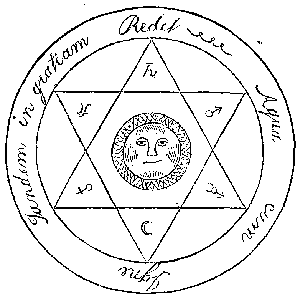
Invidiæ, semper mens tamen æqua fuit,
Multa tulit veterum ut sciret secreta sophorum
Ac tandem vires noverit ignis aquæ.
In villa Spinosa supermontana, in
Parochia silvæ cuculatæ, in agro
Eboracensi, natus 1610 Feb. 3,
Ergastulum animæ deposuit 1682, Junii 18,
Annoq. ætatis suæ 72 currente.
Aurea pax vivis, requies æterna sepultis."
Whose hideous horror and sad trembling sownd
Full griesly seem'd,"
unscathed by the old lords of the soil, and needed not Mengus's Fuga, Fustis et Flagellum Dæmonum, as a triple coat of mail.
Her dwelling had—
Dark, doleful, dreary, like a greedy grave
That still for carrion carcases doth crave,
On top whereof ay dwelt the ghastly owle,
Shrieking his baleful note, which ever drave
Far from that haunt all other cheerful fowl,
And all about it wandering ghosts did wail and howle"—
is now, alas! no more. It stood in a field a little elevated, on a brow above the building at present called Malking-Tower. The site of the house or cottage is still distinctly traceable, and fragments of the plaster are yet to be found imbedded in the boundary wall of the field. The old road to Gisburne ran almost close to it. It commanded a most extensive prospect in front, in the direction of Alkincoates, Colne, and the Yorkshire moors; while in another direction the vast range of Pendle, nearly intercepted, gloomed in sullen majesty. At the period when Mother Demdike was in being, Malking-Tower would be at some distance from any other habitation; its occupier, as the vulgar would opine—
Far from all neighbours, that her devilish deedes
And hellish arts from people she might hide,
And hurt far off unknown whomever she envide."
"Enter Boy with a switch.
Boy. Now I have gathered Bullies, and fild my bellie pretty well, i'le goe see some sport. There are gentlemen coursing in the medow hard by; and 'tis a game that I love better than going to Schoole ten to one.
Enter an invisible spirit. J. Adson[D] with a brace of greyhounds.
What have we here a brace of Greyhounds broke loose from their masters: it must needs be so, for they have both their Collers and slippes about their neckes. Now I looke better upon them, me thinks I should know them, and so I do: these are Mr. Robinsons dogges, that dwels some two miles off, i'le take them up, and lead them home to their master; it may be something in my way, for he is as liberall a gentleman, as any is in our countrie, Come Hector, come. Now if I c'ud but start a Hare by the way, kill her, and carry her home to my supper, I should thinke I had made a better afternoones worke of it than gathering of bullies. Come poore curres along with me.
Exit."
* * * * * * *
* * * * * * *
"Enter Boy with the Greyhounds.
A Hare, a Hare, halloe, halloe, the Divell take these curres, will they not stir, halloe, halloe, there, there, there, what are they growne so lither and so lazie? Are Mr. Robinsons dogges turn'd tykes with a wanion? the Hare is yet in sight, halloe, halloe, mary hang you for a couple of mungrils (if you were worth hanging,) and have you serv'd me thus? nay then ile serve you with the like sauce, you shall to the next bush, there will I tie you, and use you like a couple of curs as you are, and though not lash you, yet lash you whilest my switch will hold, nay since you have left your speed, ile see if I can put spirit into you, and put you in remembrance what halloe, halloe meanes.
As he beats them, there appeared before him Gooddy Dickison, and the Boy upon the dogs, going in.
Now blesse me heaven, one of the Greyhounds turn'd into a woman, the other into a boy! The lad I never saw before, but her I know well; it is my gammer Dickison.
G. Dick. Sirah, you have serv'd me well to swindge me thus. You yong rogue, you have vs'd me like a dog.
Boy. When you had put your self into a dogs skin, I pray how c'ud I help it; but gammer are not you a Witch? if you bee, I beg upon my knees you will not hurt me.
Dickis. Stand up my boie, for thou shalt have no harme,
Be silent, speake of nothing thou hast seene.
And here's a shilling for thee.
Boy. Ile have none of your money, gammer, because you are a Witch; and now she is out of her foure leg'd shape, ile see if with my two legs I can out-run her.
Dickis. Nay sirra, though you be yong, and I old, you are not so nimble, nor I so lame, but I can overtake you.
Boy. But Gammer what do you meane to do with me
Now you have me?
Dickis. To hugge thee, stroke thee, and embrace thee thus,
And teach thee twentie thousand prety things,
So thou tell no tales; and boy this night
Thou must along with me to a brave feast.
Boy. Not I gammer indeed la, I dare not stay out late,
My father is a fell man, and if I bee out long, will both
chide and beat me.
Dickis. Not sirra, then perforce thou shalt along,
This bridle helps me still at need,
And shall provide us of a steed.
Now sirra, take your shape and be
Prepar'd to hurrie him and me.
Exit.
Now looke and tell mee wher's the lad become.
Boy. The boy is vanisht, and I can see nothing in his stead
But a white horse readie sadled and bridled.
Dickis. And thats the horse we must bestride,
On which both thou and I must ride,
Thou boy before and I behinde,
The earth we tread not, but the winde,
For we must progresse through the aire,
And I will bring thee to such fare
As thou ne're saw'st, up and away,
For now no longer we can stay.
She catches him up, and turning round.
Boy. Help, help.
Exit."
* * * * * * *
* * * * * * *
"Rob. What place is this? it looks like an old barne: ile peep in at some cranny or other, and try if I can see what they are doing. Such a bevy of beldames did I never behold; and cramming like so many Cormorants: Marry choke you with a mischiefe.
Gooddy Dickison. Whoope, whurre, heres a sturre,
Never a cat, never a curre,
But that we must have this demurre.
Mal. A second course.
Mrs. Gen. Pull, and pull hard
For all that hath lately him prepar'd
For the great wedding feast.
Mall. As chiefe
Of Doughtyes Surloine of rost Beefe.
All. Ha, ha, ha.
Meg. 'Tis come, 'tis come.
Mawd. Where hath it all this while beene?
Meg. Some
Delay hath kept it, now 'tis here,
For bottles next of wine and beere,
The Merchants cellers they shall pay for't.
Mrs. Gener. Well,
What sod or rost meat more, pray tell.
Good. Dick. Pul for the Poultry, Foule, and Fish,
For emptie shall not be a dish.
Robin. A pox take them, must only they feed upon hot meat, and I upon nothing but cold sallads.
Mrs. Gener. This meat is tedious, now some Farie,
Fetch what belongs unto the Dairie,
Mal. Thats Butter, Milk, Whey, Curds and Cheese,
Wee nothing by the bargaine leese.
All. Ha, ha, ha.
Goody Dickison. Boy, theres meat for you.
Boy. Thanke you.
Gooddy Dickis. And drinke too.
Meg. What Beast was by thee hither rid?
Mawd. A Badger nab.
Meg. And I bestrid
A Porcupine that never prickt.
Mal. The dull sides of a Beare I kickt.
I know how you rid, Lady Nan.
Mrs. Gen. Ha, ha, ha, upon the knave my man.
Rob. A murrein take you, I am sure my hoofes payd for't.
Boy. Meat lie there, for thou hast no taste, and drinke there, for thou hast no relish, for in neither of them is there either salt or savour.
All. Pull for the posset, pull.
Robin. The brides posset on my life, nay if they come to their spoone meat once, I hope theil breake up their feast presently.
Mrs. Gen. So those that are our waiters nere,
Take hence this Wedding cheere.
We will be lively all,
And make this barn our hall.
Gooddy Dick. You our Familiers, come.
In speech let all be dumbe,
And to close up our Feast,
To welcome every gest
A merry round let's daunce.
Meg. Some Musicke then ith aire
Whilest thus by paire and paire,
We nimbly foot it; strike.
Musick.
Mal. We are obeyd.
Sprite. And we hels ministers shall lend our aid.
Dance and Song together. In the time of which the Boy speakes.
Boy. Now whilest they are in their jollitie, and do not mind me, ile steale away, and shift for my selfe, though I lose my life for't.
Exit."
* * * * * * *
* * * * * * *
"Dought. He came to thee like a Boy thou sayest, about thine own bignesse?
Boy. Yes Sir, and he asked me where I dwelt, and what my name was.
Dough. Ah Rogue!
Boy. But it was in a quarrelsome way; Whereupon I was as stout, and ask'd him who made him an examiner?
Dough. Ah good Boy.
Mil. In that he was my Sonne.
Boy. He told me he would know or beat it out of me,
And I told him he should not, and bid him doe his worst;
And to't we went.
Dough. In that he was my sonne againe, ha boy; I see him at it now.
Boy. We fought a quarter of an houre, till his sharpe nailes made my eares bleed.
Dough. O the grand Divell pare 'em.
Boy. I wondred to finde him so strong in my hands, seeming but of mine owne age and bignesse, till I looking downe, perceived he had clubb'd cloven feet like Oxe feet; but his face was as young as mine.
Dought. A pox, but by his feet, he may be the Club-footed Horse-coursers father, for all his young lookes.
Boy. But I was afraid of his feet, and ran from him towards a light that I saw, and when I came to it, it was one of the Witches in white upon a Bridge, that scar'd me backe againe, and then met me the Boy againe, and he strucke me and layd mee for dead.
Mil. Till I wondring at his stay, went out and found him in the Trance; since which time, he has beene haunted and frighted with Goblins, 40 times; and never durst tell any thing (as I sayd) because the Hags had so threatned him till in his sicknes he revealed it to his mother.
Dough. And she told no body but folkes on't. Well Gossip Gretty, as thou art a Miller, and a close thiefe, now let us keepe it as close as we may till we take 'hem, and see them handsomly hanged o'the way: Ha my little Cuffe-divell, thou art a made man. Come, away with me.
Exeunt."
Heywood and Broome's Late Lancashire Witches, Acts 2 and 3.
"Dickensons
Henrie Priestleyes wife and his ladd
Alice Hargrave, widdowe
Jane Davies (als. Jennet Device)
William Davies
The wife of Henrie Offep and her sonnes
John and Myles
The wife of Duckers
James Hargrave of Maresden
Loyards wife
James wife
Sanders wife, And as hee beleeveth
Lawnes wife
Sander Pynes wife of Baraford
One Foolegate and his wife
And Leonards of the West Close."
And thus in Webster:—
"Dickensons Wife, Henry Priestleys Wife, and his Lad, Alice Hargreene Widow, Jane Davies, William Davies, and the Wife of Henry Fackes, and her Sons John and Miles, the Wife of —— Denneries, James Hargreene of Marsdead, Loynd's Wife, one James his Wife, Saunders his Wife, and Saunders himself sicut credit, one Laurence his Wife, one Saunder Pyn's Wife of Barraford, one Holgate and his Wife of Leonards of the West close."
"One Pickerne and his wife both of Wyndwall,
Rawson of Clore and his wife
Duffice wife of Clore by the water side
Cartmell the wife of Clore
And Jane of the hedgend in Maresden."
The end of Editor, 1845: Introduction.
Turn the page for The Title and the Epistle Dedicatory.
Tap or click the right-hand side of the book to turn the page, the left to turn back; or use the arrow keys, or swipe. Press F for full screen.
Editor, 1845
Introduction
Were not every chapter of the history of the human mind too precious an inheritance to be willingly relinquished,—for appalling as its contents may be, the value of the materials it may furnish may be inestimable,—we might otherwise be tempted to wish that the miserable record in which the excesses occasioned by the witch mania are narrated, could be struck out of its pages, and for ever cancelled. Most assuredly, he, who is content to take the fine exaggeration of the author of Hydriotaphia as a serious and literal truth, and who believes with him that "man is a glorious animal," must not go to the chapter which contains that record for his evidences and proofs. If he should be in search of materials for humiliation and abasement, he will find in the history of witchcraft in this country, from the beginning to the end of the seventeenth century, large and abundant materials, whether it affects the species or the individual. In truth, human nature is never seen in worse colours than in that dark and dismal review. Childhood, without any of its engaging properties, appears prematurely artful, wicked and cruel1; woman, the victim of a wretched and debasing bigotry, has yet so little of the feminine adjuncts, that the fountains of our sympathies are almost closed; and man, tyrannizing over the sex he was bound to protect, in its helpless destitution and enfeebled decline, seems lost in prejudice and superstition and only strong in oppression. If we turn from the common herd to the luminaries of the age, to those whose works are the landmarks of literature and science, the reference is equally disappointing;—
And silent as the moon
Hid in her vacant interlunar cave."
We find the illustrious author of the Novum Organon sacrificing to courtly suppleness his philosophic truth, and gravely prescribing the ingredients for a witches' ointment;2—Raleigh, adopting miserable fallacies at second hand, without subjecting them to the crucible of his acute and vigorous understanding;3—Selden, maintaining that crimes of the imagination may be punished with death;4—The detector of Vulgar Errors, and the most humane of physicians,5 giving the casting weight to the vacillating bigotry of Sir Matthew Hale;6—Hobbes, ever sceptical, penetrating and sagacious, yet here paralyzed, and shrinking from the subject as if afraid to touch it;7—The adventurous explorer, who sounded the depths and channels of the "Intellectual System" along all the "wide watered" shores of antiquity, running after witches to hear them recite the Common Prayer and the Creed, as a rational test of guilt or innocence;8—The gentle spirit of Dr. Henry More, girding on the armour of persecution, and rousing itself from a Platonic reverie on the Divine Life, to assume the hood and cloak of a familiar of the Inquisition;9—and the patient and enquiring Boyle, putting aside for a while his searches for the grand Magisterium, and listening, as if spell-bound, with gratified attention to stories of witches at Oxford, and devils at Mascon.10 Nor is it from a retrospect of our own intellectual progress only that we find how capricious, how intermitting, and how little privileged to great names or high intellects, or even to those minds which seemed to possess the very qualifications which would operate as conductors, are those illuminating gleams of common sense which shoot athwart the gloom, and aid a nation on its tardy progress to wisdom, humanity, and justice. If on the Continent there were, in the sixteenth century, two men from whom an exposure of the absurdities of the system of witchcraft might have been naturally and rationally expected, and who seem to stand out prominently from the crowd as predestined to that honourable and salutary office, those two men were John Bodin11 and Thomas Erastus.12 The former a lawyer—much exercised in the affairs of men—whose learning was not merely umbratic—whose knowledge of history was most philosophic and exact—of piercing penetration and sagacity—tolerant—liberal minded—disposed to take no proposition upon trust, but to canvass and examine every thing for himself, and who had large views of human nature and society—in fact, the Montesquieu of the seventeenth century. The other, a physician and professor, sage, judicious, incredulous,
"The scourge of impostors, the terror of quacks,"
who had routed irrecoverably empiricism in almost every shape—Paracelsians—Astrologers—Alchemists—Rosicrucians—and who weighed and scrutinized and analyzed every conclusion, from excommunication and the power of the keys to the revolutions of comets and their supposed effects on empires, and all with perfect fearlessness and intuitive insight into the weak points of an argument. Yet, alas! for human infirmity. Bodin threw all the weight of his reasoning and learning and vivacity into the scale of the witch supporters, and made the "hell-broth boil and bubble" anew, and increased the witch furor to downright fanaticism, by the publication of his Demo-manie,13 a work in which
Looks dark as ignorance, as frenzy wild;"
but which it is impossible to read without being carried along by the force of mind and power of combination which the author manifests, and without feeling how much ingenious sophistry can perform to mitigate and soften the most startling absurdity. His contemporary, Erastus, after all his victories on the field of imposition, was foiled by the subject of witchcraft at last. This was his pet delusion—almost the only one he cared not to discard—like the dying miser's last reserve:—
Not that, I cannot part with that,—and died."
In his treatise De Lamiis, published in 1577, 8vo., he defends nearly all the absurdities of the system with a blind zealotry which in such a man is very remarkable. His book has accordingly taken its place on the same shelf with Sprenger, Remigius, Delrio, and De Lancre, and deserves insertion only in a list which has yet to be made out, and which if accurately compiled would be a literary curiosity, of the singularly illogical books of singularly able reasoners. What was left unaccomplished by the centurions of literature came ultimately from the strangest of all possible quarters; from the study of an humble pupil of the transmuter of metals and prince of mountebanks and quacks—the expounder of Reuchlin de verbo mirifico, and lecturer in the unknown tongues—the follower of Trismegistus—cursed with bell, book and candle, by every decorous Church in Christendom—the redoubted Cornelius Agrippa; who, if he left not to his pupil Wierus the secret of the philosopher's stone or grand elixir, seems to have communicated a treasure perhaps equally rare and not less precious, the faculty of seeing a truth which should open the eyes of bigotry and dispel the mists of superstition, which should stop the persecution of the helpless and stay the call for blood. If, in working out this virgin ore from the mine, he has produced it mixed up with the scoria of his master's Occult Philosophy; if he gives us catalogues of devils and spirits, with whose acquaintance we could have dispensed; if he pleads the great truth faintly, inconsistently, imperfectly, and is evidently unaware of the strength of the weapons he wields; these deductions do not the less entitle Wierus to take his place in the first rank of Humanity's honoured professors, the true philanthropists and noble benefactors of mankind.
In our own country, it may be curious and edifying to observe to whom we mainly owe those enlightened views on this subject, which might have been expected to proceed in their natural channel, but for which we look in vain, from the "triumphant heirs of universal praise," the recognized guides of public opinion, whose fame sheds such a lustre on our annals,—the Bacons, the Raleighs, the Seldens, the Cudworths, and the Boyles.
The strangely assorted and rather grotesque band to whom we are principally indebted for a vindication of outraged common sense and insulted humanity in this instance, and whose vigorous exposition of the absurdities of the prevailing system, in combination with other lights and sources of intelligence, led at last to its being universally abandoned, consists of four individuals—on any of whom a literary Pharisee would look down with supercilious scorn:—a country gentleman, devoted to husbandry, and deep in platforms of hop gardens,14—a baronet, whose name for upwards of a century has been used as a synonyme for incurable political bigotry,15—a little, crooked, and now forgotten man, who died, as his biographer tells us, "distracted, occasioned by a deep conceit of his own parts, and by a continual bibbing of strong and high tasted liquors,"16—and last, but not least assuredly, of one who was by turns a fanatical preacher and an obscure practitioner of physic, and who passed his old age at Clitheroe in Lancashire in attempting to transmute metals and discover the philosopher's stone.17 So strange a band of Apostles of reason may occasion a smile; it deserves, at all events, a little more particular consideration before we address ourselves to the short narration which may be deemed necessary as an introduction to the republication which follows.
Of the first of the number, Reginald or Reynold Scot, it is to be regretted that more particulars are not known. Nearly the whole are contained in the following information afforded by Anthony à Wood, Athenæ., vol. i. p. 297; from which it appears that he took to "solid reading" at a crisis of life when it is generally thrown aside. "Reynolde Scot, a younger son of Sir John Scot, of Scot's Hall, near to Smeeth, in Kent, by his wife, daughter of Reynolde Pimp, of Pimp's Court, Knight, was born in that county, and at about 17 years of age was sent to Oxon, particularly as it seems to Hart Hall, where several of his countrymen and name studied in the latter end of K. Henry VIII. and the reign of Edward VI., &c. Afterwards he retired to his native country, without the honour of a Degree, and settled at Smeeth, where he found great encouragement in his studies from his kinsman, Sir Thomas Scot. About which time, taking to him a wife, he gave himself up solely to solid reading, to the perusing of obscure authors that had, by the generality of scholars, been neglected, and at times of leisure to husbandry and gardening. He died in September or October in 1599, and was buried among his ancestors, in the church at Smeeth before mentioned." Retired as his life and obscure as his death might be, he is one whose name will be remembered as long as vigorous sense, flowing from the "wells of English undefiled," hearty and radiant humour, and sterling patriotism, are considered as deserving of commemoration. His Discoverie of Witchcraft, first published in 1584, is indeed a treat to him who wishes to study the idioms, manners, opinions, and superstitions of the reign of Elizabeth. Its entire title deserves to be given:—
"The discouerie of witchcraft, wherein the lewde dealing of witches and witchmongers is notablie detected, the knauerie of coniurors, the impietie of inchantors, the follie of soothsaiers, the impudent falshood of cousenors, the infidelitie of atheists, the pestilent practises of Pythonists, the curiositie of figurecasters, the vanitie of dreamers, the beggerlie art of Alcumystrie, the abhomination of idolatrie, the horrible art of poisoning, the vertue and power of naturall magike, and all the conueiances of Legierdemaine and iuggling are deciphered: and many other things opened, which haue long lien hidden, howbeit verie necessarie to be knowne. Heerevnto is added a treatise vpon the nature and substance of spirits and diuels, &c: all latelie written by Reginald Scot Esquire. 1 John, 4, 1. Beleeue not euerie spirit but trie the spirits, whether they are of God; for many false prophets are gone out into the world, &c. 1584."
This title is sufficient to show that he gives no quarter to the delusion he undertakes to expose, and though he does not deny that there may be witches in the abstract, (to have done so would have left him a preacher without an audience,) yet he guards so cautiously against any practical application of that principle, and battles so vigorously against the error which assimilated the witches of modern times to the witches of Scripture, and, denying the validity of the confessions of those convicted, throws such discredit and ridicule upon the whole system, that the popular belief cannot but have received a severe shock from the publication of his work.18 By an extraordinary elevation of good sense, he managed, not only to see through the absurdities of witchcraft, but likewise of other errors which long maintained their hold upon the learned as well as the vulgar. Indeed, if not generally more enlightened, he was, in some respects, more emancipated from delusion than even his great successor, the learned and sagacious Webster, who, a century after, clung still to alchemy which Reginald Scot had ridiculed and exposed. Yet with all its strong points and broad humour, it is undeniable that The Discoverie of Witchcraft only scotched the snake instead of killing it; and that its effect was any thing but final and complete. Inveterate error is seldom prostrated by a blow from one hand, and truth seems to be a tree which cannot be forced by planting it before its time. There was something, too, in the book itself which militated against its entire acceptance by the public. It is intended to form a little Encyclopædia of the different arts of imposition practised in Scot's time; and in order to illustrate the various tricks and modes of cozenage, he gives us so many charms and diagrams and conjurations, to say nothing of an inventory of seventy-nine devils and spirits, and their several seignories and degrees, that the Occult Philosophy of Cornelius Agrippa himself looks scarcely less appalling, at first sight, than the Discoverie. This gave some colour to the declamation of the author's opponents, who held him up as Wierus had been represented before him, as if he were as deeply dipped in diabolical practises as any of those whom he defended. Atheist and Sadducee, if not very wizard himself, were the terms in which his name was generally mentioned, and as such, the royal author of the Demonology anathematizes him with great unction and very edifying horror. Against the papists, the satire of Scot had been almost as much directed as against what he calls the "witch-mongers," so that that very powerful party were to a man opposed to him. Vigorous, therefore, as was his onslaught, its effect soon passed by; and when on the accession of James, the statute which so long disgraced our penal code was enacted, as the adulatory tribute of all parties, against which no honest voice was raised, to the known opinions of the monarch, Scot became too unfashionable to be seen on the tables of the great or in the libraries of the learned. If he were noticed, it was only to be traduced as a sciolist, (imperitus dialecticæ et aliarum bonarum artium, says Dr. Reynolds,) and to be exposed for imagined lapses in scholarship in an age when for a writer not to be a scholar, was like a traveller journeying without a passport. Meric Casaubon, who carried all the prejudices of the time of James the first into the reign of Charles the second, but who, though overshadowed by the fame of his father, was no unworthy scion of that incomparable stock, at the same time that he denounces Scot as illiterate, will only acknowledge to having met with him "at friends houses" and "booksellers shops," as if his work were one which would bring contamination to a scholar's library. Scot was certainly not a scholar in the sense in which the term is applied to the Scaligers, Casaubons, and Vossius's, though he would have been considered a prodigy of reading in these days of superficial acquisition. But he had original gifts far transcending scholarship. He had a manly, straightforward, vigorous understanding, which, united with an honest integrity of purpose, kept him right when greater men went wrong. How invaluable a phalanx would the battalion of folios which the reign of James the first produced now afford us, if the admirable mother-wit and single-minded sincerity of Reginald Scot could only have vivified and informed them.19
After the lapse of another half century, and at the very period when the persecution against witches waxed hotter, and the public prejudice had become only more inveterate, from the ingredient of fanaticism having been largely thrown in as a stimulant, another ally to the cause of compassion and common sense started up, in the person of one whose name has rounded many a period and given point to many an invective. To find the proscribed author of the Patriarcha purging with "euphrasy and rue" the eyes of the dispensers of justice, and shouldering the crowd to obtain for reason a fair and impartial hearing, is indeed like meeting with Saul among the prophets. If there be one name which has been doomed to run the gauntlet, and against which every pert and insolent political declaimer has had his fling, it is that of this unfortunate writer; yet in his short but masterly and unanswerable "Advertisement to the Jurymen of England, touching Witches, together with a difference between an English and Hebrew Witch," first published in 1653, 4to., he has addressed himself so cogently and decisively to the main fallacy of the arguments in favour of witchcraft which rested their force on Scripture misunderstood, and has so pertinently and popularly urged the points to be considered, that his tract must have had the greatest weight on the class to whom his reasoning was principally addressed, and on whose fiat the fates of his unhappy clients may be said to have hung. For this good service, reason and common sense owe Sir Robert Filmer a debt which does not yet appear to have been paid. The verdict of proscription against him was pronounced by the most incompetent and superficial æra of our literature, and no friendly appellant has yet moved the court of posterity for its reversal. Yet without entering upon the theory of the patriarchal scheme, which after all, perhaps, was not so irrational as may be supposed, or discussing on an occasion like the present the conflicting theories of government, it may be allowable to express a doubt whether even the famous author of the "Essay on the Human Understanding," to whose culminating star the decadence of the rival intelligence is attributable, can be shewn to have been as much in advance of his generation in the time of king William, as from the tract on witchcraft, and another written on a different subject, but with equally enlightened views,20 Sir Robert Filmer manifestly appears to have outrun his at the period of the usurpation.21
The next champion in this unpopular cause, John Wagstaffe, who published "The Question of Witchcraft Debated," 1669, 12mo,22 was, as A. à Wood informs us, "the son of John Wagstaffe, citizen of London, descended from those of his name of Hasland Hall, in Derbyshire, was born in Cheapside, within the city of London, became a commoner of Oriel College in the latter end of 1649, took the degrees in Arts, and applied himself to the study of politics and other learning. At length, being raised from an academical life to the inheritance of Hasland, by the death of an uncle, who died without male issue, he spent his life afterwards in single estate." His death took place in 1677. The Oxford historian, who had little reverence for new lights, and never loses an opportunity of girding at those whose weights and measures were not according to the current and only authentic standard, has left no very flattering account of his person. "He was a little crooked man, and of a despicable presence. He was laughed at by the boys of this University, because, as they said, he himself looked like a little wizard." Small as might be his stature, and questionable the shape in which he appeared, he might still have taken up the boast of the author of the Religio Medici: "Men that look upon my outside do err in my altitude, for I am above Atlas's shoulders." None but a large-souled and kindly-affectioned man, whose intellect was as comprehensive as his feelings were benevolent, could have produced the excellent little treatise which claims him as its author. The following is the lofty and memorable peroration in which he sums up the strength of his cause:—
"I cannot think without trembling and horror on the vast numbers of people that in several ages and several countries have been sacrificed unto this idol, Opinion. Thousands, ten thousands, are upon record to have been slain, and many of them not with simple deaths, but horrid, exquisite tortures. And yet, how many are there more who have undergone the same fate, of whom we have no memorial extant. Since, therefore, the opinion of witchcraft is a mere stranger unto Scripture, and wholly alien from true religion; since it is ridiculous by asserting fables and impossibilities; since it appears, when duly considered, to be all bloody and full of dangerous consequence unto the lives and safety of men; I hope that with this my Discourse, opposing an absurd and pernicious error, I can not at all disoblige any sober, unbiassed person; especially if he be of such ingenuity as to have freed himself from a slavish subjection unto those prejudicial opinions which custom and education do with too much tyranny impose.—If the doctrine of witchcraft should be carried up to a height, and the inquisition after it should be intrusted in the hands of ambitious, covetous and malicious men, it would prove of far more fatal consequence unto the lives and safety of mankind, than that ancient, heathenish custom of sacrificing men unto idol gods; insomuch that we stand in need of another Hercules Liberator, who, as the former freed the world from human sacrifice, should, in like manner, travel from country to country, and by his all-commanding authority, free it from this euil and base custom of torturing people to confess themselves witches, and burning them after extorted confessions. Surely the blood of men ought not to be so cheap, nor so easily to be shed by those who, under the name of God, do gratifie exorbitant passions and selfish ends; for without question, under this side heaven, there is nothing so sacred as the life of man; for the preservation whereof all policies and forms of government, all laws and magistrates are most especially ordained. Wherefore I presume that this Discourse of mine, attempting to prove the vanity and impossibility of witchcraft, is so far from any deserved censure and blame, that it rather deserves commendation and praise, if I can in the least measure contribute to the saving of the lives of men."
Wagstaffe was answered by Meric Casaubon in his treatise "Of Credulity and Incredulity in Things Divine and Spiritual," 1670, 12mo; and if his reply be altogether inconclusive, it cannot be denied to be, as indeed every thing of Meric Casaubon's writing was, learned, discursive and entertaining. He observes of Wagstaffe:—
"He doth make some show of a scholar and a man of some learning, but whether he doth acquit himself as a gentleman (which I hear he is) in it, I shall leave to others to judge." This is surely the first time that a belief in witchcraft was ever made a test of gentlemanly propriety.
Two years before the trial, which is the subject of the following republication, took place, the hamlet of Thornton, in the parish of Coxwold, in the adjoining county of York, gave birth to one who was destined so utterly to demolish the unstable and already shaken and tottering structure which Bodin, Delrio, and their followers had set up, as not to leave one stone of that unhallowed edifice remaining upon another. Of the various course of life of John Webster, the author of "The Displaying of supposed Witchcraft," his travels, troubles, and persecutions; of the experience he had had in restless youth and in unsettled manhood of religion under various forms, amongst religionists of almost every denomination; and of those profound and wide-ranging researches in every art and science in which his vigorous intellect delighted, and by which it was in declining age enlightened, sobered and composed; it is much to be regretted that we have not his own narrative, written in the calm evening of his days, when he walked the slopes of Pendle, from where,
when, to use his own expressions, he lived a "solitary and sedentary life, mihi et musis, having more converse with the dead than the living, that is, more with books than with men." The facts for his biography are scanty and meagre, and are rather collected by inference from his works, than from any other source. He was born at Thornton on the 3rd of February, 1610. From a passing notice of A. à Wood, and an incidental allusion in his own works, he may be presumed to have passed some time at Cambridge, though with what views, or at what period of his life, is uncertain. He was ordained Presbyter by Dr. Morton, when Bishop of Durham, who was, it will be recollected, the sagacious prelate by whom the frauds of the boy of Bilson were detected. In the year 1634, Webster was curate of Kildwick in Craven, and while in that cure the scene occurred which he has so vividly sketched in the passage after quoted, and which supplied the hint, and laid the foundation, for the work which has perpetuated his fame. How long he continued in this cure we know not: but, if one authority may be relied on, he was Master of the Free Grammar School at Clitheroe in 1643. To this foundation he may be considered as a great benefactor, for, from information supplied from a manuscript source, I find that he recovered for its use, with considerable trouble and no small personal charge, an income of about £60. per annum, which had been given to the school, but was illegally diverted and withheld. From this period there is a blank in his biography for about ten years. Most probably his life was rambling and desultory. He speaks of himself as having been about that time a chaplain in the army. His first two works, published in 1653 and 1654, "The Saints' Guide," and "The Judgment Set and the Books Opened,"24 show that in the interval he had deserted the Established Church, and, probably, after some of those restless fluctuations of belief to which men of his ardent temperament are subject, settled at last in a wilder sort of Independency, which he eulogizes as "unmanacling the simple and pure light of the Gospel from the chains and fetters of cold and dead formality, and of restrictive and compulsory power." His language in these two works is more assimilated to that of the Seekers or Quakers, which it resembles in the cloudy mysteriousness of its phraseology, than that of the more rational and sober writers of the Independent school. Amongst the dregs of fanaticism of which they consist, the reader will look in vain for any germ or promise of future excellence or distinction as an author. It would seem that he preached the sermons contained in "The Judgment Set and Books Opened" at the church of All-Hallows, Lombard-street, at which he must have been for some time the officiating minister, and where the amusing incident, in which Webster was concerned, narrated by Wood, which had many a parallel in those times, no doubt occurred. "On the 12th of Oct., 1653," says the author of the Athenæ.,25 "he (i.e. William Erbury) with John Webster, sometimes a Cambridge scholar, endeavoured to knock down learning and the ministry both together, in a disputation that they then had against two ministers in a church in Lombard-street, in London. Erbury then declared that the wisest ministers and purest churches were at that time befool'd, confounded, and defil'd, by reason of learning. Another while he said, that the ministry were monsters, beasts, asses, greedy dogs, false prophets; and that they are the Beast with seven heads and ten horns. The same person also spoke out and said that Babylon is the Church in her ministers, and that the Great Whore is the Church in her worship, &c.; so that with him there was an end of ministers and churches and ordinations altogether. While these things were babbled to and fro, the multitude being of various opinions, began to mutter, and many to cry out, and immediately it came to a meeting or tumult, (call it which you please,) wherein the women bore away the Bell, but lost some of them their kerchiefs: and the dispute being hot, there was more danger of pulling down the church than the ministry."26
Of Erbury who, being originally in holy orders and a beneficed clergyman, deserted the Established Church and ran into all the excesses of Antinomianism, Webster was a great admirer, and has in a preface, hitherto unnoticed, prefixed to a scarce tract of Erbury's, entitled "The great Earthquake, or Fall of all the Churches," published in 1654, 4to, left a sketch of his opinions and character, in which his defence is undertaken with great zeal and no small ingenuity. One of his apologist's conclusions most of Erbury's readers will find no difficulty in assenting to, "the world is not ripe for such discoveries as our author held forth." The verses which are appended to this sketch, characterizing Erbury—
Who did the saintship sever
From the opinion; this fails, that shall never,
Chymist of Truth and Gospel;"—
are, also, evidently Webster's, and their quality is not such as to make us unreasonably impatient for any further manifestations of his poetical skill. In the year 1654 he published another tract of singular interest and curiosity, in which he attacks the Universities and the received system of education there, always with vigour and various learning, and frequently with success. It is entitled "Academiarum Examen, or the Examination of Academies; wherein is discussed and examined the matter, method, and customes of academick and scholastic learning, and the insufficiency thereof discovered and laid open; as also some expedients proposed for the reforming of schools, and the perfecting and promoting of all kind of science; offered to the judgment of all those that love the proficiencie of arts and sciences and the advancement of learning. By Jo. Webster. In moribus et institutis academiarum, collegiorum et similium conventium quo ad doctorum hominum sedes et operas mutuas destinata sunt, omnia progressui scientiarum in ulterius adversa inveniri. Franc. Bacon de Verulamio lib. de cogitat. et vis. pag. mihi. 14. London: Printed for Giles Calvert, and are to be sold at the sign of the Black Spread-Eagle, at the west end of Paul's. 1654." 4to. In this tract, which, like some other attacks upon the seats of learning, displays more power in objection than in substitution, in pulling down than in building up again, he shews the same fondness for the philosophers of the Hermetic school, for Paracelsus, Dee, Fludd and Van Helmont, and the same adhesion to planetary sigils, astrology, and the doctrine of sympathies and primæval signatures, which is perceptible in the deliberate performance of his old age. Of himself he observes: "I owe little to the advantages of those things called the goods of fortune, but most (next under the goodness of God) to industry: however, I am a free born Englishman, a citizen of the world and a seeker of knowledge, and am willing to teach what I know, and learn what I know not." No one can read the Academiarum Examen without feeling that it is the production of a vigorous and powerful mind, which had "tasted," and that not scantily, of the "sweet fruit of far fetched and dear bought science." Yet it still remains a literary problem rather difficult of solution, how a performance so clear, well digested, and rational, could proceed, and that contemporaneously, from the same author as the cloudy and fanatical "Judgment Set and Books Opened." On behalf of the Universities, answerers started up in the persons of Ward and Wilkins, both afterwards bishops, and the part taken by the first of them in the controversy was considered of sufficient importance to form matter of commemoration in his monumental inscription. Two opponents so famous, might almost seem to threaten extinction to one, of whom it could only be said, that he had been an obscure country schoolmaster, and whose acquirements, whatever they were, were mainly the result of his own unassisted study. In the joint answer, the title of which is "Vindiciæ Academiarum, containing some briefe animadversions upon Mr. Webster's book entitled the 'Examination of Academies,' together with an appendix concerning what Mr. Hobbes and Mr. Dell have published in this argument, Oxford, 1654," 4to., there is no want of bitterness nor of controversial skill, but though, particularly in the limited arena of the prescribed course of academical study, the knowledge displayed in it is more exact, there is neither visible in it the same power of mind, nor the same breadth of views, nor even the same variety of learning, as is conspicuous in the original tract. This, with the two fanatical pieces which Webster published contemporaneously with it, were entirely unknown to his biographer, Dr. Whitaker, who has ceded him a place amongst the distinguished natives and residents of the parish of Whalley, in the full confidence "that there is no puritanical taint in his writings, and that his taste had evidently been formed upon better models.27" Had these early theological and literary delinquencies of the physician of Clitheroe been communicated to his historian, it may be questioned whether the portals of his provincial temple of fame would have opened to receive so heinous a transgressor. But Dr. Whitaker's deduction would have been perhaps perfectly warrantable, had Webster left no remains but his History of Metals, and Displaying of Witchcraft—so little do an author's latest works afford a clue to the character of his earliest. From 1654 to 1671, when he published his History of Metals, little is known of Webster's course of life. He appears to have retired into the country and devoted himself to medical practice and study, and to have taken up his residence in or near Clitheroe. He complains, that in the year 1658 all his books and papers were taken from him, an abstraction which, so far as his manuscripts are concerned, posterity is not called upon to lament, if they all resembled his Judgment Set and Books Opened. But his capacious and acute understanding was gradually unfolding new resources, supplying the defects, and overcoming the disadvantages of his imperfect education and desultory and irregular studies, while his matured and enlightened judgment had abandoned and discarded the fanatical pravities and erroneous tenets, which his ardent enthusiasm had too hastily imbibed. When he again became a candidate for the honours of authorship, it was evident that he knew well how to apply those quarries of learning into which, during his long recess, he had been digging so indefatigably, to furnish materials for solid and durable structures, rising in honourable and gratifying contrast to the fabrics which had preceded them. In 1671 came forth his "Metallographia, or History of Metals,"28 in which all that recondite learning and extensive observation could bring together, on a subject which experiment had scarcely yet placed upon a rational basis, is collected. He styles himself on the Title page, "Practitioner in Physic and Chirurgery." In 1677, he published his great work. Its Title is "The Displaying of supposed Witchcraft. Wherein is affirmed that there are many sorts of Deceivers and Impostors. And Divers persons under a passive Delusion of Melancholy and Fancy. But that there is a Corporeal League made betwixt the Devil and the Witch, Or that he sucks on the Witches Body, has Carnal Copulation, or that Witches are turned into Cats, Dogs, raise Tempests, or the like, is utterly denied and disproved. Wherein also is handled, the Existence of Angels and Spirits, the truth of Apparitions, the Nature of Astral and Sydereal Spirits, the force of Charms and Philters; with other abstruse matters. By John Webster, Practitioner in Physic. Falsæ etenim opiniones Hominum præoccupantes, non solum surdos, sed et cæcos faciunt, ita ut videre nequeant, quæ aliis perspicua apparent. Galen, lib. 8. de Comp. Med. London, Printed by J.M. and are to be sold by the Booksellers in London. 1677," (fol.) In this memorable book he exhausts the subject, as far as it is possible to do so, by powerful ridicule, cogent arguments, and the most various and well applied learning, leaving to Hutchinson, and others who have since followed in his track, little further necessary than to reproduce his facts and reasonings in a more popular, it can scarcely be said, in a more effective, form.29 Those who love literary parallels may compare Webster, as he appears in this his last and most characteristic performance, with two famous medical contemporaries, Sir Thomas Browne, and Thomas Bartholinus the Dane, whom he strongly resembled in the character of his mind, in the complexion and variety of his studies, in grave simplicity, in exactness of observation, in general philosophical incredulity with some startling reserves, in elaborate and massive ratiocination, and in the enthusiasm, subdued but not extinguished, which gives zest to his speculations and poignancy and colouring to his style. He who seeks to measure great men in their strength and in their weakness, and what operation of literary analysis is more instructive or delightful, will find ample employment for collation and comparison in this extraordinary book, in which, keen as is the penetration displayed on almost every subject of imposition and delusion, he appears still to cling, with the obstinacy of a veteran, to some of the darling Dalilahs of his youth, "to the admirable and soul-ravishing knowledge of the three great Hypostatical principles of nature, salt, sulphur, and mercury," and, proh pudor! to alchemy and astrology—and those seraphic doctors and professors, Crollius, Libavius, and Van Helmont. He closed his literary performances with this noble fabric of logic and learning, not the less striking, and scarcely less useful, because it is chequered by some of the mosaic work of human imperfection,—a performance which may be said to have grown up under the umbrage of Pendle, and which he might have bequeathed to its future Demdikes and Chattox's as an amulet of irresistible power.30
But it is necessary to proceed from the authors on witchcraft to that extraordinary case which forms the subject of the present republication, and which first gave to Pendle its title to be considered as the Hartz Forest of England.
The Forest of Pendle is a portion of the greater one of Blackburnshire, and is so called from the celebrated mountain of that name, over the declivity of which it extends and stretches in a long but interrupted descent of five miles, to the water of Pendle, a barren and dreary tract. Dr. Whitaker observes of this and the neighbouring forests, and the remark even yet holds good, "that they still bear the marks of original barrenness, and recent cultivation; that they are still distinguished from the ancient freehold tracts around them, by want of old houses, old woods, high fences; (for these were forbidden by the forest laws;) by peculiarities of dialect and manners in their inhabitants; and lastly, by a general air of poverty which all the opulence of manufactures cannot remove." He considers that "at an uncertain period during the occupancy of the Lacies, the first principle of population" (in these forests) commenced; it was found that these wilds, bleak and barren as they were, might be occupied to some advantage in breeding young and depasturing lean "cattle, which were afterwards fattened in the lower domains. Vaccaries, or great upland pastures, were laid out for this purpose; booths or mansions erected upon them for the residence of herdsmen; and at the same time that herds of deer were permitted to range at large as heretofore, lawnds, by which are meant parks within a forest, were inclosed, in order to chase them with greater facility, or, by confinement, to produce fatter venison. Of these lawnds Pendle had new and old lawnd, with the contiguous park of Ightenhill."
In the early part of the seventeenth century, the inhabitants of this district must have been, with few exceptions, a wretchedly poor and uncultivated race, having little communication with the occupants of the more fertile regions around them, and in whose minds superstition, even yet unextinguished, must have had absolute and uncontrollable domination. Under the disenchanting influence of steam, manufactures, and projected rail-roads, still much of the old character of its population remains. Hodie manent vestigia ruris. The "parting genius" of superstition still clings to the hoary hill tops and rugged slopes and mossy water sides, along which the old forest stretched its length, and the voices of ancestral tradition are still heard to speak from the depth of its quiet hollows, and along the course of its gurgling streams. He who visits Pendle31 will yet find that charms are generally resorted to amongst the lower classes; that there are hares which, in their persuasion, never can be caught, and which survive only to baffle and confound the huntsman; that each small hamlet has its peculiar and gifted personage, whom it is dangerous to offend; that the wise man and wise woman (the white witches of our ancestors) still continue their investigations of truth, undisturbed by the rural police or the progress of the schoolmaster; that each locality has its haunted house; that apparitions still walk their ghostly rounds—and little would his reputation for piety avail that clergyman in the eyes of his parishioners who should refuse to lay those "extravagant and erring spirits," when requested, by those due liturgic ceremonies which the orthodoxy of tradition requires.
In the early part of the reign of James the first, and at the period when his execrable statute against witchcraft might have been sharpening its appetite by a temporary fast for the full meal of blood by which it was eventually glutted,—for as yet it could count no recorded victims,—two wretched old women with their families resided in the Forest of Pendle. Their names were Elizabeth Southernes and Ann Whittle, better known, perhaps, in the chronicles of witchcraft, by the appellations of Old Demdike and Old Chattox.32 Both had attained, or had reached the verge of the advanced age of eighty, were evidently in a state of extreme poverty, subsisting with their families by occasional employment, by mendicancy, but principally, perhaps, by the assumption of that unlawful power, which commerce with spirits of evil was supposed to procure, and of which their sex, life, appearance, and peculiarities, might seem to the prejudiced neighbourhood in the Forest to render them not unsuitable depositaries. In both, perhaps, some vindictive wish, which appeared to have been gratified nearly as soon as uttered, or some one of those curious coincidences which no individual's life is without, led to an impression which time, habit, and general recognition would gradually deepen into full conviction, that each really possessed the powers which witchcraft was believed to confer. Whether it be with witches as it is said to be with a much maligned branch of a certain profession, that it needs two of its members in a district to make its exercise profitable, it is not for me to say; but it is seldom found that competition is accompanied by any very amicable feeling in the competitors, or by a disposition to underrate the value of the merchandize which each has to offer for sale. Accordingly, great was the rivalry, constant the feuds, and unintermitting the respective criminations of the Erictho and Canidia of Pendle,33 who had opened shops for the vending of similar contraband commodities, and were called upon to decry each other's stock, as well as to magnify their own. Each "gave her little senate laws," and had her own party (or tail, according to modern phraseology) in the Forest. Some looked up to and patronized one, and some the other. If old Demdike could boast that she had Tibb as a familiar, old Chattox was not without her Fancy. If the former had skill in waxen images, the latter could dig up the scalps of the dead, and make their teeth serviceable to her unhallowed purposes. In the anxiety which each felt to outvie the other, and to secure the greater share of the general custom of a not very extended or very lucrative market, each would wish to be represented as more death-dealing, destructive, and powerful than her neighbour; and she who could number up the most goodly assortment of damage done to man and beast, whether real or not was quite immaterial, as long as the draught was spiced and flavoured to suit the general taste, stood the best chance of obtaining a monopoly. It is a curious fact, that the son-in-law of one of these two individuals, and whose wife was herself executed as a witch, paid to the other a yearly rent,34 on an express covenant that she should exempt him from her charms and witchcrafts. Where the possession of a commission from the powers of darkness was thus eagerly and ostentatiously paraded, every death, the cause of which was not perfectly obvious, whether it ended in a sudden termination or a slow and gradual decline, would be placed to the general account of one of the two (to use Master Potts's description,) "agents for the devil in those parts," as the party responsible for these unclaimed dividends of mortality. Did a cow go mad, or was a horse unaccountably afflicted with the staggers, the same solution was always at hand to clear negligence and save the trouble of inquiry; and so far from modestly disclaiming these atrocities, the only struggle on the parts of Mothers Demdike and Chattox would be which should first appropriate them. And in all this it must not be forgotten that their own credulity was at least as great as the credulity of their neighbours, and that each had the power in question was so much an admitted point, that she had long ceased, in all probability, to entertain any doubts on the subject. With this general conviction on one hand, and a sincere persuasion on the other, it would be surprising if, in the course of a few years, the scandalous chronicle of Pendle had not accumulated a corpus delicti against them, which only required that "one of his Majesties Justices in these parts, a very religious honest gentleman, painful in the service of his country," should work the materials into shape, and make "the gruel thick and slab."
Such a man was soon found in the representative of the old family of the Nowels of Read, who, desirous of signalizing himself as an active and stirring justice, took up the case of these self-accusing culprits, for both made confessions when examined before him, with a vigour worthy of a better cause. On the 2nd April, 1612, he committed old Demdike, old Chattox, Alizon Device, and Anne Redfern to Lancaster, to take their trial at the next assizes for various murders and witchcrafts. "Here," says the faithful chronicler, Master Potts, "they had not stayed a weeke, when their children and friendes being abroad at libertie, laboured a speciall meeting at Malking Tower35 in the Forrest of Pendle, vpon Good-fryday, within a weeke after they were committed, of all the most dangerous, wicked, and damnable witches in the county farre and neere. Vpon Good-fryday they met, according to solemne appoyntment, solemnized this great festiuall day according to their former order, with great cheare, merry company, and much conference. In the end, in this great assemblie it was decreed that M. Covell, [he was the gaoler of Lancaster Castle,] by reason of his Office, shall be slaine before the next Assises, the Castle at Lancaster to be blown up," &c., &c. This witches' convention, so historically famous, we unquestionably owe to the "painful justice" whose scent after witches and plots entitled him to a promotion which he did not obtain. An overt act so alarming and so indisputable, at once threw the country, far and near, into the greatest ferment—furiis surrexit Etruria justis—while it supplied an admirable locus in quo for tracing those whose retiring habits had prevented their propensities to witchcraft from being generally known to their intimate friends and connexions. The witness by whose evidence this legend was principally supported, was Jennet Device, a child about nine years old, and grand-daughter of old Demdike. A more dangerous tool in the hands of an unscrupulous evidence-compeller, being at once intelligent, cunning and pliant, than the child proved herself, it would not have been easy to have discovered. A foundation being now laid capable of embracing any body of confederates, the indefatigable justice proceeded in his inquiries, and in the end, Elizabeth Device the daughter of old Demdike, James Device her son, Alice Nutter, Katherine Hewitt, John Bulcock, Jane Bulcock, with some others, were committed for trial at Lancaster. The very curious report of that trial is contained in the work now republished, which was compiled under the superintendence of the judges who presided, by Master Thomas Potts, clerk in court, and present at the trial. His report, notwithstanding its prolixity and its many repetitions, it has been thought advisable to publish entire, and the reprint which follows is as near a fac-simile as possible of the original tract.
It is rather strange that Dr. Whitaker, to whom local superstitions were always matters of the strongest interest, and welcome as manna to the sojourners in the wilderness,36 should have been ignorant, not merely of Master Potts's discovery, but even of the fact of this trial of the witches in 1612. It is equally singular that Sir Walter Scott should have forgotten, when writing his letters on Demonology and Witchcraft, that he had republished this tract, somewhat inaccurately, but with rather a long introduction and notes, in the third volume of his edition of the Somers Tracts, which appeared in 1810. He mentions Potts's Discoverie, in the amusing but very inaccurate and imperfect historical sketch referred to,37 as a curious and rare book, which he had then for the first time obtained a sight of. What could have been his meaning in referring his readers, for an account of Mother Demdike and a description of Malking Tower, to "Mr. Roby's Antiquities of Lancaster," that apocryphal historian having given no such account or description, and having published no such work, it is rather difficult to conjecture.
With all his habitual tautology and grave absurdity, Master Potts is, nevertheless, a faithful and accurate chronicler, and we owe his memory somewhat for furnishing us with so elaborate a report of what took place on this trial, and giving us, "in their own country terms," the examinations of the witnesses, which contain much which throws light on the manners and language of the times, and nearly all that is necessary to enable us to form a judgment on the proceedings. It will be observed that he follows with great exactness the course pursued in court, in opening the case and recapitulating the evidence separately against each prisoner, so as most graphically to place before us the whole scene as it occurred. The part in which he is felt to be most deficient, is in the want of some further account of the prisoners convicted, from the trial up to the time of their execution. To Master Potts, a man of legal forms and ceremonies, the entire interest in the case seems to have come in and gone out with the judge's trumpets.
As most of the points in the trial which appeared to require observation, have been adverted to in the notes which follow the reprint, it is not considered necessary to enter into any analysis or review of the evidence adduced at the trial, which presents such a miserable mockery of justice. Mother Demdike, it will be seen, died in prison before the trial came on. Of the Pendle witches four, namely Old Chattox, Elizabeth Device, James Device, and Alizon Device, had all made confessions, and had little chance, therefore, of escaping condemnation. They were all found guilty; and with them were convicted, Anne Redfern, Alice Nutter, Katherine Hewitt, John Bulcock, and Jane Bulcock, who were all of Pendle or its neighbourhood, and who maintained their innocence and refused to make any confession. They were executed, along with the first-mentioned four and Isabel Robey, who was of Windle, in the parish of Prescot, and had been found guilty of similar practises, the day after the trial, viz. on the 18th of August, 1612, "at the common place of execution near to Lancaster."
The main interest in reviewing this miserable band of victims will be felt to centre in Alice Nutter.38 Wealthy, well conducted, well connected, and placed probably on an equality with most of the neighbouring families and the magistrate before whom she was brought, and by whom she was committed, she deserves to be distinguished from the companions with whom she suffered, and to attract an attention which has never yet been directed towards her.39 That Jennet Device, on whose evidence she was convicted, was instructed to accuse her by her own nearest relatives, to whom "superfluous lagged the veteran on the stage," and that the magistrate, Roger Nowell, entered actively as a confederate into the conspiracy from a grudge entertained against her on account of a long disputed boundary, are allegations which tradition has preserved, but the truth or falsehood of which, at this distance of time, it is scarcely possible satisfactorily to examine. With such a witness, however, as Jennet Device, and such an admirable engine as the meeting at Malking-Tower, the guests at which she could multiply ad libitum, doling out the plaat, as Titus Oates would call it, by such instalments, and in such fragmentary portions, as would conduce to an easy digestion of the whole, the wonder seems not to be, that one unfortunate victim of a higher class should have perished in the meshes of artful and complicated villainy, but that its ramifications were not more extensive, and still more fatal and destructive. From one so capable of taking a hint as the little precocious prodigy of wickedness, in whose examination, Potts tells us, "Mr. Nowell took such great paines," a very summary deliverance might be expected from troublesome neighbours, or still more troublesome relatives; and if, by a leading question, she could only be induced to marshal them in their allotted places at the witches' imaginary banquet, there was little doubt of their taking their station at a place of meeting where the sad realities of life were only to be encountered, "the common place of execution near to Lancaster."
The trial of the Samlesbury witches, Jennet Bierley, Ellen Bierley, and Jane Southworth, forms a curious episode in Potts's Discoverie. A Priest or Jesuit, of the name of Thomson, alias Southworth, had tutored the principal evidence, Grace Sowerbuts, a girl of the age of fourteen, but who had not the same instinctive genius for perjury as Jennet Device, to accuse the three persons above mentioned of having bewitched her; "so that," as the indictment runs, "by means thereof her body wasted and consumed." "The chief object," says Sir Walter Scott, "in this imposture, was doubtless the advantage and promotion of the Catholic cause, as the patient would have been in due time exorcised and the fiend dispossessed, by the same priest who had taught her to counterfeit the fits. Revenge against the women, who had become proselytes to the Church of England, was probably an additional motive." But the imposture broke down, from the inability of the principal witness to support the scheme of deception. Unsuccessful, however, as it proved, the time was well chosen, the groundwork excellently laid, the evidence industriously got up, and it must ever deserve a prominent place in the history—a history, how delightful when it shall be written in the spirit of philosophy and with due application of research—of human fraud and imposture.
We can only speculate, of course, on such an occasion, but perhaps no trial is recorded as having taken place, with the results of which every body, the parties convicted only excepted, was, in all probability, better pleased or satisfied, than at this witch trial at Lancaster in 1612. The mob would be delighted with a pageant, always acceptable, in the execution of ten witches; and still more, that one of them was of a rank superior to their own;—the judge had no doubt, in his opinion, avoided each horn of the dilemma—the abomination mentioned in Scripture—punishing the innocent or letting the guilty go free—by tracking guilt with well breathed sagacity, and unravelling imposture with unerring skill;—a Jesuit had been unkennelled, a spectacle as gratifying to a serious Protestant in those days, as running down a fox to a thorough sportsman;—a plot had been discovered which might have made Lancaster Castle "to topple on its warders" and "slope its head to its foundations," and Master Cowell, who had held so many inquests, to vanish without leaving anything in his own person whereon an inquest could be holden;—a pestilent nest of incorrigible witches had been dug out and rooted up, and Pendle Hill placed under sanatory regulations;—and last, and not least, as affording matter of pride and exultation to every loyal subject, a commentary had at last been collected for two texts, which had long called for some such support without finding it, King James's Demonology, and his statute against witchcraft. When the Discoverie of Master Potts, with its rich treasury of illustrative evidence, came to hand, would not the monarch be the happiest man in his dominions!
Twenty years after the publication of the tract now reprinted, Pendle Forest again became the scene of pretended witchcrafts; and from various circumstances, the trial which took place then (in 1633) has acquired even greater notoriety than the one which preceded it, though no Master Potts could be found to transmit a report of the proceedings in the second case, a deficiency which is greatly to be lamented. The particulars are substantially comprised in the following examination, which is given from the copy in Whitaker's Whalley, p. 213, which, on comparison, is unquestionably more accurate than the other two versions, in Webster, p. 347, and Baines's Lancashire, vol. i. p. 604:40—
"The Examination of Edmund Robinson,
"Son of Edm. Robinson, of Pendle forest, mason,41 taken at Padiham before Richard Shuttleworth42 and John Starkie,43 Esqs. two of his majesty's justices of the peace, within the county of Lancaster, 10th of February, A.D. 1633.
"Who informeth upon oath, (beeinge examined concerninge the greate meetings of the witches) and saith, that upon All-saints day last past, hee, this informer, beeinge with one Henry Parker, a neare doore neighbor to him in Wheatley-lane,44 desyred the said Parker to give him leave to get some bulloes,45 which hee did. In which tyme of gettinge bulloes, hee sawe two greyhounds, viz. a blacke and a browne one, came runninge over the next field towards him, he verily thinkinge the one of them to bee Mr. Nutters,46 and the other to bee Mr. Robinsons,47 the said Mr. Nutter and Mr. Robinson havinge then such like. And the said greyhounds came to him and fawned on him, they havinge about theire necks either of them a coller, and to either of which collers was tyed a stringe, which collers as this informer affirmeth did shine like gould, and hee thinkinge that some either of Mr. Nutter's or Mr. Robinson's family should have followed them: but seeinge noe body to followe them, he tooke the said greyhounds thinkinge to hunt with them, and presently a hare did rise very neare before him, at the sight whereof he cryed, loo, loo, but the dogges would not run. Whereupon beeinge very angry, he tooke them, and with the strings that were at theire collers tyed either of them to a little bush on the next hedge, and with a rod that hee had in his hand, hee bett them. And in stede of the blacke greyhound, one Dickonson wife stoode up (a neighbr.) whom this informer knoweth, and in steade of the browne greyhound a little boy whom this informer knoweth not. At which sight this informer beeinge affraid indevoured to run away: but beeinge stayed by the woman, viz. by Dickonson's wife, shee put her hand into her pocket, and pulled out a peace of silver much like to a faire shillinge, and offered to give him to hould his tongue, and not to tell, whiche hee refused, sayinge, nay thou art a witch; Whereupon shee put her hand into her pocket againe, and pulled out a stringe like unto a bridle48 that gingled, which shee put upon the litle boyes heade that stood up in the browne greyhounds steade; whereupon the said boy stood up a white horse. Then immediately the said Dickonson wife tooke this informer before her upon the said horse, and carried him to a new house called Hoarestones,49 beinge about a quarter of a mile off, whither, when they were comme, there were divers persons about the doore, and hee sawe divers others cominge rideinge upon horses of severall colours towards the said house, which tyed theire horses to a hedge neare to the sed house; and which persons went into the sed house, to the number of threescore or thereabouts, as this informer thinketh, where they had a fyer and meate roastinge, and some other meate stirringe in the house, whereof a yonge woman whom hee this informer knoweth not, gave him flesh and breade upon a trencher, and drinke in a glasse, which, after the first taste, hee refused, and would have noe more, and said it was nought. And presently after, seeinge diverse of the company goinge to a barn neare adioyneinge,50 hee followed after, and there he sawe sixe of them kneelinge, and pullinge at sixe severall roapes which were fastened or tyed to ye toppe of the house; at or with which pullinge came then in this informers sight flesh smoakeinge, butter in lumps, and milke as it were syleinge51 from the said roapes, all which fell into basons whiche were placed under the saide roapes. And after that these sixe had done, there came other sixe which did likewise, and duringe all the tyme of theire so pullinge, they made such foule faces that feared52 this informer, soe as hee was glad to steale out and run home, whom, when they wanted, some of theire company came runninge after him neare to a place in a high way, called Boggard-hole,53 where this informer met two horsemen, at the sight whereof the sed persons left followinge him, and the foremost of which persons yt followed him, hee knoweth to bee one Loynd wife, which said wife, together with one Dickonson wife, and one Jenet Davies54 he hath seene at severall tymes in a croft or close adioninge to his fathers house, whiche put him in a greate feare. And further, this informer saith, upon Thursday after New Yeares day last past, he sawe the sed Loynd wife sittinge upon a crosse peece of wood, beeinge within the chimney of his father's dwellinge house, and hee callinge to her, said, come downe thou Loynd wife, and immediately the sed Loynd wife went up out of his sight. And further, this informer saith, yt after hee was comme from ye company aforesed to his father's house, beeinge towards eveninge, his father bad him goe fetch home two kyne to seale,55 and in the way, in a field called the Ollers, hee chanced to hap upon a boy, who began to quarrell with him, and they fought soe together till this informer had his eares made very bloody by fightinge, and lookinge downe, hee sawe the boy had a cloven foote, at which sight hee was affraid, and ran away from him to seeke the kyne. And in the way hee sawe a light like a lanthorne, towards which he made hast, supposinge it to bee carried by some of Mr. Robinson's people: But when hee came to the place, hee onley found a woman standinge on a bridge, whom, when hee sawe her, he knewe to bee Loynd wife, and knowinge her, he turned backe againe, and immediatly hee met with ye aforesed boy, from whom he offered to run, which boy gave him a blow on the back which caus'd him to cry. And hee farther saith, yt when hee was in the barne, he sawe three women take three pictures from off the beame, in the which pictures many thornes, or such like things sticked, and yt Loynd wife tooke one of the said pictures downe, but thother two women yt tooke thother two pictures downe hee knoweth not.56 And beeinge further asked, what persons were at ye meeteinge aforesed, hee nominated these persons hereafter mentioned, viz. Dickonson wife, Henry Priestley wife and her sone, Alice Hargreaves widdowe, Jennet Davies, Wm. Davies, uxor. Hen. Jacks and her sone John, James Hargreaves of Marsden, Miles wife of Dicks, James wife, Saunders sicut credit, Lawrence wife of Saunders, Loynd wife, Buys wife of Barrowford, one Holgate and his wife sicut credit, Little Robin wife of Leonard's, of the West Cloase.57
"Edmund Robinson of Pendle, father of ye sd Edmunde Robinson, the aforesaid informer, upon oath saith, that upon All Saints' Day, he sent his sone, the aforesed informer, to fetch home two kyne to seale, and saith yt hee thought his sone stayed longer than he should have done, went to seeke him, and in seekinge him, heard him cry very pittifully, and found him soe afraid and distracted, yt hee neither knew his father, nor did know where he was, and so continued very neare a quarter of an hower before he came to himselfe,58 and he tould this informer, his father, all the particular passages yt are before declared in the said Edmund Robinson, his sone's information."
The name of Margaret Johnson does not appear in Edmund Robinson's examination. Whether accused or not, the opportunity was too alluring to be lost by a personage full of matter, being like old Mause Headrigg, "as a bottle that lacketh vent," and too desirous of notoriety, to let slip such an occasion. She made, on the 2nd of March following, before the same justices who had taken Robinson's examination, the following confession, which must have been considered a most instructive one by those who were in search of some short vade mecum of the statistics of witchcraft in Pendle:—
"The Confession of Margaret Johnson.
"That betwixt seaven and eight yeares since, shee beeinge in her owne house in Marsden, in a greate passion of anger and discontent, and withall pressed with some want, there appeared unto her a spirit or devill in ye proportion or similitude of a man, apparrelled in a suite of blacke, tyed about with silk points, who offered yt if shee would give him her soule hee would supply all her wants, and bringe to her whatsoever shee did neede. And at her appointment would in revenge either kill or hurt whom or what shee desyred, weare it man or beast. And saith, yt after a solicitation or two shee contracted and covenanted with ye said devill for her soule. And yt ye said devill or spirit badde her call him by the name of Mamilian. And when shee would have him to doe any thinge for her, call in Mamilian, and hee would bee ready to doe her will. And saith, yt in all her talke or conference shee calleth her said devill, Mamil my God. Shee further saith, yt ye said Mamilian, her devill, (by her consent) did abuse and defile her body by comittinge wicked uncleannesse together. And saith, yt shee was not at the greate meetings at Hoarestones, at the forest of Pendle, upon All-Saints Day, where ——. But saith yt shee was at a second meetinge ye Sunday next after All-Saints Day, at the place aforesaid; where there was at yt tyme between 30 and 40 witches, who did all ride to the said meetinge, and the end of theire said meeting was to consult for the killinge and hurtinge of men and beasts. And yt besides theire particular familiars or spirits, there was one greate or grand devill or spirit more eminent than the rest. And if any desyre to have a greate and more wonderfull devill, whereby they may have more power to hurt, they may have one such. And sayth, yt such witches as have sharp bones given them by the devill to pricke them, have no pappes or dugges whereon theire devill may sucke, but theire devill receiveth bloud from the place, pricked with the bone. And they are more grand witches than any yt have marks. Shee allsoe saith, yt if a witch have but one marke, shee hath but one spirit, if two then two spirits, if three yet but two spirits. And saith, yt theire spirits usually have knowledge of theire bodies. And being desyred to name such as shee knewe to be witches, shee named, &c.59 And if they would torment a man, they bid theire spirit goe and tormt. him in any particular place. And yt Good-Friday is one constant day for a yearely generall meetinge of witches. And yt on Good-Friday last, they had a meetinge neare Pendle water syde. Shee alsoe saith, that men witches usually have women spirits, and women witches men spirits. And theire devill or spirit gives them notice of theire meetinge, and tells them the place where it must bee. And saith, if they desyre to be in any place upon a sodaine, theire devill or spirit will upon a rodde, dogge, or any thinge els, presently convey them thither: yea, into any roome of a man's house. But shee saith it is not the substance of theire bodies, but theire spirit assumeth such form and shape as goe into such roomes. Shee alsoe saith, yt ye devill (after he begins to sucke) will make a pappe or dugge in a short tyme, and the matter which hee sucks is blood. And saith yt theire devills can cause foule weather and storms, and soe did at theire meetings. Shee alsoe saith yt when her devill did come to sucke her pappe, hee usually came to her in ye liknes of a cat, sometymes of one colour and sometymes of an other. And yt since this trouble befell her, her spirit hath left her, and shee never sawe him since."
On the evidence contained in these examinations several persons were committed for trial at Lancaster, and seventeen, on being tried at the ensuing assizes, were found guilty by the jury. The judge before whom the trial took place was, however, more sagacious and enlightened than his predecessors, Bromley and Altham. He respited the execution of the prisoners; and on the case being reported to the king in council, the Bishop of Chester, Dr. Bridgman, was required to investigate the circumstances. The inquiry was instituted at Chester, and four of the convicted witches, namely, Margaret Johnson, Frances Dickonson, Mary Spencer, and the wife of one of the Hargreaves's, were sent to London, and examined, first by the king's physicians and surgeons, and afterwards by Charles the first in person.
"A stranger scene" to quote Dr. Whitaker's concluding paragraph "can scarcely be conceived; and it is not easy to imagine whether the untaught manners, rude dialect, and uncouth appearance of these poor foresters, would more astonish the king; or his dignity of person and manners, together with the splendid scene with which they were surrounded, would overwhelm them. The end, however, of the business was, that strong presumptions appeared of the boy having been suborned to accuse them falsely, and they were accordingly dismissed. The boy afterwards confessed that he was suborned."60
In Dr. Whitaker's astonishment that Margaret Johnson should make the confession she appears to have done, in a clear case of imposture, few of his readers will be disposed to participate, who are at all conversant with the trials of reputed witches in this country. Confessions were so common on those occasions, that there is, I believe, not a single instance of any great number of persons being convicted of witchcraft at one time, some of whom did not make a confession of guilt. Nor is there anything extraordinary in that circumstance, when it is remembered that many of them sincerely believed in the existence of the powers attributed to them; and others, aged and of weak understanding, were, in a measure, coerced by the strong persuasion of their guilt, which all around them manifested, into an acquiescence in the truth of the accusation. In many cases the confessions were made in the hope, and no doubt with the promise, seldom performed, that a respite from punishment would be eventually granted. In other instances, there is as little doubt, that they were the final results of irritation, agony, and despair.61 The confessions are generally composed of "such stuff as dreams are made of," and what they report to have occurred, might either proceed, when there was no intention to fabricate, from intertwining the fantastic threads which sometimes stream upon the waking senses from the land of shadows, or be caused by those ocular hallucinations of which medical science has supplied full and satisfactory solution. There is no argument which so long maintained its ground in support of witchcraft as that which was founded on the confessions referred to. It was the last plank clung to by many a witch-believing lawyer and divine. And yet there is none which will less bear critical scrutiny and examination, or the fallacy of which can more easily be shown, if any particular reported confession is taken as a test and subjected to a searching analysis and inquiry.
It is said that we owe to the grave and saturnine Monarch, who extended his pardon to the seventeen convicted in 1633, that happy generalisation of the term, which appropriates honourably to the sex in Lancashire the designation denoting the fancied crime of a few miserable victims of superstition. That gentle sex will never repudiate a title bestowed by one, little given to the playful sports of fancy, whose sorrows and unhappy fate have never wanted their commiseration, and who distinguished himself on this memorable occasion, at a period when
That madmen led the blind,"
—in days when philosophy stumbled and murder arrayed itself in the robes of justice—by an enlightened exercise of the kingly prerogative of mercy. Proceeding from such a fountain of honour, and purified by such an appropriation, the title of witch has long lost its original opprobrium in the County Palatine, and survives only to call forth the gayest and most delightful associations. In process of time even the term witchfinder may lose the stains which have adhered to it from the atrocities of Hopkins, and may be adopted by general usage, as a sort of companion phrase, to signify the fortunate individual, who, by an union with a Lancashire witch, has just asserted his indefeasible title to be considered as the happiest of men.
J.C.
"I see among other malefactors manie poore old women conuented before you for working of miracles, other wise called witchcraft, and therefore I thought you also a meet person to whom I might commend my booke."—And he then proceeds, in the following spirited and gallant strain, to run his course against the Dagon of popular superstition:—
"I therefore (at this time) doo onelie desire you to consider of my report, concerning the euidence that is commonlie brought before you against them. See first whether the euidence be not friuolous, & whether the proofs brought against them be not incredible, consisting of ghesses, presumptions, & impossibilities contrarie to reason, scripture, and nature. See also what persons complaine vpon them, whether they be not of the basest, the vnwisest, & most faithles kind of people. Also may it please you to waie what accusations and crimes they laie to their charge, namelie: She was at my house of late, she would haue had a pot of milke, she departed in a chafe bicause she had it not, she railed, she curssed, she mumbled and whispered, and finallie she said she would be euen with me: and soone after my child, my cow, my sow, or my pullet died, or was strangelie taken. Naie (if it please your Worship) I haue further proofe: I was with a wise woman, and she told me I had an ill neighbour, & that she would come to my house yer it were long, and so did she; and that she had a marke aboue hir waste, & so had she: and God forgiue me, my stomach hath gone against hir a great while. Hir mother before hir was counted a witch, she hath beene beaten and scratched by the face till bloud was drawne vpon hir, bicause she hath beene suspected, & afterwards some of those persons were said to amend. These are the certeinties that I heare in their euidences.
"Note also how easilie they may be brought to confesse that which they neuer did, nor lieth in the power of man to doo: and then see whether I haue cause to write as I doo. Further, if you shall see that infidelitie, poperie, and manie other manifest heresies be backed and shouldered, and their professors animated and hartened, by yeelding to creatures such infinit power as is wrested out of Gods hand, and attributed to witches: finallie, if you shall perceiue that I haue faithfullie and trulie deliuered and set downe the condition and state of the witch, and also of the witchmonger, and haue confuted by reason and lawe, and by the word of God it selfe, all mine aduersaries obiections and arguments: then let me haue your countenance against them that maliciouslie oppose themselues against me.
"My greatest aduersaries are yoong ignorance and old custome. For what follie soeuer tract of time hath fostered, it is so superstitiouslie pursued of some, as though no error could be acquainted with custome. But if the lawe of nations would ioine with such custome, to the maintenance of ignorance, and to the suppressing of knowledge; the ciuilest countrie in the world would soone become barbarous, &c. For as knowledge and time discouereth errors, so dooth superstition and ignorance in time breed them."
The passage which I next quote, is a further specimen of the impressive and even eloquent earnestness with which he pleads his cause:—
"In the meane time, I would wish them to know that if neither the estimation of Gods omnipotencie, nor the tenor of his word, nor the doubtfulnes or rather the impossibilitie of the case, nor the small proofes brought against them, nor the rigor executed vpon them, nor the pitie that should be in a christian heart, nor yet their simplicitie, impotencie, or age may suffice to suppresse the rage or rigor wherewith they are oppressed; yet the consideration of their sex or kind ought to mooue some mitigation of their punishment. For if nature (as Plinie reporteth) haue taught a lion not to deale so roughlie with a woman as with a man, bicause she is in bodie the weaker vessell, and in hart more inclined to pitie (which Ieremie in his lamentations seemeth to confirme) what should a man doo in this case, for whome a woman was created as an helpe and comfort vnto him? In so much as, euen in the lawe of nature, it is a greater offense to slea a woman than a man: not bicause a man is not the more excellent creature, but bicause a woman is the weaker vessell. And therefore among all modest and honest persons it is thought a shame to offer violence or iniurie to a woman: in which respect Virgil saith, Nullum memorabile nomen fœminea in pœna est.
"God that knoweth my heart is witnes, and you that read my booke shall see, that my drift and purpose in this enterprise tendeth onelie to these respects. First, that the glorie and power of God be not so abridged and abased, as to be thrust into the hand or lip of a lewd old woman: whereby the worke of the Creator should be attributed to the power of a creature. Secondlie, that the religion of the gospell may be seene to stand without such peeuish trumperie. Thirdlie, that lawfull fauour and christian compassion be rather vsed towards these poore soules, than rigor and extremitie. Bicause they, which are commonlie accused of witchcraft, are the least sufficient of all other persons to speake for themselues; as hauing the most base and simple education of all others; the extremitie of their age giuing them leaue to dote, their pouertie to beg, their wrongs to chide and threaten (as being void of anie other waie of reuenge) their humor melancholicall to be full of imaginations, from whence cheefelie proceedeth the vanitie of their confessions; as that they can transforme themselues and others into apes, owles, asses, dogs, cats, &c: that they can flie in the aire, kill children with charmes, hinder the comming of butter, &c.
"And for so much as the mightie helpe themselues together, and the poore widowes crie, though it reach to heauen, is scarse heard here vpon earth: I thought good (according to my poore abilitie) to make intercession, that some part of common rigor, and some points of hastie iudgement may be aduised vpon. For the world is now at that stay (as Brentius in a most godlie sermon in these words affirmeth) that euen as when the heathen persecuted the christians, if anie were accused to beleeue in Christ, the common people cried Ad leonem: so now, if anie woman, be she neuer so honest, be accused of witchcraft, they crie Ad ignem."
"Thus was Parson Lowis taken, who had been a Minister, (as I have heard) in one Parish above forty yeares, in Suffolke, before he was condemned, but had been indited for a common imbarriter, and for Witchcraft, above thirty yeares before, and the grand Jury (as I have heard) found the bill for a common imbarriter, who now, after he was found with the markes, in his confession, he confessed, that in pride of heart, to be equall, or rather above God, the Devill tooke advantage of him, and hee covenanted with the Devill, and sealed it with his bloud, and had three Familiars or spirits, which sucked on the markes found upon his body, and did much harme, both by Sea and Land, especially by Sea, for he confessed, that he being at Lungarfort in Suffolke, where he preached, as he walked upon the wall, or workes there, he saw a great saile of Ships passe by, and that as they were sailing by, one of his three Impes, namely his yellow one, forthwith appeared to him, and asked him what hee should doe, and he bade it goe and sinke such a Ship, and shewed his Impe a new Ship, amongst the middle of the rest (as I remember) one that belonged to Ipswich, so he confessed the Impe went forthwith away, and he stood still, and viewed the Ships on the Sea as they were a sayling, and perceived that Ship immediately, to be in more trouble and danger then the rest; for he said, the water was more boystrous neere that then the rest, tumbling up and down with waves, as if water had been boyled in a pot, and soone after (he said) in a short time it sanke directly downe into the Sea, as he stood and viewed it, when all the rest sayled away in safety, there he confessed, he made fourteen widdowes in one quarter of an houre. Then Mr. Hopkin, as he told me (for he tooke his Confession) asked him, if it did not grieve him to see so many men cast away, in a short time, and that he should be the cause of so many poore widdowes on a suddaine, but he swore by his maker, no, he was joyfull to see what power his Impes had, and so likewise confessed many other mischiefes, and had a charme to keep him out of Goale, and hanging, as he paraphrased it himselfe, but therein the Devill deceived him; for he was hanged, that Michaelmas time 1645. at Burie Saint Edmunds, but he made a very farre larger confession, which I have heard hath been printed: but if it were so, it was neither of Mr. Hopkins doing nor mine owne; for we never printed anything untill now."
Hutchinson gives the explanation of this confession. What can be more atrocious than the whole story, which is yet but the common story of witch confessions?
"Adv. Then did not he confess this before the Commissioners, at the Time of his Tryal?
"Clerg. No, but maintained his Innocence stoutly, and challenged them to make Proof of such Things as they laid to his Charge. I had this from a Person of Credit, who was then in Court, and heard his Tryal. I may add, that tho' his Case is remembered better than others that suffered, yet I never heard any one speak of him, but with great Compassion, because of his Age and Character, and their Belief of his Innocence: And when he came to his Execution, because he would have Christian Burial, he read the Office himself, and that way committed his own Body to the Ground, in sure and certain Hope of the Resurrection to eternal Life.
"In the Notes upon those Verses that I quoted out of Hudibras, it is said, that he had been a painful Preacher for many Years, I may add for Fifty, for so long he had been Vicar of Brandeston in the County of Suffolk, as appears by the Time of his Institution. That I might know the present Sense of the Chief Inhabitants of that Place, I wrote to Mr. Wilson, the Incumbent of that Town, and by his Means received the following Letter from Mr. Rivett, a worthy Gentleman who lived lately in the same Place, and whose Father lived there before him.
"'SIR,
"'In Answer to your Request concerning Mr. Lowes, my Father was always of the opinion, that Mr. Lowes suffered wrongfully, and hath often said, that he did believe, he was no more a Wizzard than he was. I have heard it from them that watched with him, that they kept him awake several Nights together, and run him backwards and forwards about the Room, until he was out of Breath: Then they rested him a little, and then ran him again: And thus they did for several Days and Nights together, till he was weary of his Life, and was scarce sensible of what he said or did. They swam him at Framlingham, but that was no true Rule to try him by; for they put in honest People at the same Time, and they swam as well as he."
"To the Prince of the Kings of the Earth. It is the manner of men, O heavenly King, to dedicate their books to some great men, thereby to have their works protected and countenanced among them; but thou only art able, by thy holy Spirit of Truth, to defend thy Truth, and to make it take impression in the heart and understanding of men. Unto thee alone do I dedicate this work, entreating thy Most High Majesty to grant, that whoever shall open this book, thy holy Spirit may so possess their understanding, as that the Spirit of errour may depart from them, and that they may read and try thy Truth by the touchstone of thy Truth, the holy Scriptures; and finding that Truth, may embrace it and forsake their darksome inventions of Antichrist, that have deluded and defiled the nations now and in former ages. Enlighten the world, thou that art the Light of the World, and let darkness be no more in the world, now or in any future age; but make all people to walk as children of the Light for ever; and destroy Antichrist, that hath deceived the nations, and save us the residue by thyself alone; and let not Satan any more delude us, for the Truth is thine for ever." He then puts his "Dilemma that cannot be answered by Witchmongers." It is too long to quote, but it is a dilemma that would pose the stoutest Coryphæus of the party to whom he addressed himself.
"The Judgement Set, and the Bookes Opened. Religion Tried whether it be of God or of men. The Lord cometh to visit his own, For the time is come that Judgement must begin at the House of God.
| { | The Sheep from the Goats, | |
| To separate | { | and |
| { | The Precious from the Vile. |
And to discover the Blasphemy of those that say,
| { | Apostles, | } | { | Found Lyars, | ||
| { | Teachers, | } | { | Deceivers, | ||
| They are | { | Alive, | } | but are | { | Dead, |
| { | Rich, | } | { | Poore, blind, naked, | ||
| { | Jewes, | } | { | The Synagogue of Satan. |
In severall Sermons at Alhallows Lumbard-street, By John Webster, A servant of Christ and his Church. Micah 3. 5. &c. Thus saith the Lord, concerning the Prophets that make my people erre, that bite with their teeth, and cry peace: and he that putteth not into their mouths, they prepare war against him: Therefore night shall be upon them, that they shall not have a vision, &c. The Sun shall goe down over the prophets, and the Day shall be dark. Their seers shall be ashamed, and the Deviners confounded: yea, they shall All cover their lips, for there is no answer of God." London, 1654. 4to.
"All those that claim an Ordination by Man, or from Man, that speak from the Spirit of the World, from Wit, Learning and Humane Reason, who Preach for Hire, and make Merchandize of the Souls of Men; I witness they are all Baal's Priests and Idol-Shepherds, who destroy the Sheep, and are Theives and Robbers, who came not in by the Door of the Sheep-fold, but climbed up another way, and are the Magicians, Sorcerers, Inchanters, Soothsayers, Necromancers, and Consulters with Familiar Spirits, which the Lord will cut off out of the Land, so that his People shall have no more Soothsayers; and as Jannes and Jambres resisted Moses, so do these resist the Truth; Men of corrupt Minds, reprobate concerning the Faith; but they shall proceed no farther, for their Folly shall be manifest to all Men, as theirs also was. Woe unto them, for they have gone in the way of Cain, and ran greedily after the Errors of Balaam, for Reward, and Perished in the Gainsaying of Core. These are Spots in your Feasts of Charity, when they Feast with you, feeding themselves without fear: Clouds they are without Water, carried of Winds; Trees, whose Fruit withered, without Fruit, twice dead, plucked up by the Roots: Raging Waves of the Sea, foaming out their own Shame, wandring Stars, to whom is reserved the blackness of Darkness for ever."
Auricomos quam quis discerpserit arbore fœtus.
Virg. Æneid. l. 6.
London, Printed by A.C. for Walter Kettilby at the Bishops-Head in Duck-lane, 1671, 4to."
We never tread upon them but we set
Our foot upon some reverend history;
And, questionless, here in this open court,
Which now lies naked to the injuries
Of stormy weather, some men lie interred that
Lov'd the Church so well and gave so largely to't,
They thought it should have canopied their bones
Till doomsday: but all things have their end.
Churches and cities, which have diseases like to men,
Must have like death that we have."
Me etiam intellexisse, intelligent.
Invidiæ, semper mens tamen æqua fuit,
Multa tulit veterum ut sciret secreta sophorum
Ac tandem vires noverit ignis aquæ.
In villa Spinosa supermontana, in
Parochia silvæ cuculatæ, in agro
Eboracensi, natus 1610 Feb. 3,
Ergastulum animæ deposuit 1682, Junii 18,
Annoq. ætatis suæ 72 currente.
Aurea pax vivis, requies æterna sepultis."
Whose hideous horror and sad trembling sownd
Full griesly seem'd,"
unscathed by the old lords of the soil, and needed not Mengus's Fuga, Fustis et Flagellum Dæmonum, as a triple coat of mail.
Her dwelling had—
Dark, doleful, dreary, like a greedy grave
That still for carrion carcases doth crave,
On top whereof ay dwelt the ghastly owle,
Shrieking his baleful note, which ever drave
Far from that haunt all other cheerful fowl,
And all about it wandering ghosts did wail and howle"—
is now, alas! no more. It stood in a field a little elevated, on a brow above the building at present called Malking-Tower. The site of the house or cottage is still distinctly traceable, and fragments of the plaster are yet to be found imbedded in the boundary wall of the field. The old road to Gisburne ran almost close to it. It commanded a most extensive prospect in front, in the direction of Alkincoates, Colne, and the Yorkshire moors; while in another direction the vast range of Pendle, nearly intercepted, gloomed in sullen majesty. At the period when Mother Demdike was in being, Malking-Tower would be at some distance from any other habitation; its occupier, as the vulgar would opine—
Far from all neighbours, that her devilish deedes
And hellish arts from people she might hide,
And hurt far off unknown whomever she envide."
"Enter Boy with a switch.
Boy. Now I have gathered Bullies, and fild my bellie pretty well, i'le goe see some sport. There are gentlemen coursing in the medow hard by; and 'tis a game that I love better than going to Schoole ten to one.
Enter an invisible spirit. J. Adson[D] with a brace of greyhounds.
What have we here a brace of Greyhounds broke loose from their masters: it must needs be so, for they have both their Collers and slippes about their neckes. Now I looke better upon them, me thinks I should know them, and so I do: these are Mr. Robinsons dogges, that dwels some two miles off, i'le take them up, and lead them home to their master; it may be something in my way, for he is as liberall a gentleman, as any is in our countrie, Come Hector, come. Now if I c'ud but start a Hare by the way, kill her, and carry her home to my supper, I should thinke I had made a better afternoones worke of it than gathering of bullies. Come poore curres along with me.
Exit."
* * * * * * *
* * * * * * *
"Enter Boy with the Greyhounds.
A Hare, a Hare, halloe, halloe, the Divell take these curres, will they not stir, halloe, halloe, there, there, there, what are they growne so lither and so lazie? Are Mr. Robinsons dogges turn'd tykes with a wanion? the Hare is yet in sight, halloe, halloe, mary hang you for a couple of mungrils (if you were worth hanging,) and have you serv'd me thus? nay then ile serve you with the like sauce, you shall to the next bush, there will I tie you, and use you like a couple of curs as you are, and though not lash you, yet lash you whilest my switch will hold, nay since you have left your speed, ile see if I can put spirit into you, and put you in remembrance what halloe, halloe meanes.
As he beats them, there appeared before him Gooddy Dickison, and the Boy upon the dogs, going in.
Now blesse me heaven, one of the Greyhounds turn'd into a woman, the other into a boy! The lad I never saw before, but her I know well; it is my gammer Dickison.
G. Dick. Sirah, you have serv'd me well to swindge me thus. You yong rogue, you have vs'd me like a dog.
Boy. When you had put your self into a dogs skin, I pray how c'ud I help it; but gammer are not you a Witch? if you bee, I beg upon my knees you will not hurt me.
Dickis. Stand up my boie, for thou shalt have no harme,
Be silent, speake of nothing thou hast seene.
And here's a shilling for thee.
Boy. Ile have none of your money, gammer, because you are a Witch; and now she is out of her foure leg'd shape, ile see if with my two legs I can out-run her.
Dickis. Nay sirra, though you be yong, and I old, you are not so nimble, nor I so lame, but I can overtake you.
Boy. But Gammer what do you meane to do with me
Now you have me?
Dickis. To hugge thee, stroke thee, and embrace thee thus,
And teach thee twentie thousand prety things,
So thou tell no tales; and boy this night
Thou must along with me to a brave feast.
Boy. Not I gammer indeed la, I dare not stay out late,
My father is a fell man, and if I bee out long, will both
chide and beat me.
Dickis. Not sirra, then perforce thou shalt along,
This bridle helps me still at need,
And shall provide us of a steed.
Now sirra, take your shape and be
Prepar'd to hurrie him and me.
Exit.
Now looke and tell mee wher's the lad become.
Boy. The boy is vanisht, and I can see nothing in his stead
But a white horse readie sadled and bridled.
Dickis. And thats the horse we must bestride,
On which both thou and I must ride,
Thou boy before and I behinde,
The earth we tread not, but the winde,
For we must progresse through the aire,
And I will bring thee to such fare
As thou ne're saw'st, up and away,
For now no longer we can stay.
She catches him up, and turning round.
Boy. Help, help.
Exit."
* * * * * * *
* * * * * * *
"Rob. What place is this? it looks like an old barne: ile peep in at some cranny or other, and try if I can see what they are doing. Such a bevy of beldames did I never behold; and cramming like so many Cormorants: Marry choke you with a mischiefe.
Gooddy Dickison. Whoope, whurre, heres a sturre,
Never a cat, never a curre,
But that we must have this demurre.
Mal. A second course.
Mrs. Gen. Pull, and pull hard
For all that hath lately him prepar'd
For the great wedding feast.
Mall. As chiefe
Of Doughtyes Surloine of rost Beefe.
All. Ha, ha, ha.
Meg. 'Tis come, 'tis come.
Mawd. Where hath it all this while beene?
Meg. Some
Delay hath kept it, now 'tis here,
For bottles next of wine and beere,
The Merchants cellers they shall pay for't.
Mrs. Gener. Well,
What sod or rost meat more, pray tell.
Good. Dick. Pul for the Poultry, Foule, and Fish,
For emptie shall not be a dish.
Robin. A pox take them, must only they feed upon hot meat, and I upon nothing but cold sallads.
Mrs. Gener. This meat is tedious, now some Farie,
Fetch what belongs unto the Dairie,
Mal. Thats Butter, Milk, Whey, Curds and Cheese,
Wee nothing by the bargaine leese.
All. Ha, ha, ha.
Goody Dickison. Boy, theres meat for you.
Boy. Thanke you.
Gooddy Dickis. And drinke too.
Meg. What Beast was by thee hither rid?
Mawd. A Badger nab.
Meg. And I bestrid
A Porcupine that never prickt.
Mal. The dull sides of a Beare I kickt.
I know how you rid, Lady Nan.
Mrs. Gen. Ha, ha, ha, upon the knave my man.
Rob. A murrein take you, I am sure my hoofes payd for't.
Boy. Meat lie there, for thou hast no taste, and drinke there, for thou hast no relish, for in neither of them is there either salt or savour.
All. Pull for the posset, pull.
Robin. The brides posset on my life, nay if they come to their spoone meat once, I hope theil breake up their feast presently.
Mrs. Gen. So those that are our waiters nere,
Take hence this Wedding cheere.
We will be lively all,
And make this barn our hall.
Gooddy Dick. You our Familiers, come.
In speech let all be dumbe,
And to close up our Feast,
To welcome every gest
A merry round let's daunce.
Meg. Some Musicke then ith aire
Whilest thus by paire and paire,
We nimbly foot it; strike.
Musick.
Mal. We are obeyd.
Sprite. And we hels ministers shall lend our aid.
Dance and Song together. In the time of which the Boy speakes.
Boy. Now whilest they are in their jollitie, and do not mind me, ile steale away, and shift for my selfe, though I lose my life for't.
Exit."
* * * * * * *
* * * * * * *
"Dought. He came to thee like a Boy thou sayest, about thine own bignesse?
Boy. Yes Sir, and he asked me where I dwelt, and what my name was.
Dough. Ah Rogue!
Boy. But it was in a quarrelsome way; Whereupon I was as stout, and ask'd him who made him an examiner?
Dough. Ah good Boy.
Mil. In that he was my Sonne.
Boy. He told me he would know or beat it out of me,
And I told him he should not, and bid him doe his worst;
And to't we went.
Dough. In that he was my sonne againe, ha boy; I see him at it now.
Boy. We fought a quarter of an houre, till his sharpe nailes made my eares bleed.
Dough. O the grand Divell pare 'em.
Boy. I wondred to finde him so strong in my hands, seeming but of mine owne age and bignesse, till I looking downe, perceived he had clubb'd cloven feet like Oxe feet; but his face was as young as mine.
Dought. A pox, but by his feet, he may be the Club-footed Horse-coursers father, for all his young lookes.
Boy. But I was afraid of his feet, and ran from him towards a light that I saw, and when I came to it, it was one of the Witches in white upon a Bridge, that scar'd me backe againe, and then met me the Boy againe, and he strucke me and layd mee for dead.
Mil. Till I wondring at his stay, went out and found him in the Trance; since which time, he has beene haunted and frighted with Goblins, 40 times; and never durst tell any thing (as I sayd) because the Hags had so threatned him till in his sicknes he revealed it to his mother.
Dough. And she told no body but folkes on't. Well Gossip Gretty, as thou art a Miller, and a close thiefe, now let us keepe it as close as we may till we take 'hem, and see them handsomly hanged o'the way: Ha my little Cuffe-divell, thou art a made man. Come, away with me.
Exeunt."
Heywood and Broome's Late Lancashire Witches, Acts 2 and 3.
"Dickensons
Henrie Priestleyes wife and his ladd
Alice Hargrave, widdowe
Jane Davies (als. Jennet Device)
William Davies
The wife of Henrie Offep and her sonnes
John and Myles
The wife of Duckers
James Hargrave of Maresden
Loyards wife
James wife
Sanders wife, And as hee beleeveth
Lawnes wife
Sander Pynes wife of Baraford
One Foolegate and his wife
And Leonards of the West Close."
And thus in Webster:—
"Dickensons Wife, Henry Priestleys Wife, and his Lad, Alice Hargreene Widow, Jane Davies, William Davies, and the Wife of Henry Fackes, and her Sons John and Miles, the Wife of —— Denneries, James Hargreene of Marsdead, Loynd's Wife, one James his Wife, Saunders his Wife, and Saunders himself sicut credit, one Laurence his Wife, one Saunder Pyn's Wife of Barraford, one Holgate and his Wife of Leonards of the West close."
"One Pickerne and his wife both of Wyndwall,
Rawson of Clore and his wife
Duffice wife of Clore by the water side
Cartmell the wife of Clore
And Jane of the hedgend in Maresden."
1 of 16 · 2 hours read