IN THIS LESSON
Finnish and Slavic Magic · Lesson 5 of 7
Spirits of the House, the Bathhouse and the Forest
The 'unclean force' of the Slavic village. The domovoi behind the stove and how a family took him to a new house; the bannik of the bathhouse, where girls told fortunes at midnight; the leshii who led travellers astray; the vodianoi and the rusalki, the drowned girls of Rusalia week; the 'unclean dead' who could not rest; and the Serbian vampires of 1725 and 1732 who gave Europe a new word.
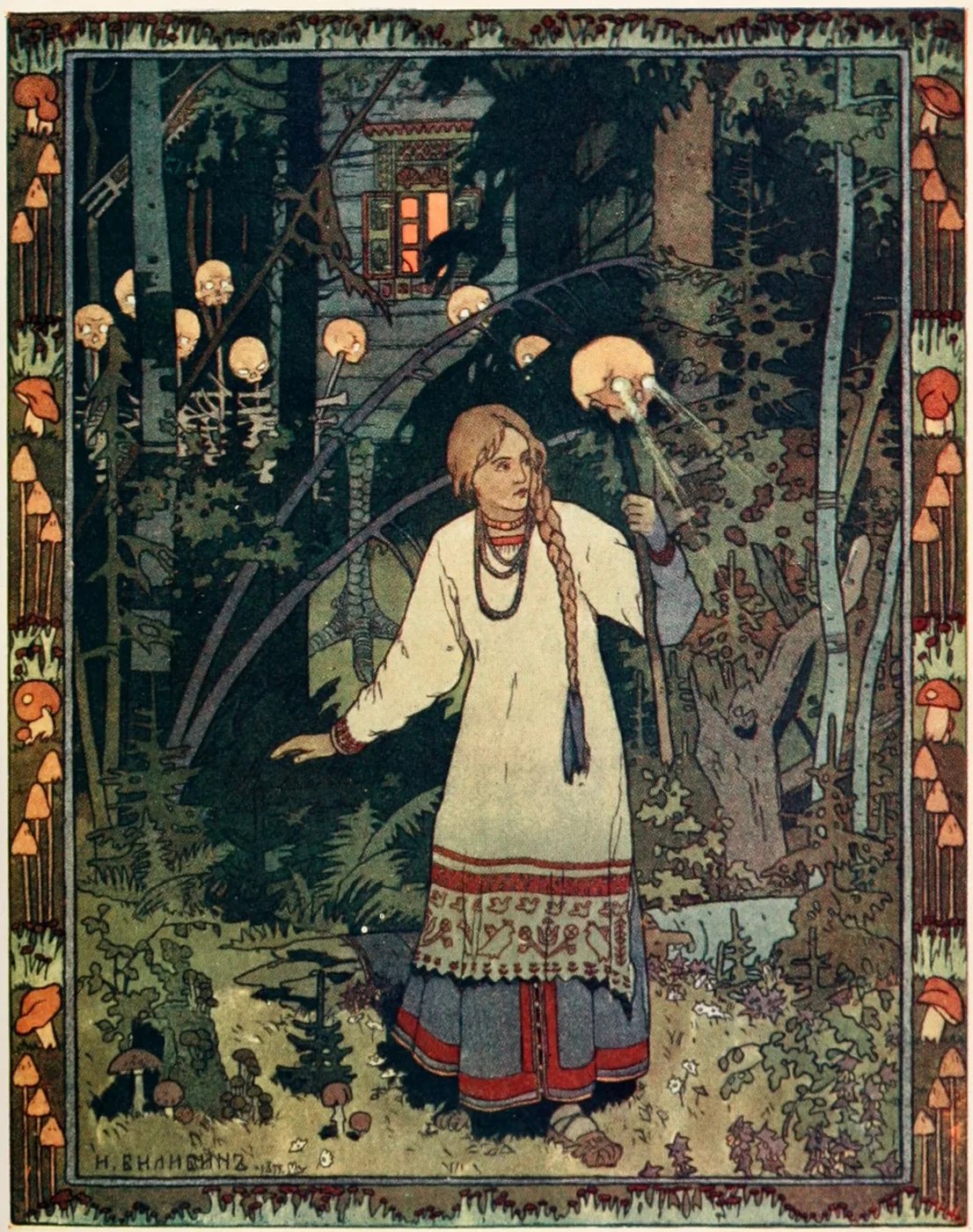
In the villages of Russia, Ukraine and Belarus, the world was shared with beings that the church called the unclean force, nechistaia sila. Some were dangerous, some useful, most both. People did not worship them. They lived alongside them, with rules and courtesies, much as the Finns lived with the haltija and the väki (Väki, the Sauna and the Forest). This lesson meets them, following Linda Ivanits and W. F. Ryan.
The domovoi
Every house had its domovoi, "the one of the house", often called simply "grandfather" or "the master". He lived behind or under the stove, and was imagined as a small, hairy old man, sometimes looking like the head of the family. A content domovoi kept the household in order, cared for the animals and warned of coming trouble, by groaning, pulling a sleeper's hair or pressing on their chest at night. An offended one threw things, tormented the horses and made the family's luck go bad.
He belonged to the family as much as to the house. When a family moved, they invited him to come with them: by carrying embers from the old stove to the new one, or by setting out an old bast shoe for him to ride in, with words such as "Grandfather, come with us to the new house". A new house was thought to be in danger until someone, or something, had died in it, and in some places the first to enter was a cat or a rooster.
Lesson 5 of 7 · 16 min