IN THIS LESSON
Jewish Magic · Lesson 4 of 7
Masters of the Name
The divine names and the people trusted with them. The Name spoken only by the high priest, the names of twelve, forty-two and seventy-two letters, and the legend that Moses killed with a word; the Pious of Germany, who passed on the Name over water; the ba'alei shem of early modern Poland, healers, amulet-writers and exorcists; the Ba'al Shem Tov, who began as one and founded Hasidism; Samuel Falk, the Ba'al Shem of London; and Isaac Luria's warning against using the names at all.
At the heart of Jewish magic stand the names of God. A name, in this tradition, is not a label but a channel of the power it names. Whoever knows how to use it can work wonders, and whoever misuses it is in grave danger. This lesson follows the names and the people trusted with them.
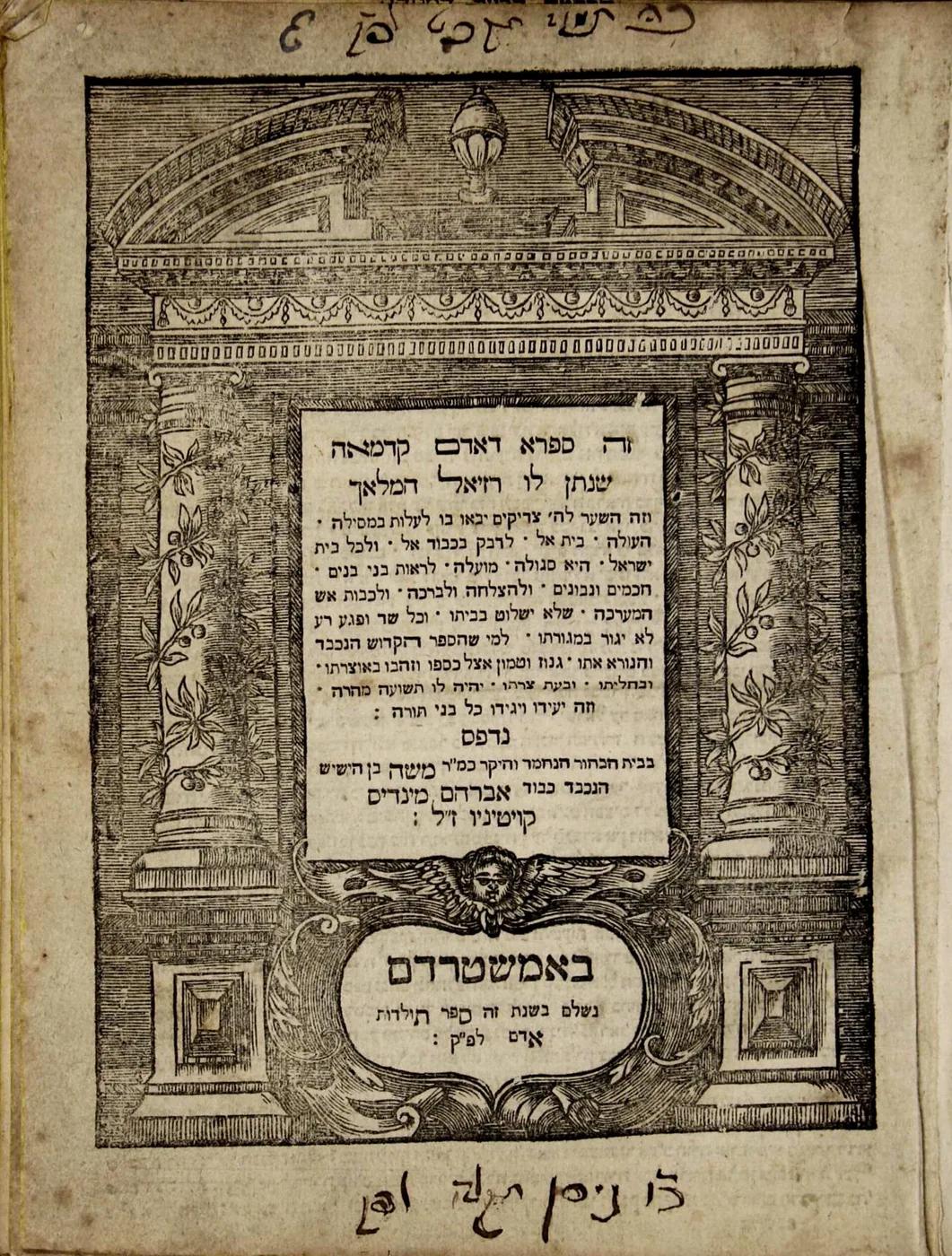
The Name
When Moses asked God's name at the burning bush, he was answered with the four letters yod, he, vav, he (Exodus 3:13–15), the Tetragrammaton (The Divine Names on the Tree). By the time of the Second Temple it was spoken aloud only by the high priest on the Day of Atonement. When the people in the Temple court heard the Name from his mouth, the Mishnah says, they knelt and fell on their faces (Yoma 6:2). After the Temple fell in 70 CE its pronunciation was no longer used, and Jews read Adonai, "my Lord", in its place. The Mishnah warns that "one who pronounces the Name by its letters" has no share in the world to come (Sanhedrin 10:1).
The rabbis knew of longer names. The Talmud says that the name of twelve letters was once taught to every priest, and that the name of forty-two letters was taught only to someone "modest and humble, in the middle of his life, not angry and not drunk" (Kiddushin 71a). The forty-two letters were later arranged as the initials of a prayer, the Ana be-Koach, sung in the synagogue to this day. The name of seventy-two is drawn from three verses of Exodus (14:19–21), each of 72 letters, read in a set pattern to give 72 names of three letters each; Christian and Hermetic magicians made them 72 angels (The Angels of Time).
Legends gave the names terrible power. Moses killed an Egyptian who was beating a Hebrew slave. The next day one of two Hebrews he found quarrelling asked him, "Do you say you will kill me, as you killed the Egyptian?" From that word "say", explains Rashi, following the midrash, "we learn that he killed him with the Explicit Name" (Rashi on Exodus 2:14). The names on amulets and in spells are usually not the Tetragrammaton itself but substitutes, permutations, ciphers and initials, such as the Shaddai on the doorpost and the AGLA of the charms, which you can unpick in the Amulet Writer.
Lesson 4 of 7 · 16 min