Mesopotamian Magic · Lesson 2 of 7
Demons and Their Defenders
The evil demons of the Udug-hul and the terrible Seven; Lamaštu, daughter of Anu, who preyed on mothers and babies, and the gifts and boat that sent her away; Pazuzu, king of the wind demons, set against her; and the guardians — the fish-cloaked sages buried under the floor, and the great winged bulls at the gates.
The Mesopotamians lived in a world thick with demons. They were not fallen angels or the servants of a single devil: they were forces of nature and disease, sent by the gods or acting on their own, without pity and without understanding. Against them the exorcist had incantations, and every household had protectors. This lesson meets both.
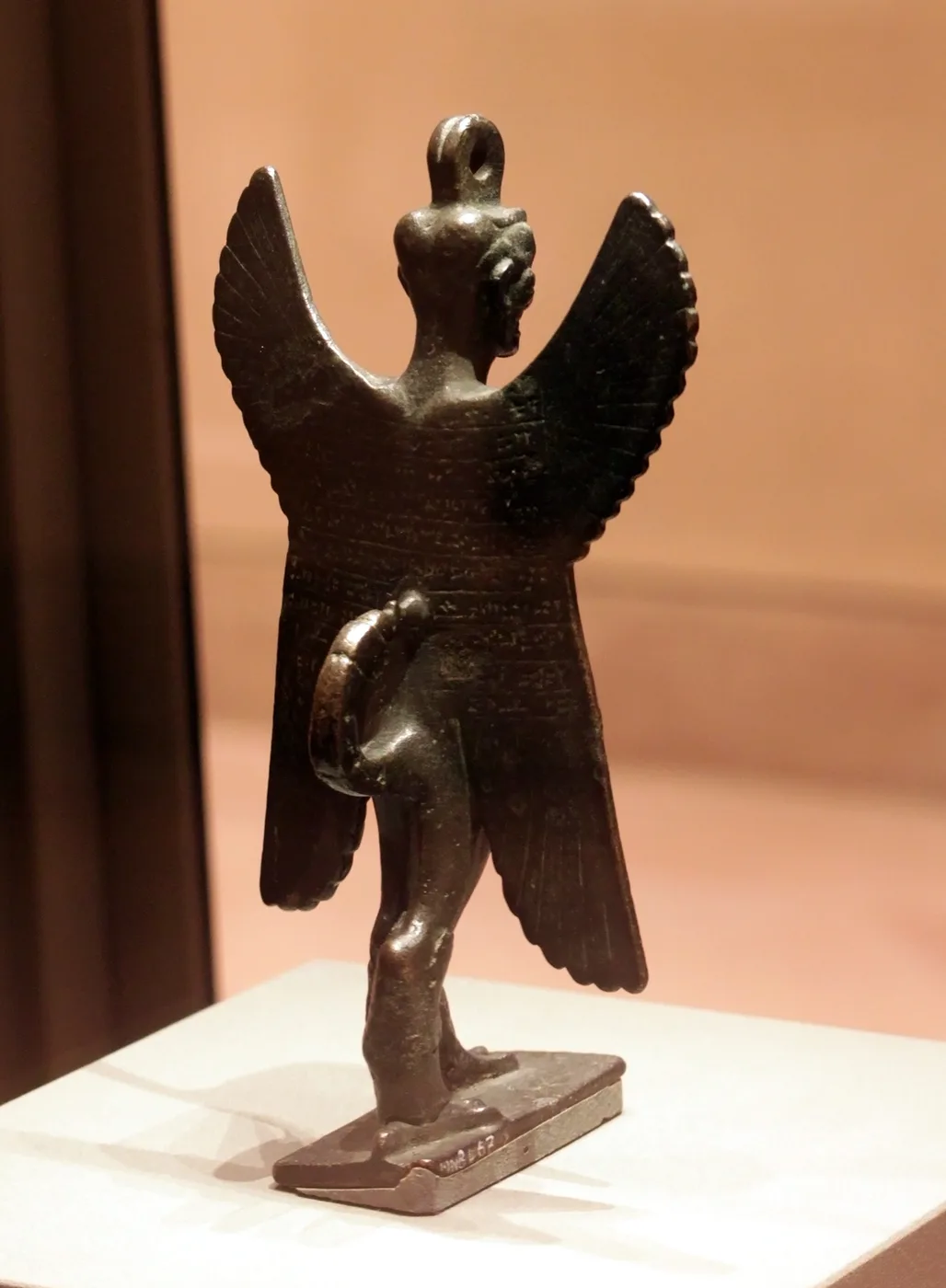
The evil ones
The great incantation series against demons is called, from its Sumerian opening, Udug-hul, "evil demon". Written in Sumerian with an Akkadian translation, it was copied for more than two thousand years. Its demons come in classes: the utukku, the gallû, the rābiṣu (the "lurker"), the ahhāzu ("seizer") and many more. They have no shape of their own, slip under doors and through the cracks of walls, and seize a man by the head, the hand or the heart. Most feared of all were the Seven, born in the mountains of the west, who knew no mercy, heard no prayer and took no bribe; the incantations describe them as a storm sweeping over the land.
Disease itself was demonic. The diagnosis "hand of a ghost", "hand of a god" or "seizure of a demon" told the exorcist which rite to perform (Ghosts, Healing and the Underworld).
Lesson 2 of 7 · 15 min