Mesopotamian Magic · Lesson 3 of 7
Witchcraft and the Two Burnings
The witch and her figurines, Hammurabi's river ordeal and the Assyrian death penalty; Maqlû, the night-long burning of the witch's images in the month of Abu; and Šurpu, the other Burning, in which a sufferer's sins and broken oaths are peeled off with an onion, unravelled with a mat and plucked with the wool, and given to the fire.
The Mesopotamians feared witches as much as demons, and they had a great deal of law and ritual for dealing with them. Two of their longest rituals were both called the Burning: Maqlû, which burned the witch's image, and Šurpu, which burned the sufferer's own sins. Between them they show the two faces of misfortune: what others do to us, and what we have done ourselves.
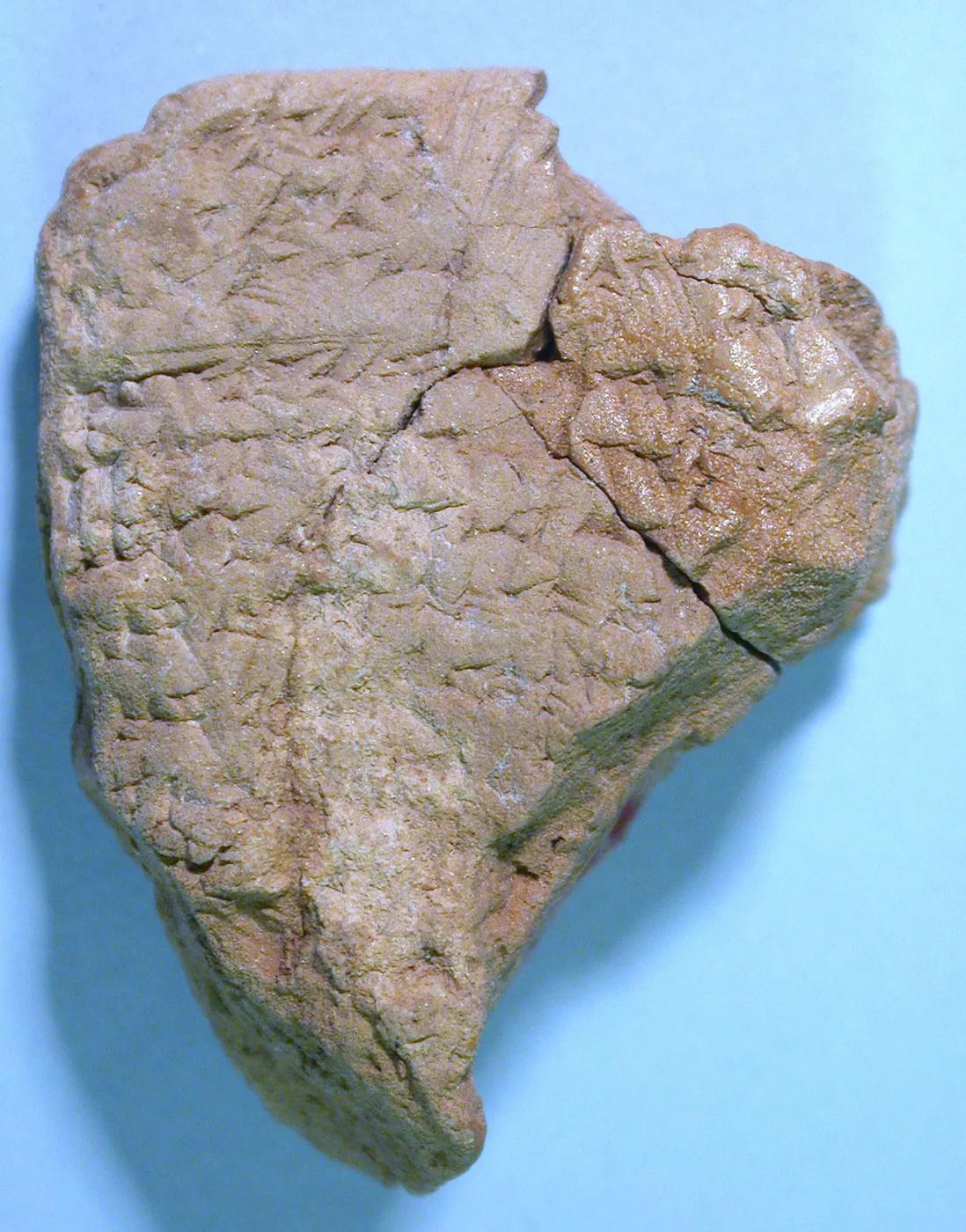
The witch
The witch, kaššāptu (a man was kaššāpu), worked kišpū, witchcraft: harmful magic done in secret. In the incantations she makes images of her victim and buries them, binds them or feeds them to dogs; she takes his spittle, hair, nail-clippings or the earth from his footprint; she gives him bewitched food and drink; she speaks against him before the gods. Her victim falls ill, loses his wealth and his wits, and is cut off from his own god. She was usually imagined as a woman, often a foreigner or a member of the household, but men were accused too.
The law took it seriously. The Laws of Hammurabi, around 1754 BCE, open with it. In Harper's old translation of the second law: "If a man charge a man with sorcery, and cannot prove it, he who is charged with sorcery shall go to the river" and throw himself in. If the river overcame him, his accuser took his house; if he came out unharmed, the accuser was put to death and the accused took his. The Middle Assyrian Laws, about 1100 BCE, simply ordered death for a man or woman caught practising witchcraft. But most witchcraft was never brought to court. It was treated, like a disease, by the exorcist.
Lesson 3 of 7 · 16 min