IN THIS LESSON
Mesopotamian Magic · Lesson 5 of 7
Heavenly Writing: Stars, Kings and the Substitute
The sky as the gods' writing — the seven thousand omens of Enūma Anu Enlil, the Venus tablet of Ammiṣaduqa, the king's astrologers and their letters; the eclipse that threatened the king, and the substitute who reigned and died in his place; the star lists of MUL.APIN, the astronomical diaries, and the birth of the zodiac and the horoscope.
To a Babylonian scholar the night sky was šiṭir šamê, the writing of heaven: a text the gods wrote and rewrote each night in stars, planets and the Moon. Reading it was the most prestigious divination of all, and it concerned not private people but the king and the land. From that reading came the first systematic astronomy and, at the end, the astrology of the West (The History of Astrology).
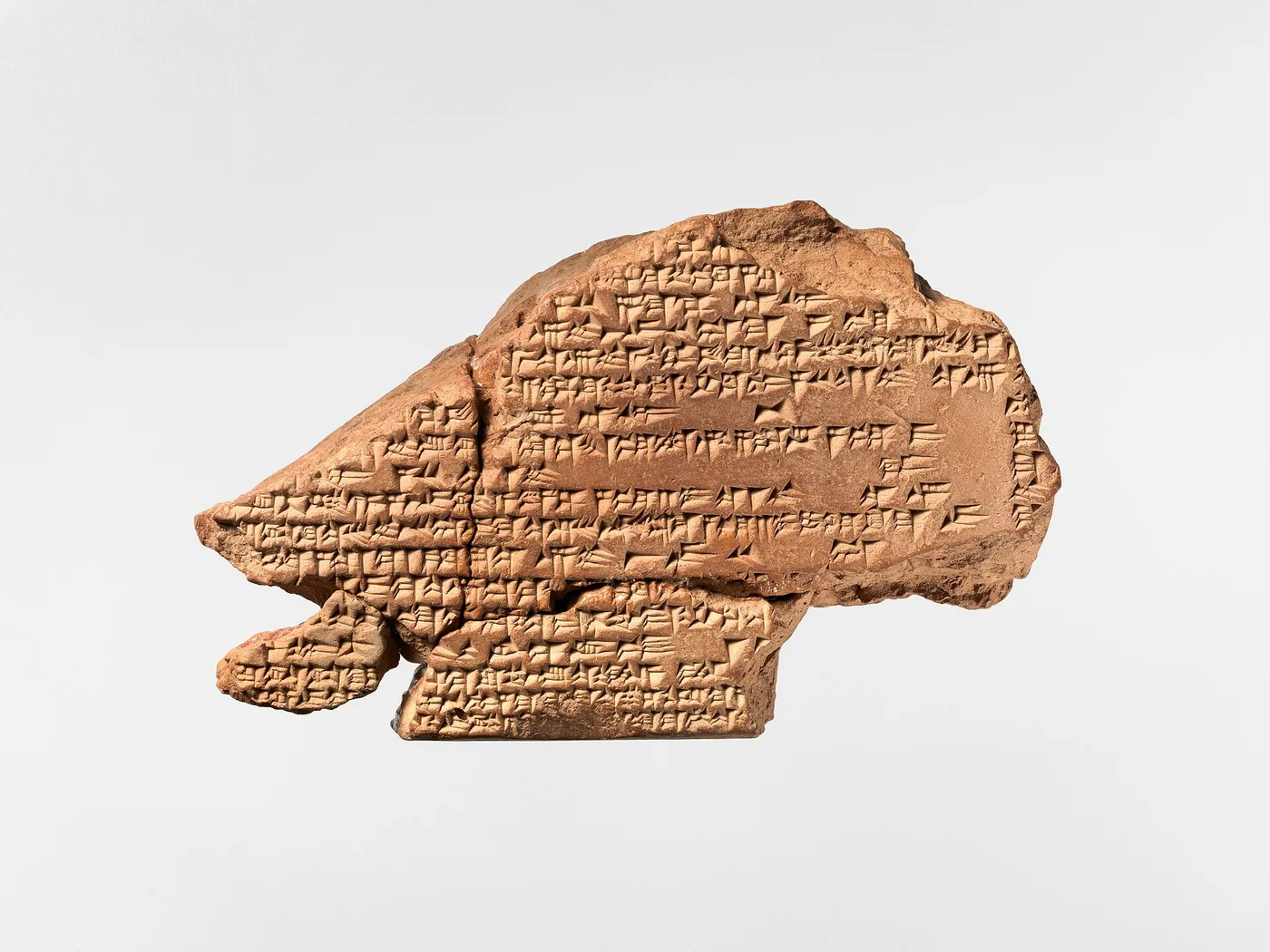
Enūma Anu Enlil
The great series of sky omens is called, from its opening words, Enūma Anu Enlil, "When Anu and Enlil", the gods who set the heavens in order. Compiled over the later second millennium and standardised in the first, it fills some seventy tablets with about seven thousand omens, in four great parts: the Moon (named for the god Sîn), the Sun (Šamaš), weather (Adad) — thunder, clouds, earthquakes — and the stars and planets (Ishtar). An omen might read, in the usual form, if the Moon is eclipsed in such a month, on such a day, at such a watch, then the king will die, or rain will fail, or a foreign enemy will come.
Its sixty-third tablet, the Venus tablet of Ammiṣaduqa, records the first and last risings of Venus over twenty-one years under a king of the first Babylonian dynasty in the seventeenth century BCE — some of the oldest planetary observations that survive.
Lesson 5 of 7 · 15 min