IN THIS LESSON
Mesopotamian Magic · Lesson 4 of 7
The Diviner and the Liver
The bārû and his question to Šamaš and Adad; reading the sheep's liver, its Presence, Path and Finger, and the clay liver models of Mari and Babylon; oil on water and smoke in the air; the ten thousand omens of If a City Is Set on a Height, the dream book and the omens of birth; and the namburbi that undid an evil sign before it came true.
The Mesopotamians believed the gods wrote the future into the world. Everything — the shape of a sheep's liver, the flight of birds, a dog in the street, a dream, a child's birth, the stars — could be a sign, and the learned could read it. Their divination is the most systematic the ancient world produced, and its logic shaped the West's for two thousand years.
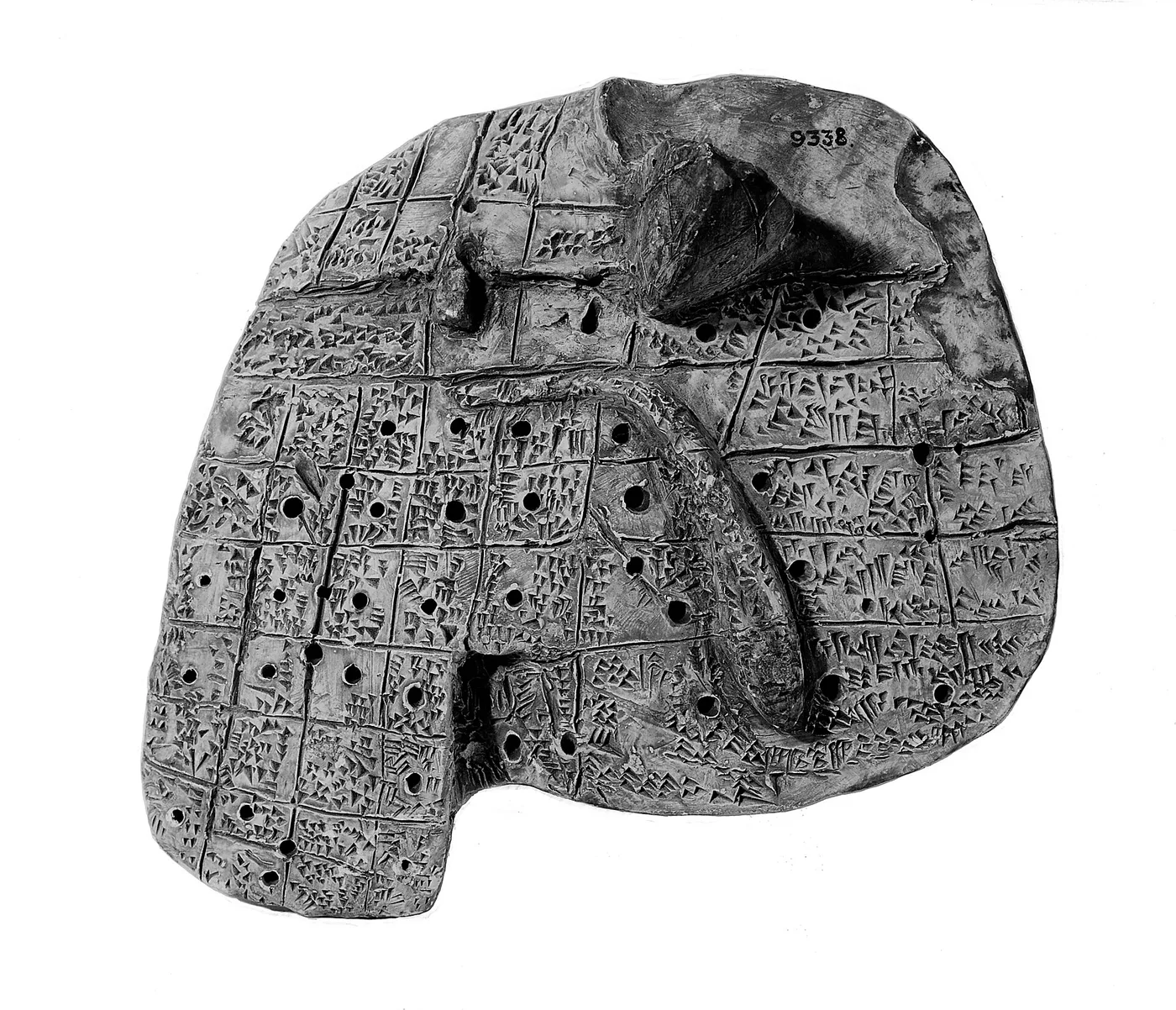
The diviner's question
The bārû, "the one who inspects", was the diviner, a learned professional like the exorcist. His great art was extispicy, the reading of the entrails of a sacrificed lamb, and especially its liver. Before the sacrifice he purified himself and put the question to Šamaš, the Sun and judge, and Adad, the storm god, the "lords of divination": will the king's army take the city? Will this man recover? Should the house be built here? He might whisper it into the lamb's ear. The answer would then be written into the animal's body.
He read the liver by its regions and features, each with a name: the Presence (manzāzu), a groove on the left lobe; the Path (padānu); the Finger (ubānu), the upper projection; the Palace Gate; the gall bladder; the "Strength", the "Well-being" and more. Was the Presence present or missing, the Path doubled, the Finger split, a hole in this place, a mark on that? Each feature had its meanings, some favourable and some not, and the diviner weighed them to reach a yes or a no. If the result was unclear he might sacrifice another lamb.
Lesson 4 of 7 · 15 min