IN THIS LESSON
Tantra and Tibet · Lesson 4 of 7
Kuṇḍalinī, Haṭha Yoga and the Six Yogas
The body as the place of practice. The channels, winds and drops of the tantric body; kuṇḍalinī, the coiled power at the base of the spine; how haṭha yoga grew out of a tantric milieu in the eleventh century and gave the world its postures; the Buddhist completion stage, inner heat and the Six Yogas of Nāropa, from dream yoga to the transference of consciousness; what the scientists who measured tummo found; and why the traditions teach all this only to initiates.
For the tantras the body is not an obstacle to liberation but its instrument and its place. The body of practice is a subtle body, a network of channels, winds and centres laid over the flesh, which earlier lessons describe in the round (The Subtle Body), and which you can explore in the Chakras & Subtle Body. This lesson follows what the tantric traditions did with it.
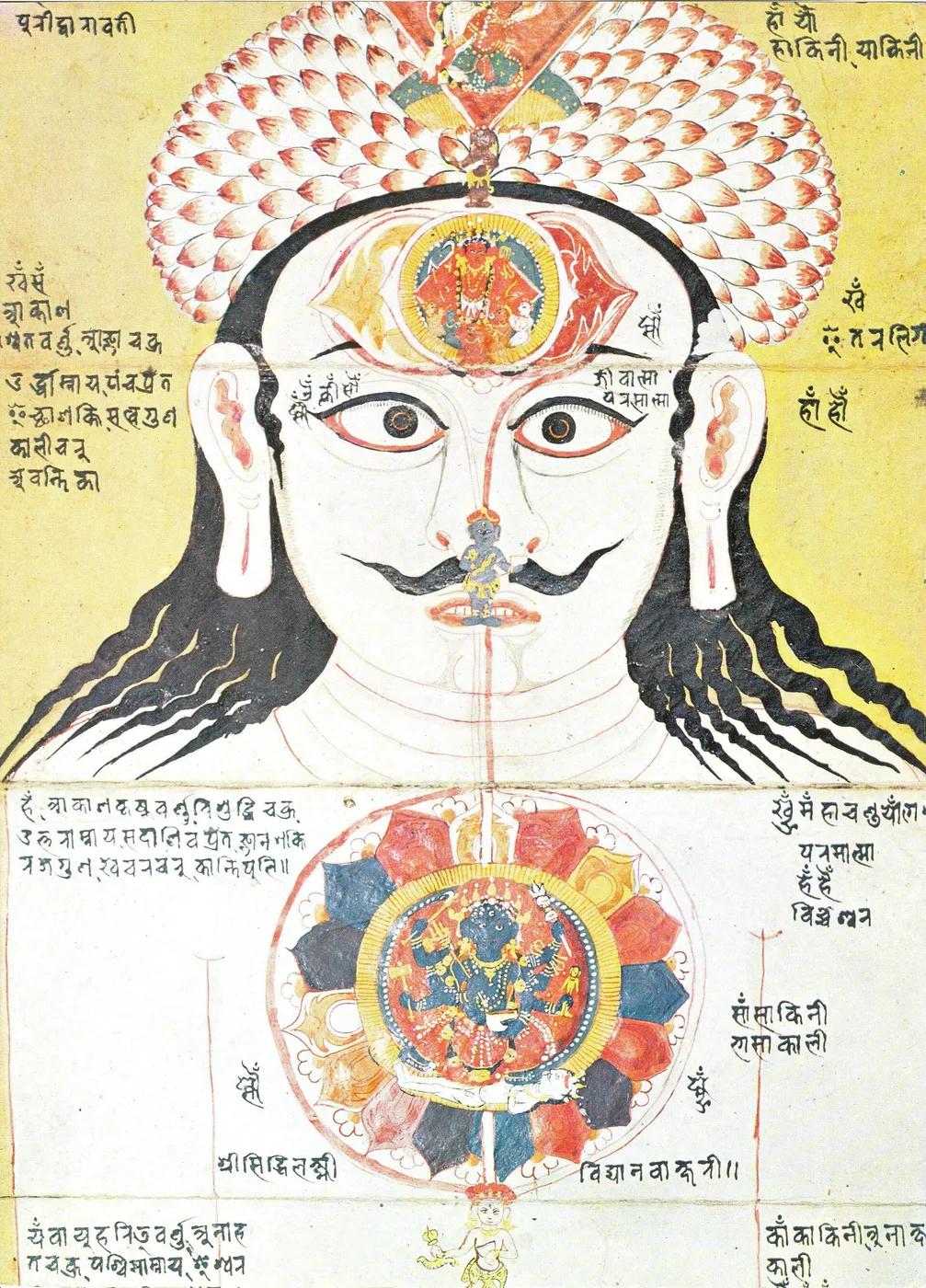
Channels, winds and drops
The texts describe tens of thousands of channels, nāḍī, through which the breath and vital energy, prāṇa, flow. Three matter most: iḍā on the left, piṅgalā on the right, and between them, along the spine, the central channel, suṣumnā, normally closed. Along it lie the wheels, cakra: six with a seventh above the head in the later Hindu system that the West adopted, four in the Buddhist Hevajra Tantra. Buddhist tantras speak too of winds that carry the mind, and drops, bindu, the subtle essences of the body, red and white.
Lesson 4 of 7 · 16 min