IN THIS LESSON
Tantra and Tibet · Lesson 5 of 7
The Diamond Vehicle Comes to Tibet
How Buddhist tantra grew in India and took root in Tibet. The Vajrayāna and its tantras, the eighty-four great adepts and the monastic universities of Nālandā and Vikramaśīla; the Tibetan empire, Padmasambhava and the founding of Samye; Bön; the later spread, from Atiśa and the translators to Marpa and Milarepa; the four schools; the treasure texts; the first reincarnate lamas; and the Dalai Lamas, from a Mongol title in 1578 to the government of 1642.
Buddhist tantra, the Vajrayāna, the "vehicle of the vajra", the diamond thunderbolt that cannot be broken, grew in India from about the seventh century. In India it was destroyed with the great monasteries around 1200. In Tibet, where it arrived in two waves, it became the whole fabric of religious life, and it is from Tibet that most of the world now knows it.
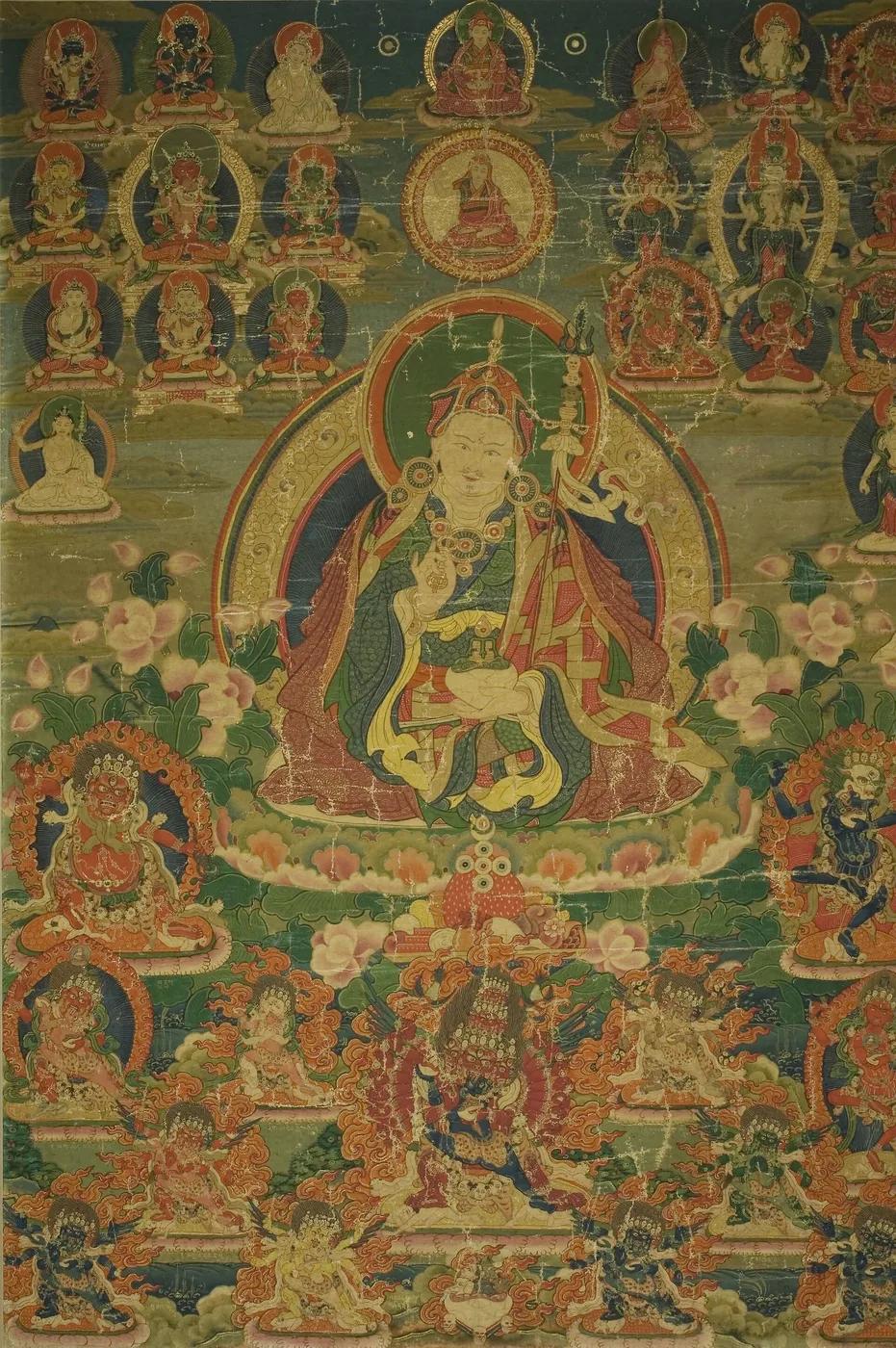
The Vajrayāna in India
The Buddhist tantras promised enlightenment not in countless lifetimes but in this one, through initiation, mantra, mandala and the yoga of the deity. Their great texts, the Guhyasamāja, the Hevajra, the Cakrasaṃvara and, in the eleventh century, the Kālacakra, the "Wheel of Time", were studied in the monastic universities of Nālandā and Vikramaśīla in Bihar under the patronage of the Pāla kings, and practised by wandering yogins.
The tradition remembers those yogins as the mahāsiddhas, the "great adepts", traditionally eighty-four, whose lives were gathered in a Sanskrit collection of the eleventh or twelfth century. They were kings and beggars, monks and fishermen, a blacksmith, a cobbler, and women such as the princess Lakṣmīṅkarā: Saraha the arrow-maker, whose songs mock learning; Lūipa, who ate fish guts; Virūpa, who stopped the sun; Tilopa, who pounded sesame seeds. Their stories teach that enlightenment can come in any life, often by breaking its rules.
Lesson 5 of 7 · 17 min