IN THIS LESSON
Tantra and Tibet · Lesson 6 of 7
Lamas, Deities and Ritual
Tibetan tantra as it is lived. The lama and the three roots; empowerment, transmission and the vows that bind; peaceful and wrathful deities, protectors and ḍākinīs; deity yoga in outline; the vajra and bell, the ritual dagger, the skull cup and the dough offerings; prayer flags, wheels and stones; the masked dances; the state oracle; Machig Labdrön and the rite of chöd, the offering of one's own body; and divination, astrology and protection.
Tibetan Buddhism is a monastic and scholarly religion, and also a religion of ritual, protection and power. The anthropologist Geoffrey Samuel called its lamas "civilized shamans": they meditate and teach, and they also exorcise, heal, divine and bless. This lesson describes the public face of that world and the outline of its practice, as teachers and scholars have described it.
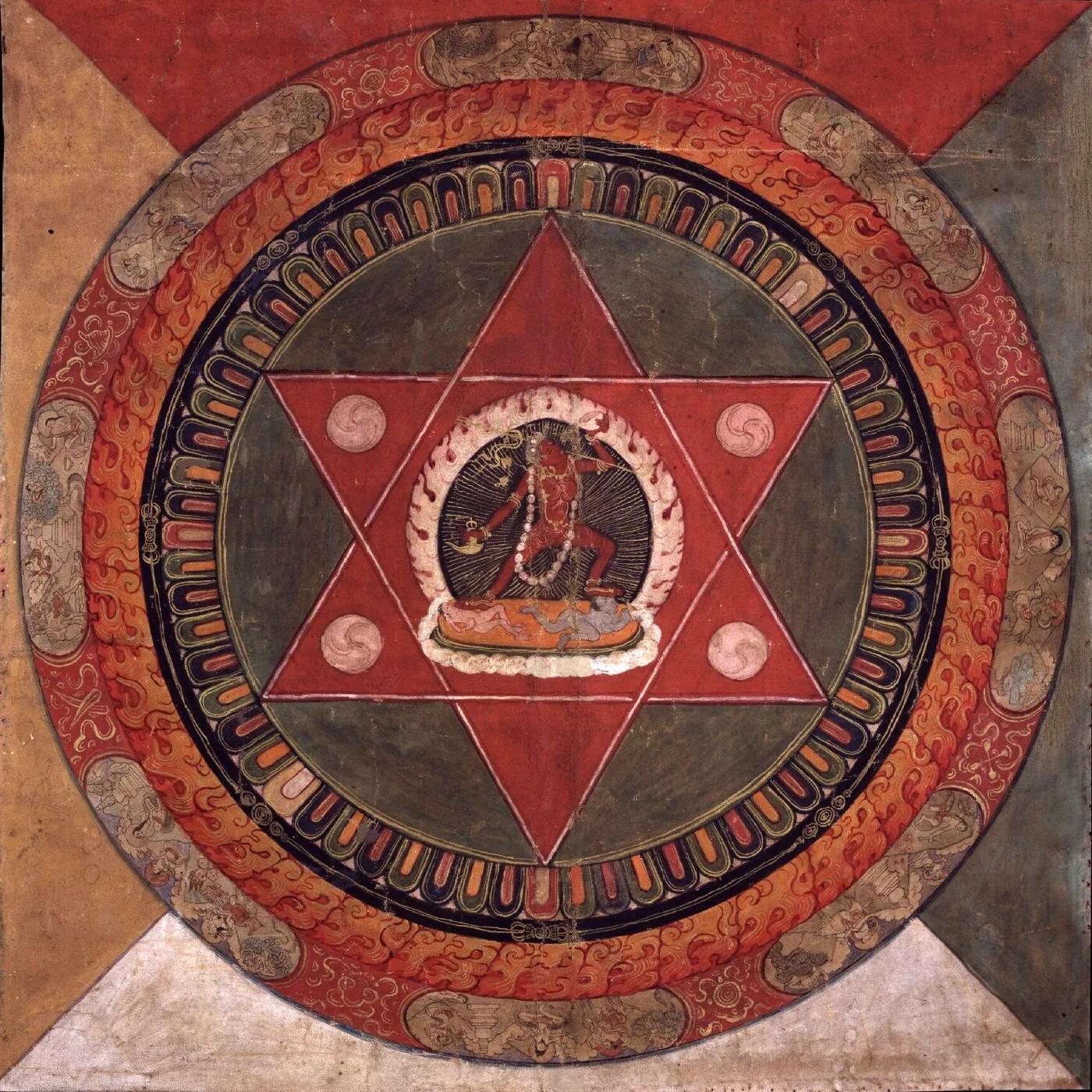
The lama and the three roots
The word lama translates the Sanskrit guru. In tantra the teacher is the doorway to everything, and practitioners take refuge not only in the Buddha, his teaching and the community, but in the three roots: the lama, source of blessing; the yidam, the meditational deity, source of accomplishment; and the protectors and ḍākinīs, source of activity. Devotion to the lama is central, and much is asked of it (The Book of the Dead, the Exile and the West).
Lesson 6 of 7 · 17 min