THE GOETIA · SPIRIT 67 OF 72 · DUKE
Amdusias
The pattern that carries a feeling
Also spelt Amduscias
Duke Venus · 29 legions
HOW IT APPEARS
A unicorn, then a man.
WHAT IT DOES
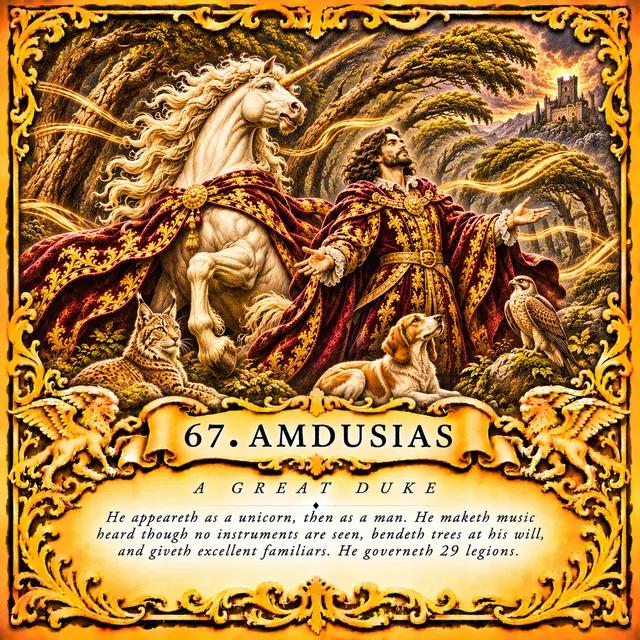
Makes music heard with no instrument seen, makes trees bend at will, and gives excellent familiars.
Familiars
Amdusias's unseen music and bending trees create a vivid image of influence expressed through rhythm, atmosphere and the movement of a shared environment.
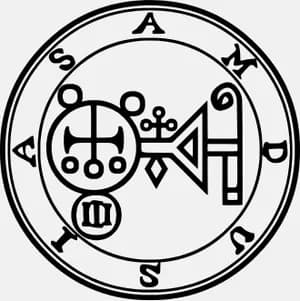
The seal of Amdusias
The seal, or sigil, as the 1904 edition printed it, to be worn before the magician as a lamen. The Goetia asks for each seal to be made in the metal of the spirit's rank: for a duke, copper.
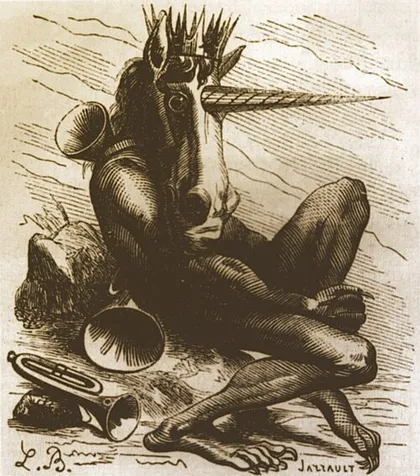
In the Sloane manuscript
The Goetia names this duke Amduscias and describes him first as a unicorn, later taking human form. Trumpets and other instruments are heard without being seen; the text also attributes to him the bending of trees and the provision of familiar spirits. Goetia, spirit 67, Sloane MS 3825
A seventeenth-century manuscript of the Goetia, which can differ in spelling and detail from the 1904 edition given above.
Rank, legions and the angel against it
- RANK, PLANET AND SEAL
Duke: ♀ Venus, its seal made in copper
- LEGIONS UNDER IT
- 29Paimon has the most, 200.
- WHEN THE GOETIA SAYS TO CALL IT
Dukes: sunrise to noon, in clear weather
- THE ANGEL SET AGAINST IT
- Eiael איעאל, the 67th of the 72 angels of the Shem ha-Mephorash, of the Angels. In Dr Rudd's Goetia each spirit is bound by the angel of the same number.
- IN THE OLDER LISTS
- In Weyer's Pseudomonarchia Daemonum (1577); also spelt Amduscias in Weyer, the manuscripts and the 1904 edition.
WRITTEN FOR OCCULTUM
A reading of Amdusias
A SYMBOLIC READING
A contemporary symbolic interpretation can consider how music organises attention without needing an argument. Repetition, pace and emphasis help create an atmosphere, whether in a composition, a room or a conversation. Amdusias invites awareness of these subtle arrangements and of the responsibility involved in shaping another person's experience through them.
A PRACTICE
Listen to a short piece of music and note where your attention or mood changes. Identify a feature that may contribute, such as rhythm, volume or silence. Afterwards, make one deliberate adjustment to your working environment and observe its effect on concentration.
AN ORIGINAL INVOCATION
Amdusias, let rhythm awaken a thoughtful attention, let silence have its place within expression, and let the atmosphere I create be shaped with care.
A line for contemplation, newly written: not a conjuration from the Goetia.
TO REFLECT ON
Which repeated pattern is quietly directing the atmosphere around me?
Historical description after Joseph H. Peterson's digital edition of the Lemegeton, Part 1: Goetia, a transcription of British Library Sloane MS 3825, offered under CC BY 4.0; the English here is a new paraphrase. Heading, summary, symbolic reading, practice, invocation and question: original editorial writing for Occultum.
Spirits of like office
The spirits that share most of what Amdusias is said to do.

Learn more in the lessons
- The Goetia — The 72 Spirits of Solomon · 18 min
- One Spirit, Three Texts · 13 min · free
- Inside the Goetia — How a Book of Spirits Works · 30 min
- Discernment & Protection · to read before any practical spirit work
The Goetia asks for each seal to be made in the metal of the spirit's rank. Given here as history and symbolism, not as instructions.