THE GOETIA · SPIRIT 26 OF 72 · DUKE
Buné
Wealth, speech and what remains
Also spelt Bimé, Bune
Duke Venus · 30 legions
HOW IT APPEARS
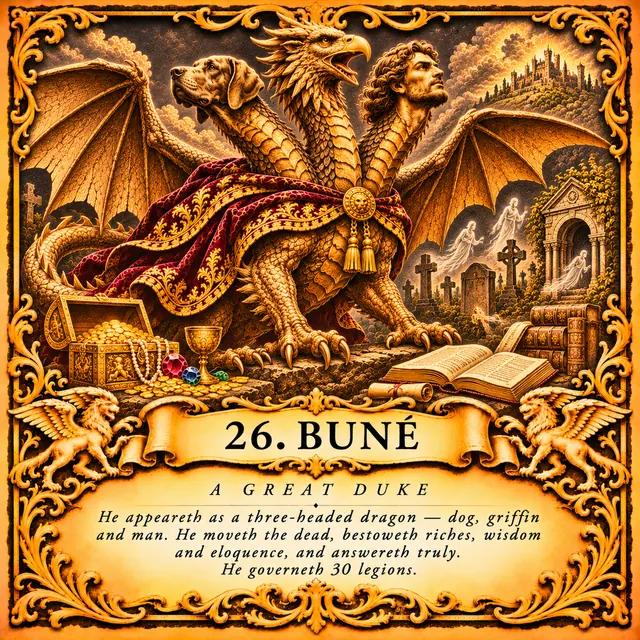
A three-headed dragon — dog, griffin and man — with a high, comely voice.
WHAT IT DOES
Moves the dead and gathers spirits at their tombs, gives riches, wisdom and eloquence, and answers truly.
Treasure & wealthTeaching & knowledge
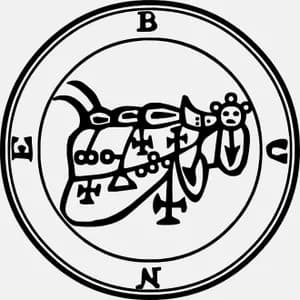
The Goetia gives him two seals and says the first is the better.
Buné connects riches and eloquence with the presence of the dead, inviting reflection on the relationship between prosperity, memory and legacy.
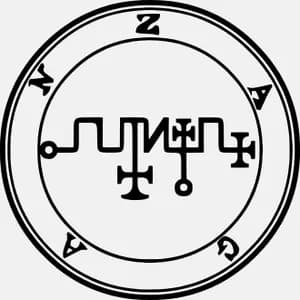
The seal of Buné
The seal, or sigil, as the 1904 edition printed it, to be worn before the magician as a lamen. The Goetia asks for each seal to be made in the metal of the spirit's rank: for a duke, copper.
In the Sloane manuscript
The Goetia's Bune appears as a three-headed dragon with canine, griffin-like and human features. His offices include moving the dead, gathering spirits around tombs, granting riches and making people wise and eloquent. Goetia, spirit 26, Sloane MS 3825
A seventeenth-century manuscript of the Goetia, which can differ in spelling and detail from the 1904 edition given above.
Rank, legions and the angel against it
- RANK, PLANET AND SEAL
Duke: ♀ Venus, its seal made in copper
- LEGIONS UNDER IT
- 30Paimon has the most, 200.
- WHEN THE GOETIA SAYS TO CALL IT
Dukes: sunrise to noon, in clear weather
- THE ANGEL SET AGAINST IT
- Haaiah האאיה, the 26th of the 72 angels of the Shem ha-Mephorash, of the Dominions. In Dr Rudd's Goetia each spirit is bound by the angel of the same number.
- IN THE OLDER LISTS
- In Weyer's Pseudomonarchia Daemonum (1577); also spelt Bimé, Bune in Weyer, the manuscripts and the 1904 edition.
WRITTEN FOR OCCULTUM
A reading of Buné
A SYMBOLIC READING
Symbolically, wealth is placed beside the reminder that a life leaves something behind. Buné invites consideration of what resources make possible and how the story of their use will be carried. Eloquence can celebrate achievement, but a legacy also rests in practical arrangements, shared benefit and the accounts of those affected.
A PRACTICE
Choose a resource you hold, whether money, time or expertise. Describe the good it currently supports and what would happen to that benefit if you were absent. Make one modest improvement that helps its value reach beyond your immediate possession.
AN ORIGINAL INVOCATION
Buné, let prosperity deepen responsibility, and help the resources and words I leave behind carry generosity, clarity and a truthful memory.
A line for contemplation, newly written: not a conjuration from the Goetia.
TO REFLECT ON
What will remain useful after my direct involvement ends?
Historical description after Joseph H. Peterson's digital edition of the Lemegeton, Part 1: Goetia, a transcription of British Library Sloane MS 3825, offered under CC BY 4.0; the English here is a new paraphrase. Heading, summary, symbolic reading, practice, invocation and question: original editorial writing for Occultum.
Spirits of like office
The spirits that share most of what Buné is said to do.



Learn more in the lessons
- The Goetia — The 72 Spirits of Solomon · 18 min
- One Spirit, Three Texts · 13 min · free
- Inside the Goetia — How a Book of Spirits Works · 30 min
- Discernment & Protection · to read before any practical spirit work
The Goetia asks for each seal to be made in the metal of the spirit's rank. Given here as history and symbolism, not as instructions.