IN THIS LESSON
- Waite and the deck
- The [Preface](/read/pictorial-key-to-the-tarot/preface): an embarrassed author
- [Part I](/read/pictorial-key-to-the-tarot/the-veil-and-its-symbols): the history, and a hatchet
- [Part II](/read/pictorial-key-to-the-tarot/the-doctrine-behind-the-veil): the doctrine behind the veil
- [Part III](/read/pictorial-key-to-the-tarot/the-outer-method-of-the-oracles): the outer method
- What it changed
- How to read it now
- Practice: three layers of one card
- Read along
Deep Study · Lesson 5 of 6
Waite's Key — Reading the Tarot as Its Designer Meant
The Pictorial Key to the Tarot read closely beside the cards: Waite's history and his "secret tradition", the trumps in his own words, what he and Pamela Colman Smith changed, and where his meanings came from.
Most people who read tarot today learned it from cards drawn by Pamela Colman Smith to the design of Arthur Edward Waite, published by Rider in London at the end of 1909. Waite explained the deck in a book, The Pictorial Key to the Tarot, and his meanings, often unacknowledged, sit behind most modern guidebooks. Reading him directly is a surprise. He is scornful of fortune-telling, sceptical about the cards' history, deliberately veiled about their "secret tradition", and very precise about what he changed. This study reads the book beside its full text in the Reading Room, where each card's picture stands next to his words.
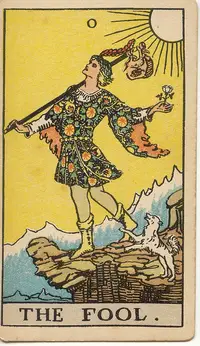
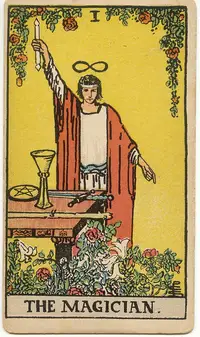
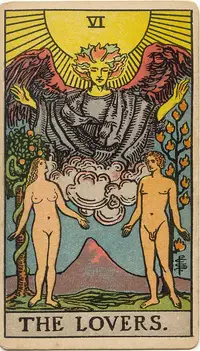
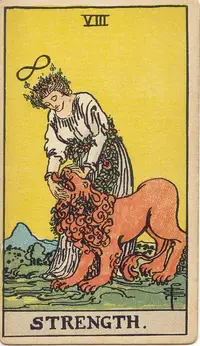
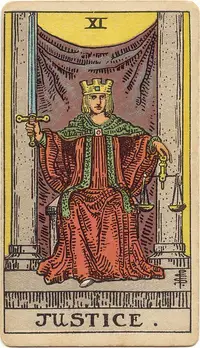
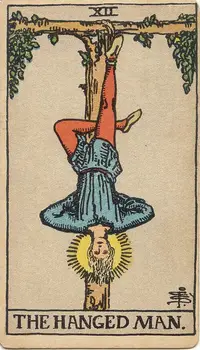
Waite and the deck
Waite (1857–1942) was a prolific scholar of mysticism, freemasonry, alchemy and the Grail, and a member of the Hermetic Order of the Golden Dawn from 1891. When the order split, he led a branch that turned it towards Christian mysticism. The Golden Dawn had its own teaching on the tarot, linking the twenty-two trumps to the Hebrew letters and the paths of the Tree of Life, which members swore to keep secret. Waite's deck and book had to honour that oath while still saying something new, and you can feel the strain on almost every page.
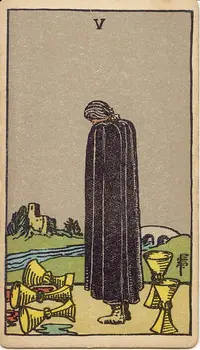
Smith (1878–1951), an artist and illustrator, drew the seventy-eight cards in a few months. Her great innovation was to give every numbered card a scene. In older decks, such as the Tarot de Marseille, the Five of Cups shows five cups and nothing more; in hers, a cloaked figure mourns three spilled cups while two still stand behind him. That single decision made the deck readable by anyone, and it is why it conquered the world.
Lesson 5 of 6 · 30 min
THE CARDS IN THIS LESSON
READ THE SOURCE
- The Pictorial Key to the Tarot · Arthur Edward Waite, 1910 · free in the Reading Room