IN THIS LESSON
Finnish and Slavic Magic · Lesson 2 of 7
The Tietäjä
The Finnish and Karelian 'one who knows'. The tietäjä and the noita; raising one's luonto, the inner power, through anger; illness as something that has come from outside and must be sent back; the origin charm and its parts, from the wound of iron to the serpent on the path and the Frost; the pains sent into the stone that does not weep; Ukko, Mary and Christ in the charms; and the healers in the courts of Lutheran Sweden.
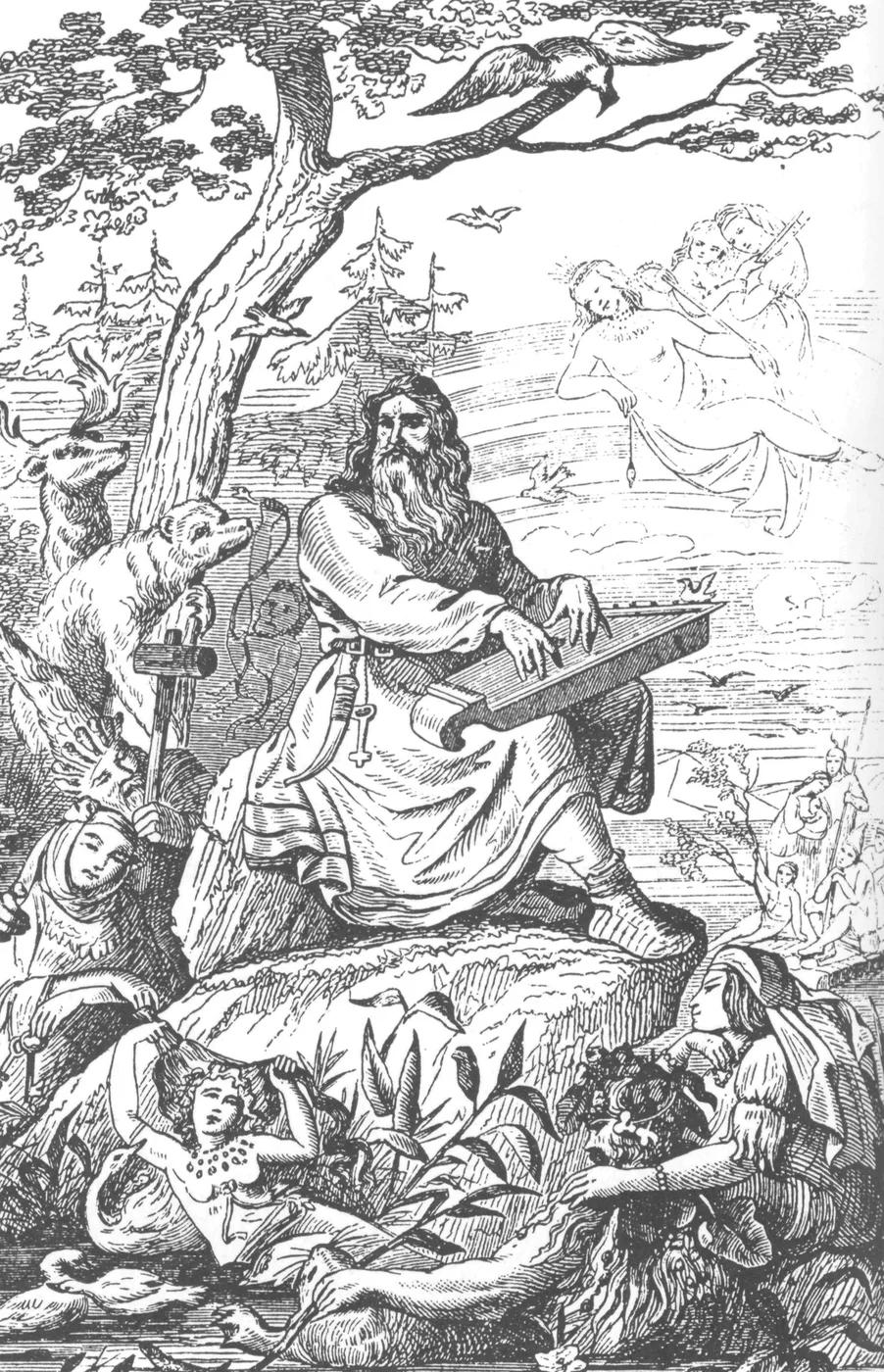
In the villages of Finland and Karelia, when a person or a cow fell ill, when a hunt failed, when a thief had to be found or a wedding protected, people sent for the tietäjä, "one who knows". The word first appears in print in 1733, in a Latin dissertation by Gabriel Maxenius on the natural effects of enchantment, but the figure is far older. The mythical first tietäjä is Väinämöinen himself.
The knower and the witch
The tietäjä was usually a man, though women healers were known too. He was not a priest and held no office. He was a farmer or a fisherman who knew more than others: charms, origins, remedies, and the ways of the unseen. He healed and prevented illness; he guarded cattle and crops; he protected wedding parties, which were thought to be in danger from envious sorcerers; he named thieves and helped with hunting, fishing and building.
His opposite was the noita, the witch or sorcerer who did harm. The word is very old. It comes from the same root as the Sámi noaidi, and once probably meant a ritual specialist of any kind (The Noaidi and the Sámi Drum). In later Finnish it came to mean a malicious sorcerer, and people often explained illness as a noita's work. Whether a particular man was a tietäjä or a noita depended on who was speaking: one family's healer was another's witch.
Lesson 2 of 7 · 17 min
READ THE SOURCE
- Kalevala · Elias Lönnrot (compiler), 1849; English 1888 · free in the Reading Room