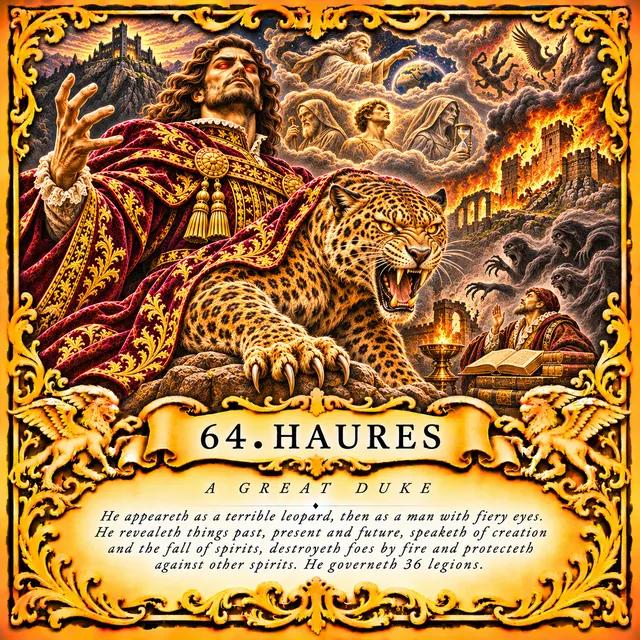
THE GOETIA · SPIRIT 64 OF 72 · DUKE
Haures
The story told by a powerful voice
Also spelt Flauros, Hauras, Havres
Duke Venus · 36 legions
HOW IT APPEARS
A terrible leopard, then a man with fiery eyes.
WHAT IT DOES
Tells past, present and future (truly only in the triangle), speaks of the creation and the fall of spirits, destroys enemies by fire and protects the magician from other spirits.
Past & futureTeaching & knowledgeWar & destruction
Thirty-six legions in the 1904 edition and the Sloane manuscript; Weyer and Scot give twenty.
Haures combines fierce appearance, sweeping explanations and conditional truthfulness, inviting scrutiny of accounts that promise to explain everything at once.
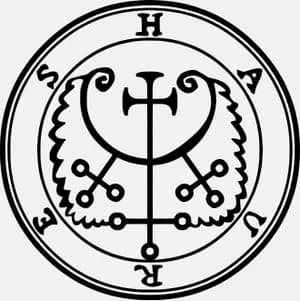
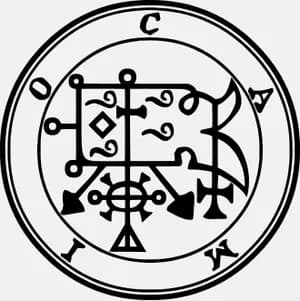
The seal of Haures
The seal, or sigil, as the 1904 edition printed it, to be worn before the magician as a lamen. The Goetia asks for each seal to be made in the metal of the spirit's rank: for a duke, copper.
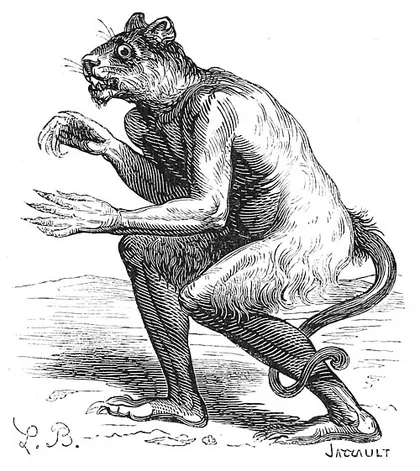
In the Sloane manuscript
Called Flauros in this Goetia manuscript, Haures appears as a leopard and later as a man with fiery eyes. He discusses creation and the spirits' fall, answers questions about events, destroys enemies by fire and offers protection, while the entry also makes his reliability conditional. Goetia, spirit 64, Sloane MS 3825
A seventeenth-century manuscript of the Goetia, which can differ in spelling and detail from the 1904 edition given above.
Rank, legions and the angel against it
- RANK, PLANET AND SEAL
Duke: ♀ Venus, its seal made in copper
- LEGIONS UNDER IT
- 36Paimon has the most, 200.
- WHEN THE GOETIA SAYS TO CALL IT
Dukes: sunrise to noon, in clear weather
- THE ANGEL SET AGAINST IT
- Mehiel מחיאל, the 64th of the 72 angels of the Shem ha-Mephorash, of the Archangels. In Dr Rudd's Goetia each spirit is bound by the angel of the same number.
- IN THE OLDER LISTS
- In Weyer's Pseudomonarchia Daemonum (1577); also spelt Flauros, Hauras, Havres in Weyer, the manuscripts and the 1904 edition.
WRITTEN FOR OCCULTUM
A reading of Haures
A SYMBOLIC READING
In an original symbolic interpretation, the force of a complete story can be examined alongside the interests of its teller. An explanation may feel satisfying because it gives every difficulty a place, yet still require evidence at each step. Haures invites the seeker to notice when anger or allegiance makes an account easier to accept.
A PRACTICE
Take a persuasive explanation of a difficult event. Break it into separate claims and mark which are supported, uncertain or contradicted. Consider what the narrator gains from that version, then revise your own account to reflect what can actually be established.
AN ORIGINAL INVOCATION
Haures, let the intensity of a story leave room for examination, let anger become visible within my judgement, and let each claim answer to the evidence available.
A line for contemplation, newly written: not a conjuration from the Goetia.
TO REFLECT ON
What makes this account convincing besides the strength with which it is told?
Historical description after Joseph H. Peterson's digital edition of the Lemegeton, Part 1: Goetia, a transcription of British Library Sloane MS 3825, offered under CC BY 4.0; the English here is a new paraphrase. Heading, summary, symbolic reading, practice, invocation and question: original editorial writing for Occultum.
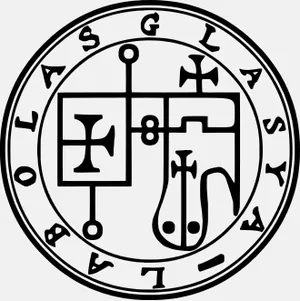
Spirits of like office
The spirits that share most of what Haures is said to do.



Learn more in the lessons
- The Goetia — The 72 Spirits of Solomon · 18 min
- One Spirit, Three Texts · 13 min · free
- Inside the Goetia — How a Book of Spirits Works · 30 min
- Discernment & Protection · to read before any practical spirit work
The Goetia asks for each seal to be made in the metal of the spirit's rank. Given here as history and symbolism, not as instructions.