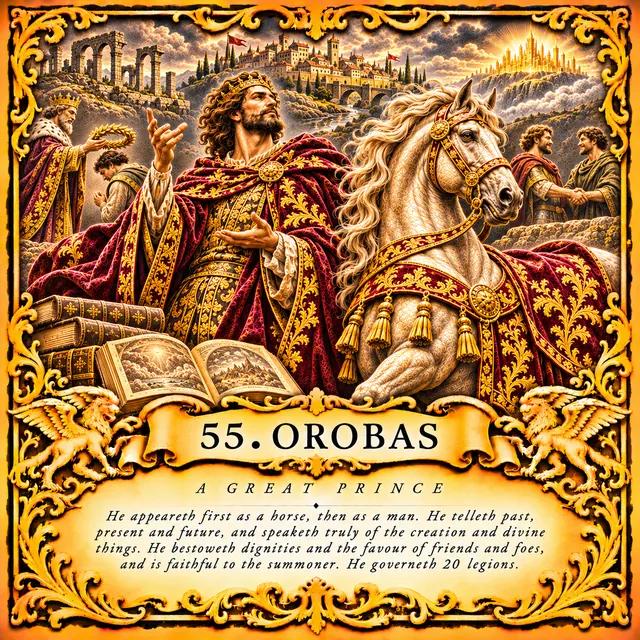
THE GOETIA · SPIRIT 55 OF 72 · PRINCE
Orobas
Trust that can be examined
Prince Jupiter · 20 legions
HOW IT APPEARS
A horse, then a man.
WHAT IT DOES
Tells past, present and future, gives dignities and favour, and answers truly about creation and the divine.
Past & futureHonours & favourTeaching & knowledge
Said to be faithful to the magician and to let no spirit tempt him.
Orobas is distinguished in the Goetia by fidelity and truthful answers, offering a focus for the qualities that make guidance worthy of confidence.
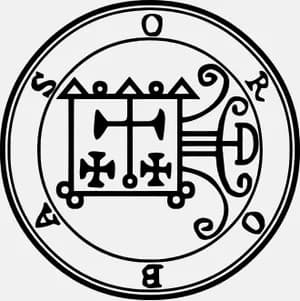
The seal of Orobas
The seal, or sigil, as the 1904 edition printed it, to be worn before the magician as a lamen. The Goetia asks for each seal to be made in the metal of the spirit's rank: for a prince, tin.
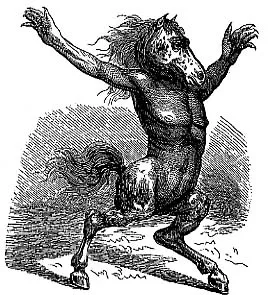
In the Sloane manuscript
The Goetia describes Orobas appearing first as a horse and then in human form. He answers questions about events, divinity and creation, grants dignities and favour, and is explicitly characterised as faithful to the operator and protective against the temptations of other spirits. Goetia, spirit 55, Sloane MS 3825
A seventeenth-century manuscript of the Goetia, which can differ in spelling and detail from the 1904 edition given above.
Rank, legions and the angel against it
- RANK, PLANET AND SEAL
Prince: ♃ Jupiter, its seal made in tin
- LEGIONS UNDER IT
- 20Paimon has the most, 200.
- WHEN THE GOETIA SAYS TO CALL IT
Princes: any hour of the day
- THE ANGEL SET AGAINST IT
- Mebahaiah מבהיה, the 55th of the 72 angels of the Shem ha-Mephorash, of the Principalities. In Dr Rudd's Goetia each spirit is bound by the angel of the same number.
- IN THE OLDER LISTS
- In Weyer's Pseudomonarchia Daemonum (1577).
WRITTEN FOR OCCULTUM
A reading of Orobas
A SYMBOLIC READING
In a contemporary symbolic reading, fidelity becomes a quality demonstrated through consistent conduct. Trust grows when guidance can be questioned, promises are proportionate and a person's freedom to decide is respected. Orobas invites reflection on relationships that make judgement steadier and allow uncertainty to be acknowledged without threatening the bond.
A PRACTICE
Think of someone whose advice you trust. Identify the actions that earned that trust and one boundary that keeps the relationship sound. When considering their next suggestion, state your own reasons for accepting, adapting or declining it.
AN ORIGINAL INVOCATION
Orobas, may fidelity become visible in conduct, may guidance welcome honest questions, and may trust support a clear and freely considered judgement.
A line for contemplation, newly written: not a conjuration from the Goetia.
TO REFLECT ON
Which repeated actions have made this guidance dependable?
Historical description after Joseph H. Peterson's digital edition of the Lemegeton, Part 1: Goetia, a transcription of British Library Sloane MS 3825, offered under CC BY 4.0; the English here is a new paraphrase. Heading, summary, symbolic reading, practice, invocation and question: original editorial writing for Occultum.
Spirits of like office
The spirits that share most of what Orobas is said to do.

Learn more in the lessons
- The Goetia — The 72 Spirits of Solomon · 18 min
- One Spirit, Three Texts · 13 min · free
- Inside the Goetia — How a Book of Spirits Works · 30 min
- Discernment & Protection · to read before any practical spirit work
The Goetia asks for each seal to be made in the metal of the spirit's rank. Given here as history and symbolism, not as instructions.