THE GOETIA · SPIRIT 12 OF 72 · PRINCE
Sitri
Desire and the freedom of another
Also spelt Bitru
Prince Jupiter · 60 legions
HOW IT APPEARS
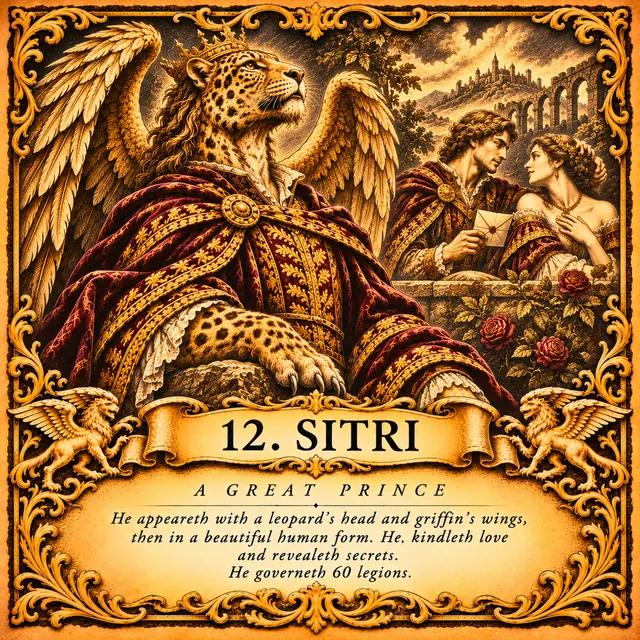
A leopard's head with griffin's wings, then a beautiful person.
WHAT IT DOES
Inflames love between men and women and reveals secrets.
Love & friendship
Sitri presents desire in an intense and troubling form, offering material for reflection on attraction, vulnerability and the limits of influence.
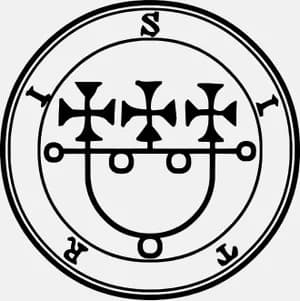
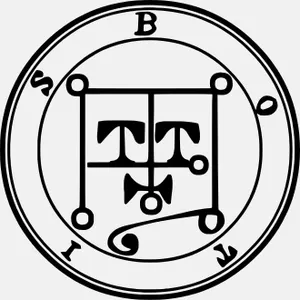
The seal of Sitri
The seal, or sigil, as the 1904 edition printed it, to be worn before the magician as a lamen. The Goetia asks for each seal to be made in the metal of the spirit's rank: for a prince, tin.
In the Sloane manuscript
The Goetia describes Sitri with a leopard's face and griffin-like wings, later taking a beautiful human form. His assigned offices include inflaming sexual desire and compelling exposure, reflecting the coercive love-magic claims of the text. Goetia, spirit 12, Sloane MS 3825
A seventeenth-century manuscript of the Goetia, which can differ in spelling and detail from the 1904 edition given above.
Rank, legions and the angel against it
- RANK, PLANET AND SEAL
Prince: ♃ Jupiter, its seal made in tin
- LEGIONS UNDER IT
- 60Paimon has the most, 200.
- WHEN THE GOETIA SAYS TO CALL IT
Princes: any hour of the day
- THE ANGEL SET AGAINST IT
- Hahaiah ההעיה, the 12th of the 72 angels of the Shem ha-Mephorash, of the Cherubim. In Dr Rudd's Goetia each spirit is bound by the angel of the same number.
- IN THE OLDER LISTS
- In Weyer's Pseudomonarchia Daemonum (1577); also spelt Bitru in Weyer, the manuscripts and the 1904 edition.
WRITTEN FOR OCCULTUM
A reading of Sitri
A SYMBOLIC READING
An ethical contemporary reading asks how desire can be acknowledged while another person's freedom remains fully present. Sitri can serve as an image of attraction becoming so absorbing that the other person is reduced to an imagined response. Reflection restores the distinction between wanting something and having a claim upon it.
A PRACTICE
Describe an attraction or longing in terms of your own feelings and choices. Remove statements about what another person ought to feel. If communication is appropriate, choose words that allow an unpressured refusal and accept the response without attempting to negotiate away its meaning.
AN ORIGINAL INVOCATION
Sitri, as I examine the force of desire, let honesty, mutual choice and respect for another person's freedom remain clear.
A line for contemplation, newly written: not a conjuration from the Goetia.
TO REFLECT ON
Can I name what I want while leaving the other person free?
Historical description after Joseph H. Peterson's digital edition of the Lemegeton, Part 1: Goetia, a transcription of British Library Sloane MS 3825, offered under CC BY 4.0; the English here is a new paraphrase. Heading, summary, symbolic reading, practice, invocation and question: original editorial writing for Occultum.
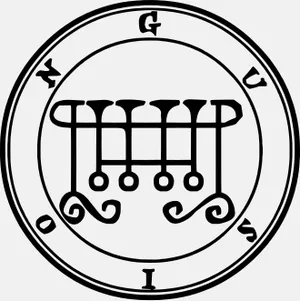
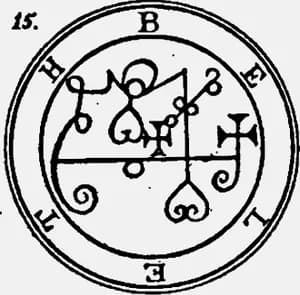
Spirits of like office
The spirits that share most of what Sitri is said to do.


Learn more in the lessons
- The Goetia — The 72 Spirits of Solomon · 18 min
- One Spirit, Three Texts · 13 min · free
- Inside the Goetia — How a Book of Spirits Works · 30 min
- Discernment & Protection · to read before any practical spirit work
The Goetia asks for each seal to be made in the metal of the spirit's rank. Given here as history and symbolism, not as instructions.