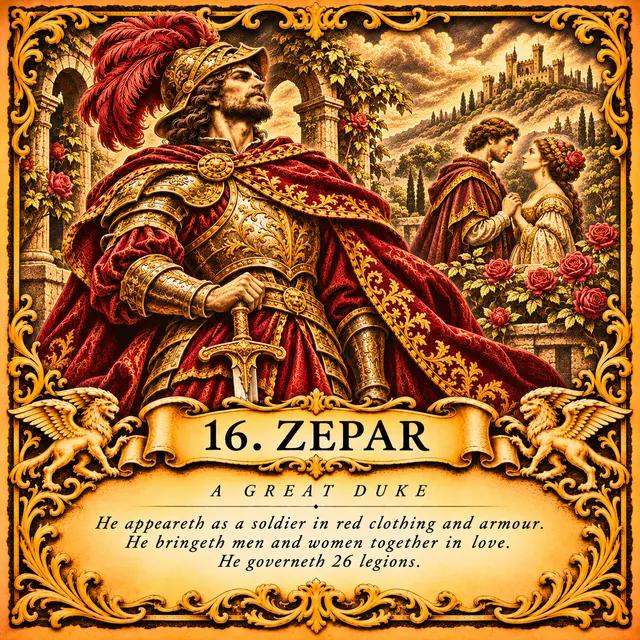
THE GOETIA · SPIRIT 16 OF 72 · DUKE
Zepar
Recognising the wish to possess
Duke Venus · 26 legions
HOW IT APPEARS
In red clothing and armour, like a soldier.
WHAT IT DOES
Brings men and women together in love, and makes women barren.
Love & friendship
Zepar brings together martial dress and coercive love magic, inviting reflection on the way attraction can become an attempt to control.
The seal of Zepar
The seal, or sigil, as the 1904 edition printed it, to be worn before the magician as a lamen. The Goetia asks for each seal to be made in the metal of the spirit's rank: for a duke, copper.

In the Sloane manuscript
The Goetia describes Zepar as an armed figure dressed in red. His offices concern making women love men, bringing them together and causing barrenness; these are historical magical claims, not established effects. Goetia, spirit 16, Sloane MS 3825
A seventeenth-century manuscript of the Goetia, which can differ in spelling and detail from the 1904 edition given above.
Rank, legions and the angel against it
- RANK, PLANET AND SEAL
Duke: ♀ Venus, its seal made in copper
- LEGIONS UNDER IT
- 26Paimon has the most, 200.
- WHEN THE GOETIA SAYS TO CALL IT
Dukes: sunrise to noon, in clear weather
- THE ANGEL SET AGAINST IT
- Hakamiah הקמיה, the 16th of the 72 angels of the Shem ha-Mephorash, of the Cherubim. In Dr Rudd's Goetia each spirit is bound by the angel of the same number.
- IN THE OLDER LISTS
- In Weyer's Pseudomonarchia Daemonum (1577).
WRITTEN FOR OCCULTUM
A reading of Zepar
A SYMBOLIC READING
The symbolic tension lies in desire being treated as an operation performed upon someone else. Zepar invites a contemporary reader to examine possession, projection and the urge to secure an outcome before another person has spoken. Mutual involvement requires room for change, hesitation and a choice that remains one's own.
A PRACTICE
Consider an expectation you have placed on a relationship. Identify which part belongs to your own preferences and which part has actually been agreed. If discussion is appropriate, turn the assumption into an open question and leave space for the answer.
AN ORIGINAL INVOCATION
Zepar, as I examine the wish to possess, let me distinguish longing from entitlement and honour what has been freely and mutually chosen.
A line for contemplation, newly written: not a conjuration from the Goetia.
TO REFLECT ON
Which expectation have I treated as an agreement without asking?
Historical description after Joseph H. Peterson's digital edition of the Lemegeton, Part 1: Goetia, a transcription of British Library Sloane MS 3825, offered under CC BY 4.0; the English here is a new paraphrase. Heading, summary, symbolic reading, practice, invocation and question: original editorial writing for Occultum.
Spirits of like office
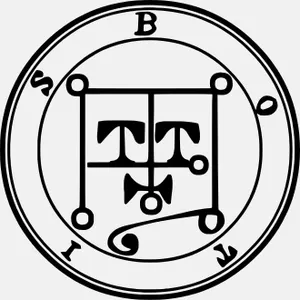
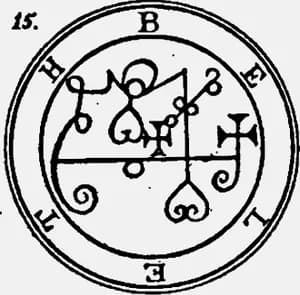
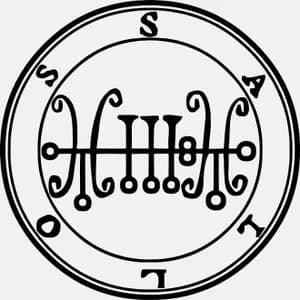
The spirits that share most of what Zepar is said to do.
Learn more in the lessons
- The Goetia — The 72 Spirits of Solomon · 18 min
- One Spirit, Three Texts · 13 min · free
- Inside the Goetia — How a Book of Spirits Works · 30 min
- Discernment & Protection · to read before any practical spirit work
The Goetia asks for each seal to be made in the metal of the spirit's rank. Given here as history and symbolism, not as instructions.