THE GOETIA · SPIRIT 23 OF 72 · DUKE
Aim
The heat behind a clever idea
Also spelt Haborym
Duke Venus · 26 legions
HOW IT APPEARS
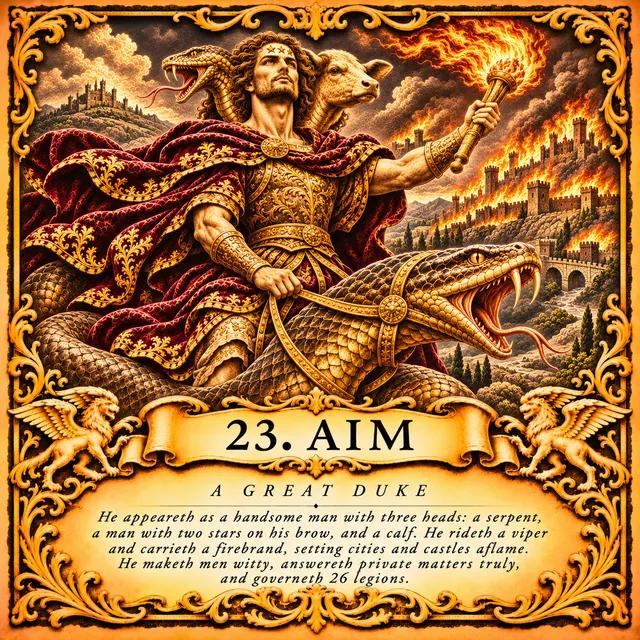
A handsome man with three heads — a serpent, a man with two stars on his brow, and a calf (a cat in the Sloane manuscript) — riding a viper and carrying a firebrand.
WHAT IT DOES
Sets cities and castles on fire, makes people witty and answers truly about private matters.
War & destructionTeaching & knowledge
Aim combines sharp understanding with destructive fire, offering material for examining an impulse that promises clarity while threatening what supports a life.
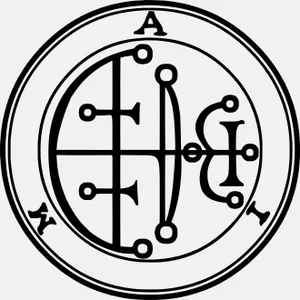
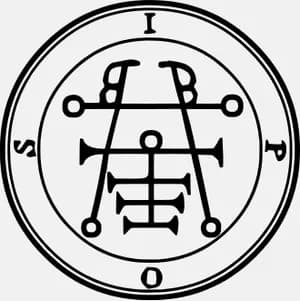
The seal of Aim
The seal, or sigil, as the 1904 edition printed it, to be worn before the magician as a lamen. The Goetia asks for each seal to be made in the metal of the spirit's rank: for a duke, copper.
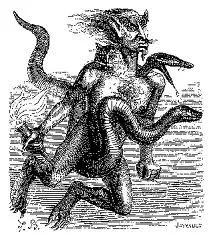
In the Sloane manuscript
The Goetia gives Aim three heads, a serpent mount and a burning brand. He is said to set major places on fire, make people resourceful or witty and answer questions about private matters. Goetia, spirit 23, Sloane MS 3825
A seventeenth-century manuscript of the Goetia, which can differ in spelling and detail from the 1904 edition given above.
Rank, legions and the angel against it
- RANK, PLANET AND SEAL
Duke: ♀ Venus, its seal made in copper
- LEGIONS UNDER IT
- 26Paimon has the most, 200.
- WHEN THE GOETIA SAYS TO CALL IT
Dukes: sunrise to noon, in clear weather
- THE ANGEL SET AGAINST IT
- Melahel מלהאל, the 23rd of the 72 angels of the Shem ha-Mephorash, of the Thrones. In Dr Rudd's Goetia each spirit is bound by the angel of the same number.
- IN THE OLDER LISTS
- In Weyer's Pseudomonarchia Daemonum (1577); also spelt Haborym in Weyer, the manuscripts and the 1904 edition.
WRITTEN FOR OCCULTUM
A reading of Aim
A SYMBOLIC READING
A symbolic reading can consider the attraction of a dramatic break: the sentence that ends a relationship, the gesture that destroys a project or the clever plan that ignores its aftermath. Aim invites attention to the difference between necessary change and the satisfaction of watching something fall apart.
A PRACTICE
Before making a decisive change, write what needs to end and what still deserves protection. Describe the likely effects on people and practical arrangements. Choose a measured first step that gives you information before an irreversible gesture takes the decision out of your hands.
AN ORIGINAL INVOCATION
Aim, as I contemplate the force of a consuming idea, let clear judgement distinguish needed change from the pleasure of destruction.
A line for contemplation, newly written: not a conjuration from the Goetia.
TO REFLECT ON
What would this dramatic action destroy that I still need to preserve?
Historical description after Joseph H. Peterson's digital edition of the Lemegeton, Part 1: Goetia, a transcription of British Library Sloane MS 3825, offered under CC BY 4.0; the English here is a new paraphrase. Heading, summary, symbolic reading, practice, invocation and question: original editorial writing for Occultum.
Spirits of like office
The spirits that share most of what Aim is said to do.
Learn more in the lessons
- The Goetia — The 72 Spirits of Solomon · 18 min
- One Spirit, Three Texts · 13 min · free
- Inside the Goetia — How a Book of Spirits Works · 30 min
- Discernment & Protection · to read before any practical spirit work
The Goetia asks for each seal to be made in the metal of the spirit's rank. Given here as history and symbolism, not as instructions.