THE BOOK OF CHANGES
The 64 hexagrams of the I Ching
The Yijing (I Ching), the Book of Changes, is the oldest oracle still in daily use. It answers a question not with a yes or a no but with one of sixty-four hexagrams: figures of six lines, each whole (yang) or broken (yin), with a short text on the whole figure, the Judgment, and a text for each line. Every hexagram is two trigrams, one above the other, and lines that are old and about to change turn it into a second hexagram: where things are going.
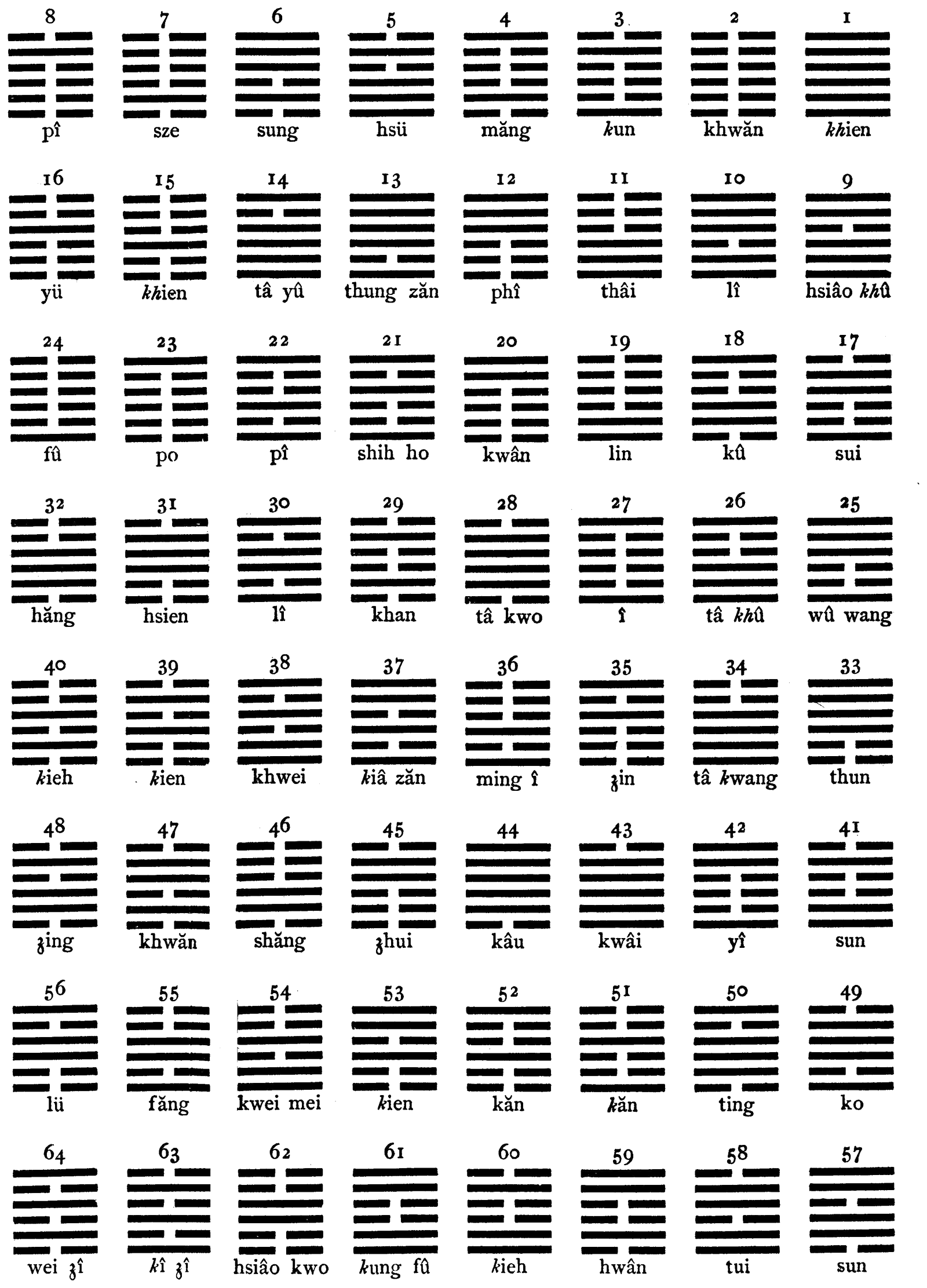
Here are all sixty-four in King Wen's order, the order of the book. Each hexagram's page gives its figure and its two trigrams, its image, sense and counsel as the I Ching tool gives them, the Judgment and the six lines in James Legge's translation of 1882, the hexagram each line turns it into when it changes, and its pair, its opposite and its hidden core.
Cast one in the I Ching tool, with coins or yarrow stalks; read Legge's translation whole in the Reading Room, with his notes and the appendixes, the “Ten Wings” of tradition; or learn how the book grew and how to read a cast in the lesson The Book of Changes. The twelve hexagrams of the months are in The Sovereign Hexagrams and the Tide of the Year, and yin and yang in Yin, Yang and the Five Phases.
Find a hexagram by its trigrams
A cast is made from the bottom up, so its first three lines are the lower trigram and its last three the upper. Find the lower trigram down the side and the upper across the top.
| lower ↓ · upper → | Heaven | Thunder | Water | Mountain | Earth | Wind | Fire | Lake |
|---|---|---|---|---|---|---|---|---|
| Heaven | 1 | 34 | 5 | 26 | 11 | 9 | 14 | 43 |
| Thunder | 25 | 51 | 3 | 27 | 24 | 42 | 21 | 17 |
| Water | 6 | 40 | 29 | 4 | 7 | 59 | 64 | 47 |
| Mountain | 33 | 62 | 39 | 52 | 15 | 53 | 56 | 31 |
| Earth | 12 | 16 | 8 | 23 | 2 | 20 | 35 | 45 |
| Wind | 44 | 32 | 48 | 18 | 46 | 57 | 50 | 28 |
| Fire | 13 | 55 | 63 | 22 | 36 | 37 | 30 | 49 |
| Lake | 10 | 54 | 60 | 41 | 19 | 61 | 38 | 58 |
The eight trigrams
Three lines, each solid or broken, make eight trigrams, the book's alphabet; two of them, one above the other, make each hexagram, the lower the inner situation and the upper the outer. Each has its image in nature and, in the Shuogua, its place in a family.
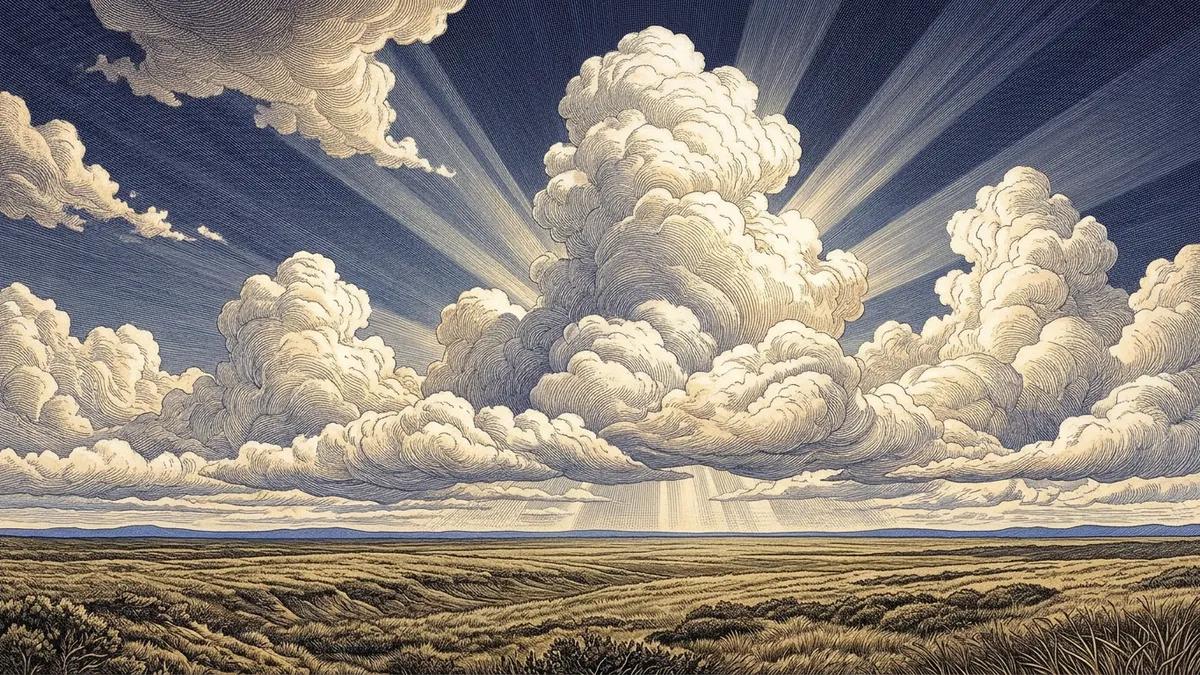
☰ Heaven 乾 Qián
Sky; strong, creative. In the family of the Shuogua it is the father.
The open heaven
Doubled, it is 1. The Creative

☱ Lake 兌 Duì
Marsh, mist; joyous, open. In the family of the Shuogua it is the youngest daughter.
The misty lake
Doubled, it is 58. The Joyous
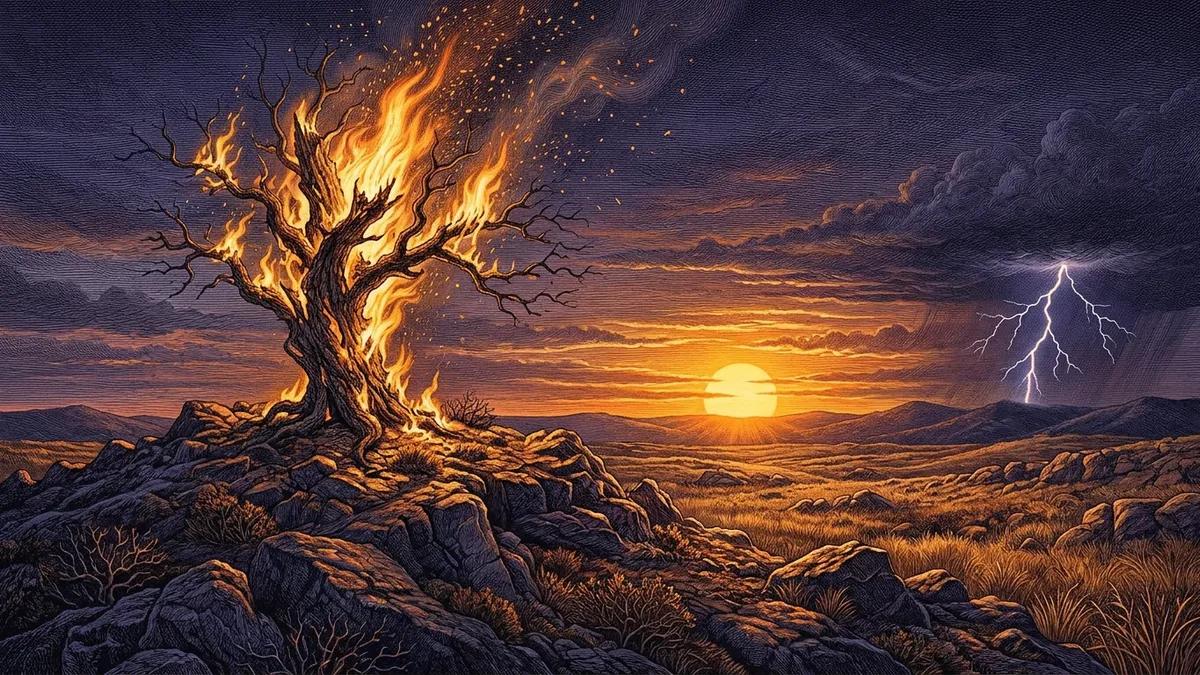
☲ Fire 離 Lí
Flame, sun, lightning; clinging, bright. In the family of the Shuogua it is the middle daughter.
The burning tree
Doubled, it is 30. The Clinging
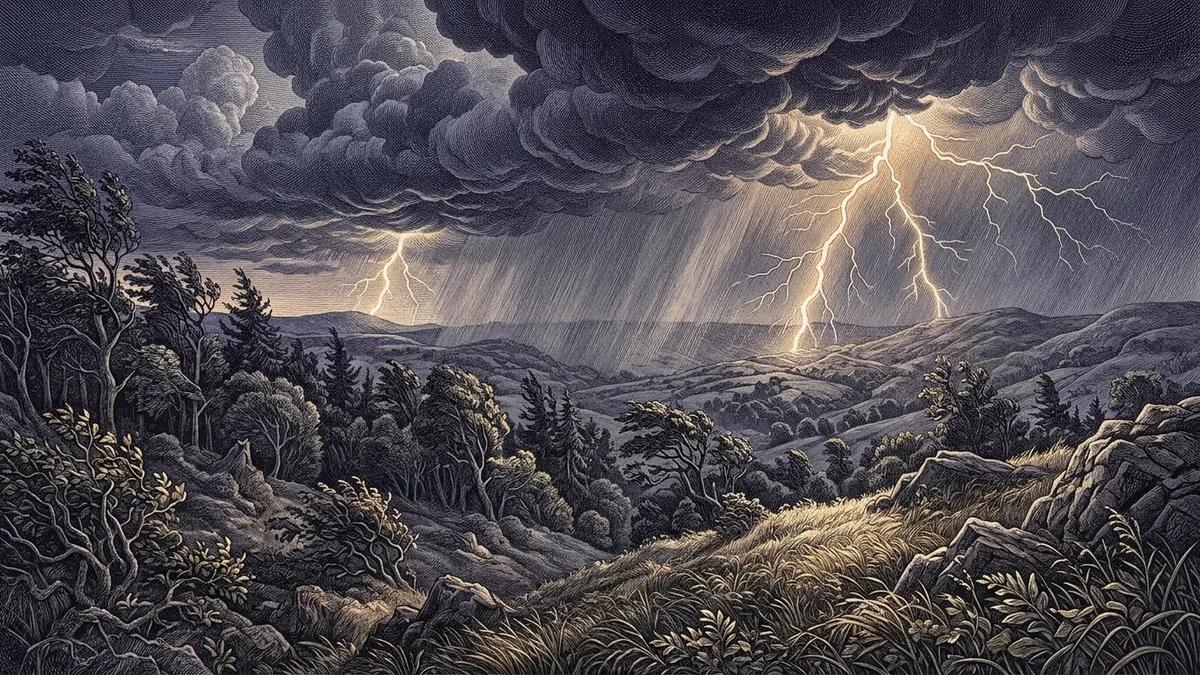
☳ Thunder 震 Zhèn
Thunder, quake; arousing, moving. In the family of the Shuogua it is the eldest son.
The breaking storm
Doubled, it is 51. The Arousing

☴ Wind 巽 Xùn
Wind, wood; gentle, penetrating. In the family of the Shuogua it is the eldest daughter.
The wind in the wood
Doubled, it is 57. The Gentle
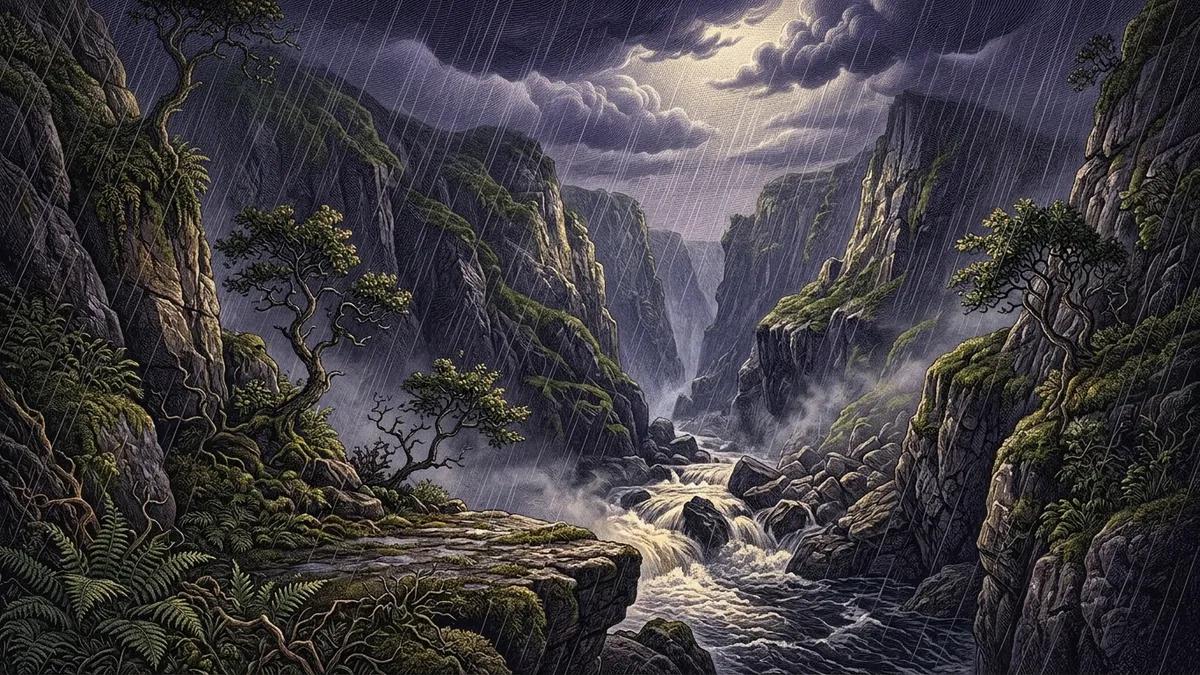
☵ Water 坎 Kǎn
Rain, rivers, the abyss; dangerous, deep. In the family of the Shuogua it is the middle son.
The gorge in the rain
Doubled, it is 29. The Abyss
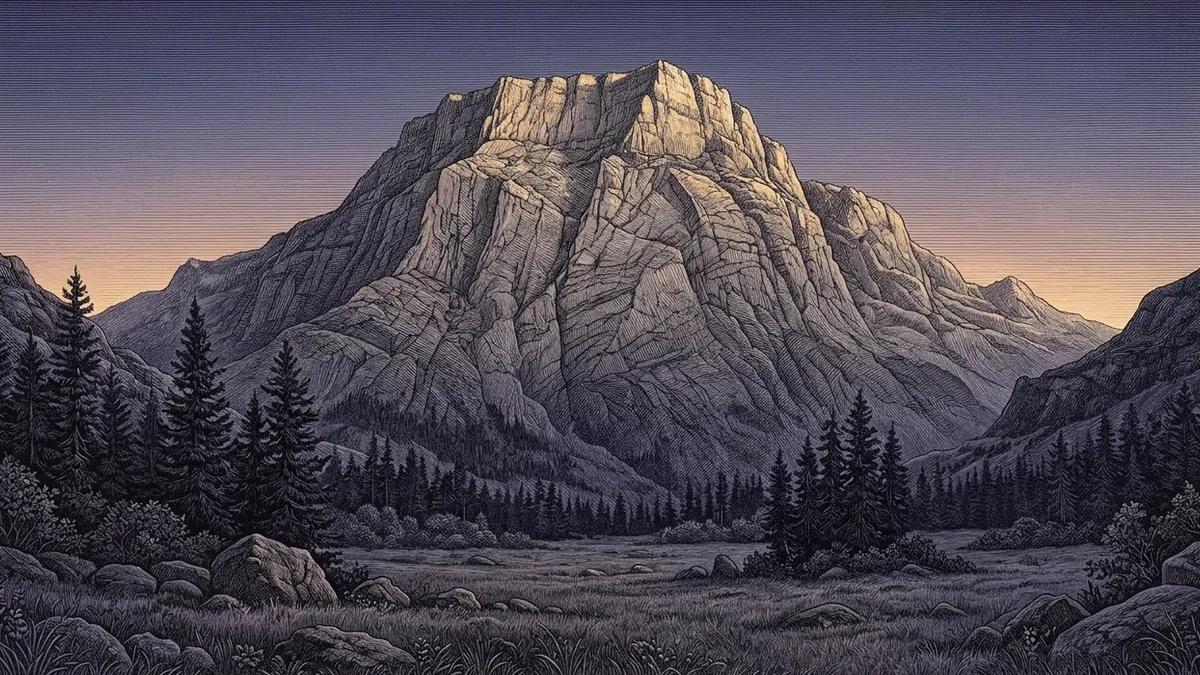
☶ Mountain 艮 Gèn
Mountain, stone; still, stopping. In the family of the Shuogua it is the youngest son.
The still mountain
Doubled, it is 52. Keeping Still
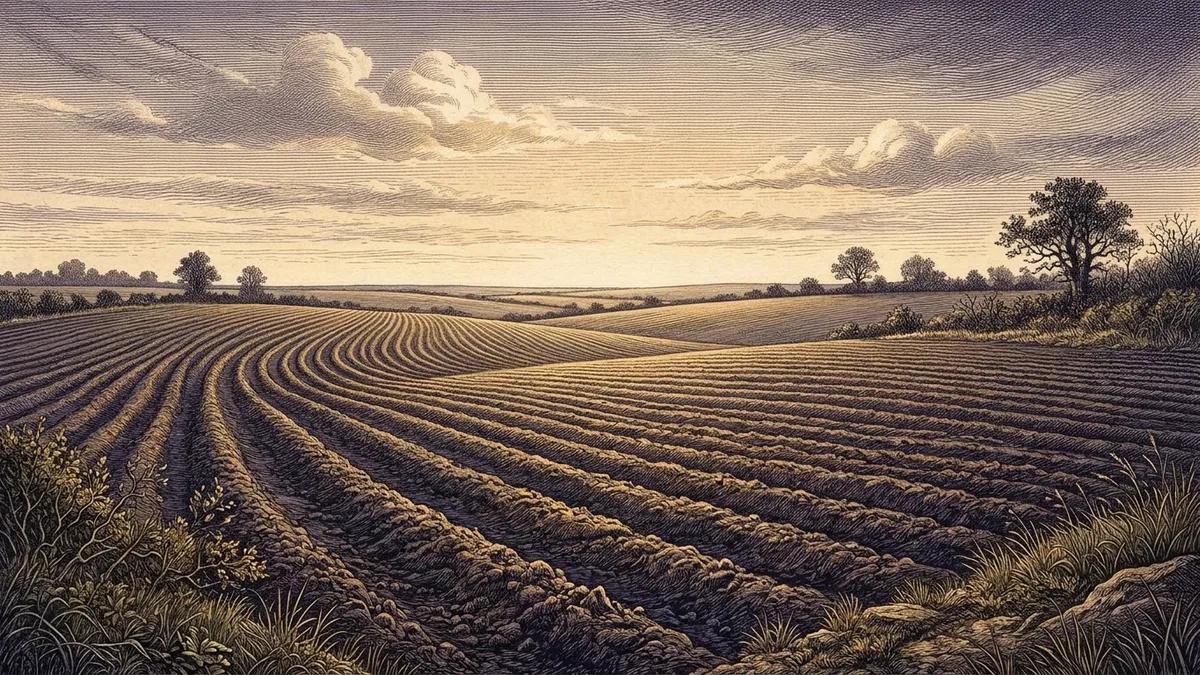
☷ Earth 坤 Kūn
Ground, the field; yielding, receptive. In the family of the Shuogua it is the mother.
The ploughed earth
Doubled, it is 2. The Receptive
Pictures: original AI illustration created for Occultum.
All sixty-four, in King Wen's order
The order of the book runs in pairs, 1 and 2, 3 and 4 and so on, each the other turned upside down or, where that changes nothing, with every line changed. Legge prints the Text in two sections, from the Creative to the Clinging and from Influence to Before Completion.
The Text, Section I · 1 to 30
- 1.The Creative乾 QiánHeaven over Heaven
- 2.The Receptive坤 KūnEarth over Earth
- 3.Difficulty at the Beginning屯 ZhūnWater over Thunder
- 4.Youthful Inexperience蒙 MéngMountain over Water
- 5.Waiting需 XūWater over Heaven
- 6.Conflict訟 SòngHeaven over Water
- 7.The Army師 ShīEarth over Water
- 8.Holding Together比 BǐWater over Earth
- 9.Small Taming小畜 Xiǎo ChùWind over Heaven
- 10.Treading履 LǚHeaven over Lake
- 11.Peace泰 TàiEarth over Heaven
- 12.Standstill否 PǐHeaven over Earth
- 13.Fellowship同人 Tóng RénHeaven over Fire
- 14.Great Possession大有 Dà YǒuFire over Heaven
- 15.Modesty謙 QiānEarth over Mountain
- 16.Enthusiasm豫 YùThunder over Earth
- 17.Following隨 SuíLake over Thunder
- 18.Work on the Spoiled蠱 GǔMountain over Wind
- 19.Approach臨 LínEarth over Lake
- 20.Contemplation觀 GuānWind over Earth
- 21.Biting Through噬嗑 Shì KèFire over Thunder
- 22.Grace賁 BìMountain over Fire
- 23.Splitting Apart剝 BōMountain over Earth
- 24.Return復 FùEarth over Thunder
- 25.Innocence無妄 Wú WàngHeaven over Thunder
- 26.Great Taming大畜 Dà ChùMountain over Heaven
- 27.Nourishment頤 YíMountain over Thunder
- 28.Great Excess大過 Dà GuòLake over Wind
- 29.The Abyss坎 KǎnWater over Water
- 30.The Clinging離 LíFire over Fire
The Text, Section II · 31 to 64
- 31.Influence咸 XiánLake over Mountain
- 32.Duration恆 HéngThunder over Wind
- 33.Retreat遯 DùnHeaven over Mountain
- 34.Great Power大壯 Dà ZhuàngThunder over Heaven
- 35.Progress晉 JìnFire over Earth
- 36.Darkening of the Light明夷 Míng YíEarth over Fire
- 37.The Family家人 Jiā RénWind over Fire
- 38.Opposition睽 KuíFire over Lake
- 39.Obstruction蹇 JiǎnWater over Mountain
- 40.Deliverance解 JiěThunder over Water
- 41.Decrease損 SǔnMountain over Lake
- 42.Increase益 YìWind over Thunder
- 43.Breakthrough夬 GuàiLake over Heaven
- 44.Coming to Meet姤 GòuHeaven over Wind
- 45.Gathering Together萃 CuìLake over Earth
- 46.Pushing Upward升 ShēngEarth over Wind
- 47.Oppression困 KùnLake over Water
- 48.The Well井 JǐngWater over Wind
- 49.Revolution革 GéLake over Fire
- 50.The Cauldron鼎 DǐngFire over Wind
- 51.The Arousing震 ZhènThunder over Thunder
- 52.Keeping Still艮 GènMountain over Mountain
- 53.Development漸 JiànWind over Mountain
- 54.The Marrying Maiden歸妹 Guī MèiThunder over Lake
- 55.Abundance豐 FēngThunder over Fire
- 56.The Wanderer旅 LǚFire over Mountain
- 57.The Gentle巽 XùnWind over Wind
- 58.The Joyous兌 DuìLake over Lake
- 59.Dispersion渙 HuànWind over Water
- 60.Limitation節 JiéWater over Lake
- 61.Inner Truth中孚 Zhōng FúWind over Lake
- 62.Small Excess小過 Xiǎo GuòThunder over Mountain
- 63.After Completion既濟 Jì JìWater over Fire
- 64.Before Completion未濟 Wèi JìFire over Water
Names: the common English titles, with the Chinese and its pinyin. The image, sense and counsel on each page are short plain-words summaries of its Judgment and Image, written for Occultum's I Ching tool, not translations; the classical text is James Legge's, from The Sacred Books of the East, vol. XVI (1882), as the Reading Room has it, with his Plate I cut from a scan of that printing.